


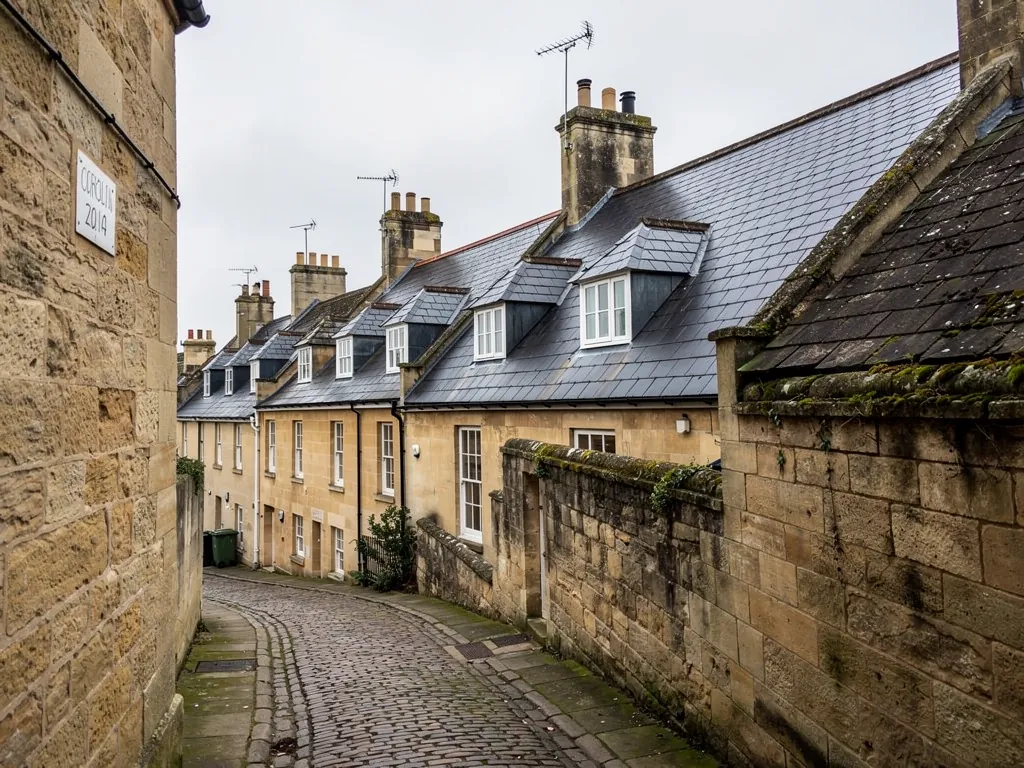
Shops, flats and rear roofs on the Moorland Road side
A roof over a trading unit has to be repaired around the business beneath it, and often around the people living above.
Moorland Road is the district's high street, and the buildings that line a shopping street share a pattern. There is a front that faces the road, a rear that faces a yard or lane, and between them a roof that is rarely visible from the pavement. The front tends to look after itself, because the owner sees it every day. The back is where the neglect builds up.
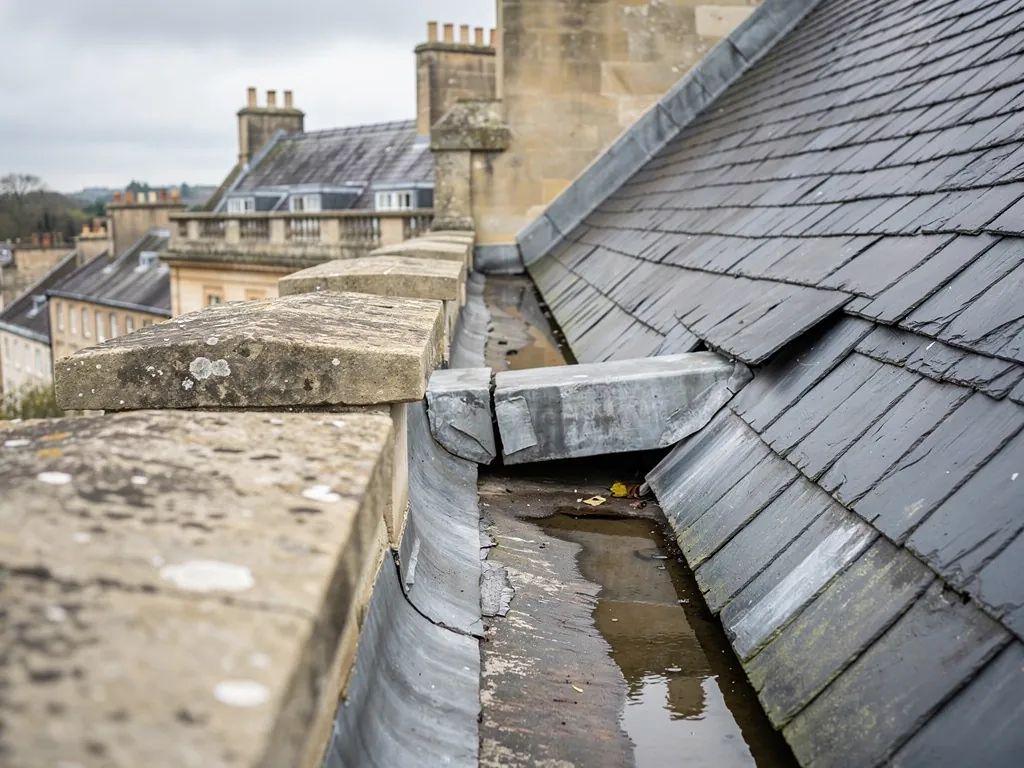
The usual weak points are the join between a flat rear roof and the main wall, the gutters on the side of the building that nobody reaches, and the lead or sheet metal where one roof steps down to another. A flashing is the weatherproof strip, usually lead, that bridges the gap between roof and wall. When a flashing lifts at one end, water follows the wall down into the ceiling below, and it can take weeks to show as a stain.
For a unit with a flat above, the roof belongs to the building, not to the shop or the flat alone, and a repair has to be organised with that in mind. We write a scope that says what the work covers, what it will change from the street, and what it needs from the occupants, so a landlord, a leaseholder and a tenant can all see the same page.
If a commercial building needs more than a repair, our commercial roofing work shows how we survey and price it. Commercial roofs are priced after the survey rather than from a list, because the access, the edges and the drainage differ on every building.