

Part 1 of 6
Pots and flaunching
The top of a stack is a small mortar cap holding up the pots, and it has the hardest life of any part.
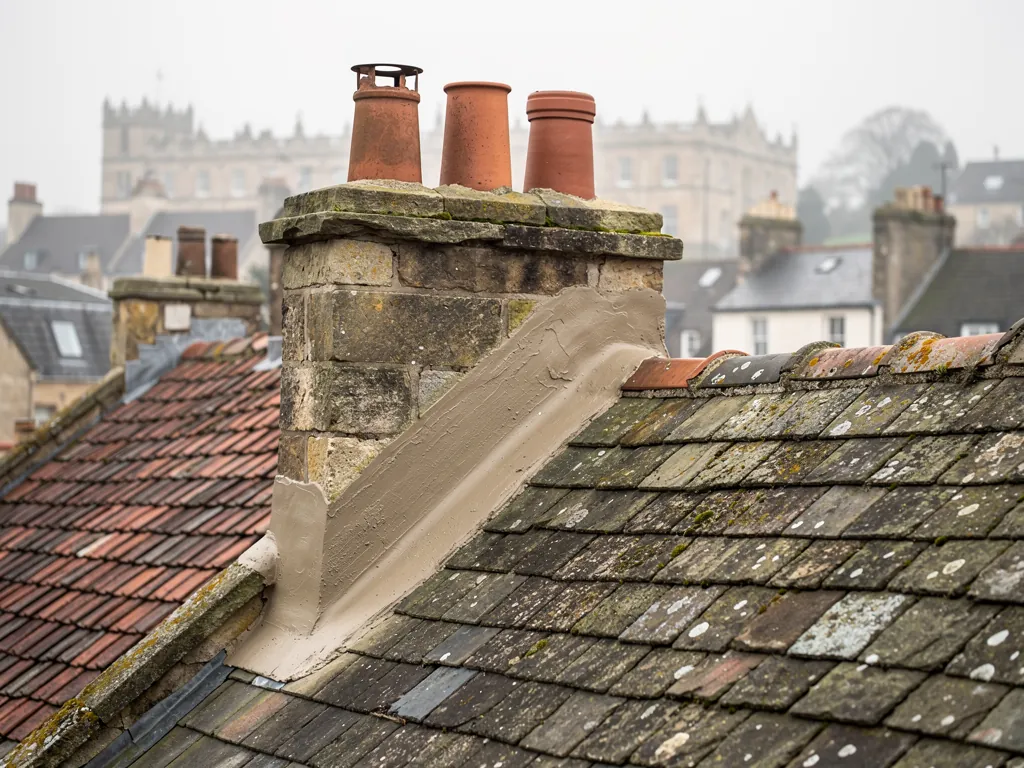
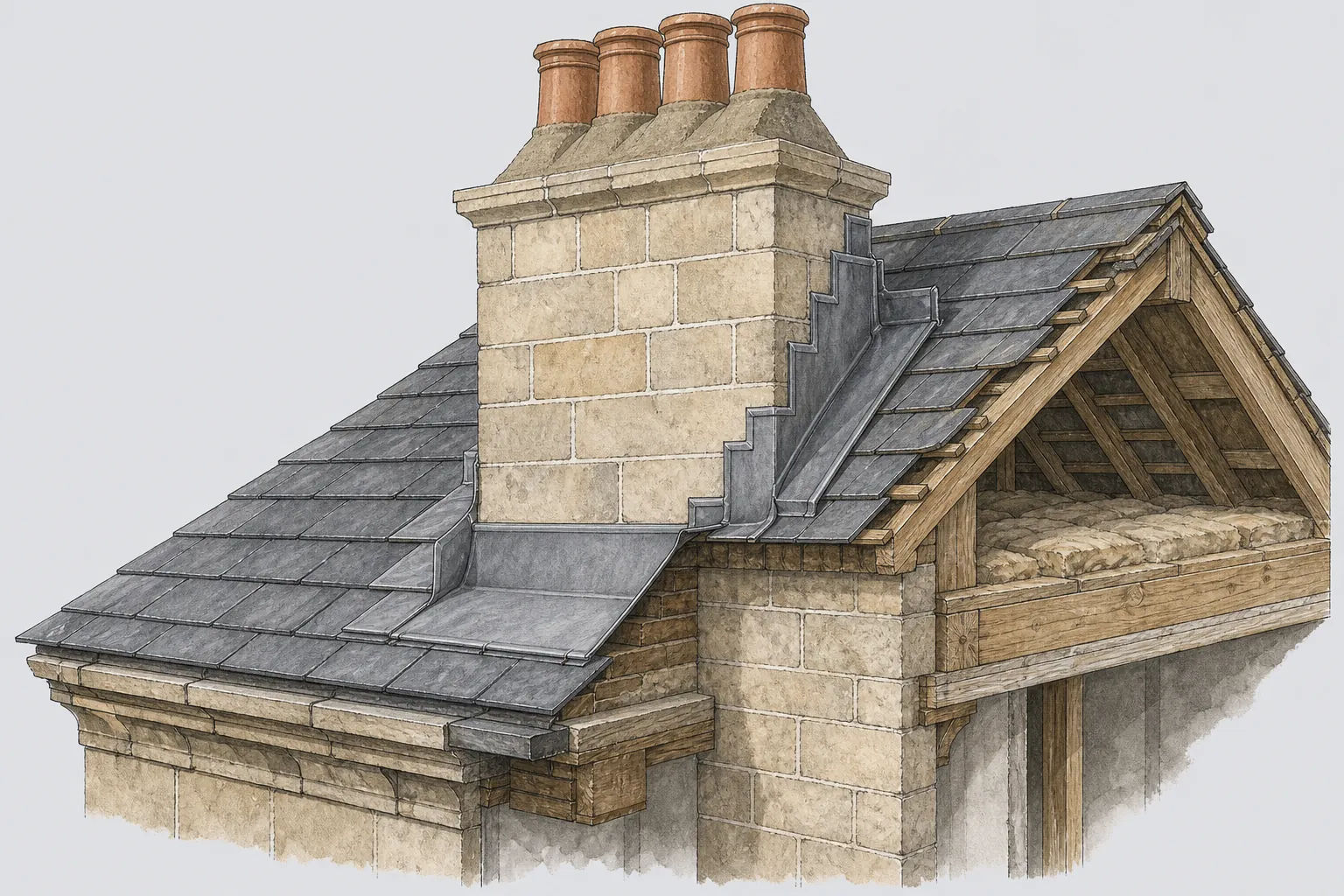
Lift your eyes to the very top of a chimney stack and you will usually see a row of clay pots standing in a sloping bed of mortar. The pots are the visible ends of the flues, the passages that carry smoke up from each fireplace. The mortar around them is the flaunching: a cap, built up in a slope from the pot to the edge of the stack, whose job is to shed rain outward instead of letting it sit on the stonework and run into the flues. It is a small piece of work, a few centimetres thick, and it takes the sky full in the face.
That exposure explains why flaunching fails first. It sits at the top of the highest structure on the house, and every frost, every gale and every heavy shower acts on it. Over time it cracks, shrinks away from the pot, and begins to crumble. Once the cap is open, water runs down the outside of the pot and into the top of the stack, and the stonework beneath begins to soak. You may never see the flaunching from the ground. Binoculars will show hairline cracks, dark gaps around the pot, or pieces of mortar that have dropped into the gutter or onto the garden path.
Pots, cowls and caps
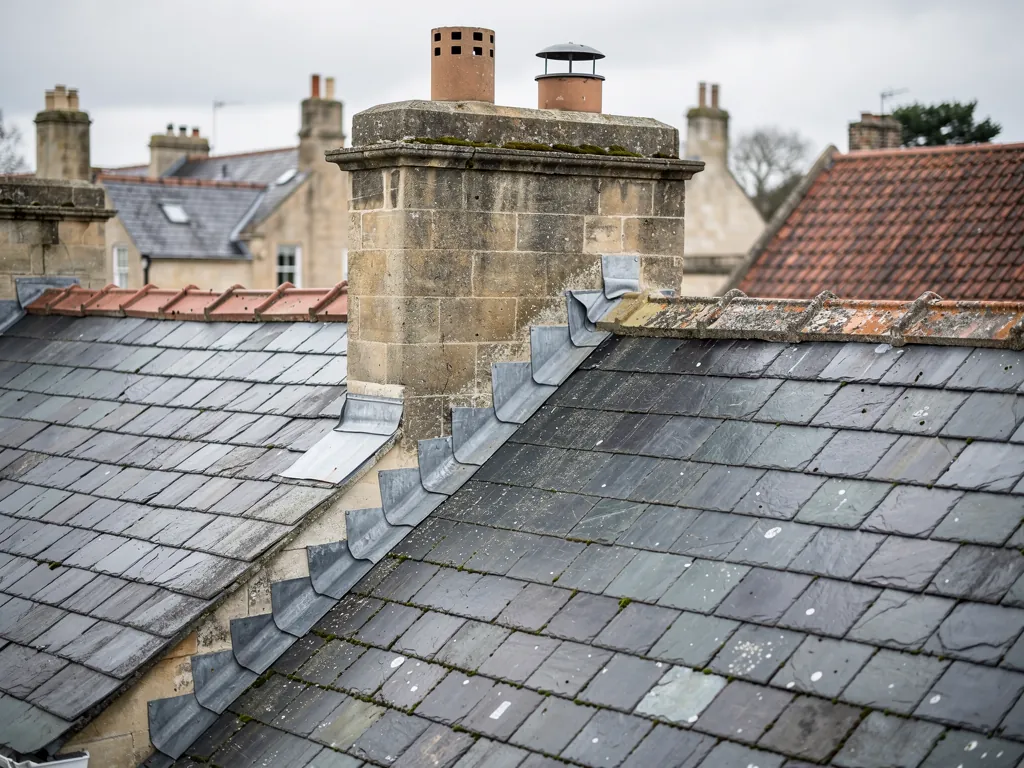
Pots themselves are clay, sometimes terracotta and sometimes buff, in a range of heights and tops. A pot that has cracked or split, or one that leans, will let water into the flue and may fall. A cowl is a fitting on top of the pot; some are shaped to keep rain out, some to improve the draw, and some carry a mesh to keep birds from nesting. A flue that is not in use should be capped with a ventilated cover, not sealed, so air still moves through it and damp does not collect inside. Nesting birds are protected, so if a nest is in use we leave it alone until the young have flown.
Renewing the flaunching
Renewing it means breaking out the old cap, cleaning the top of the stack, resetting any pot that has moved, and building a new sloped bed around each pot. The mortar is chosen to suit the stack. On a Bath stone chimney, lime is the safer choice. On the proposed works at 7 Walcot Buildings, the Bath Preservation Trust asked for lime in the flaunching, and recorded its view that earlier use of cement may have worsened the stone damage to that stack. We give the new cap a proper slope, with a slight overhang so that water drips clear of the top of the stone.
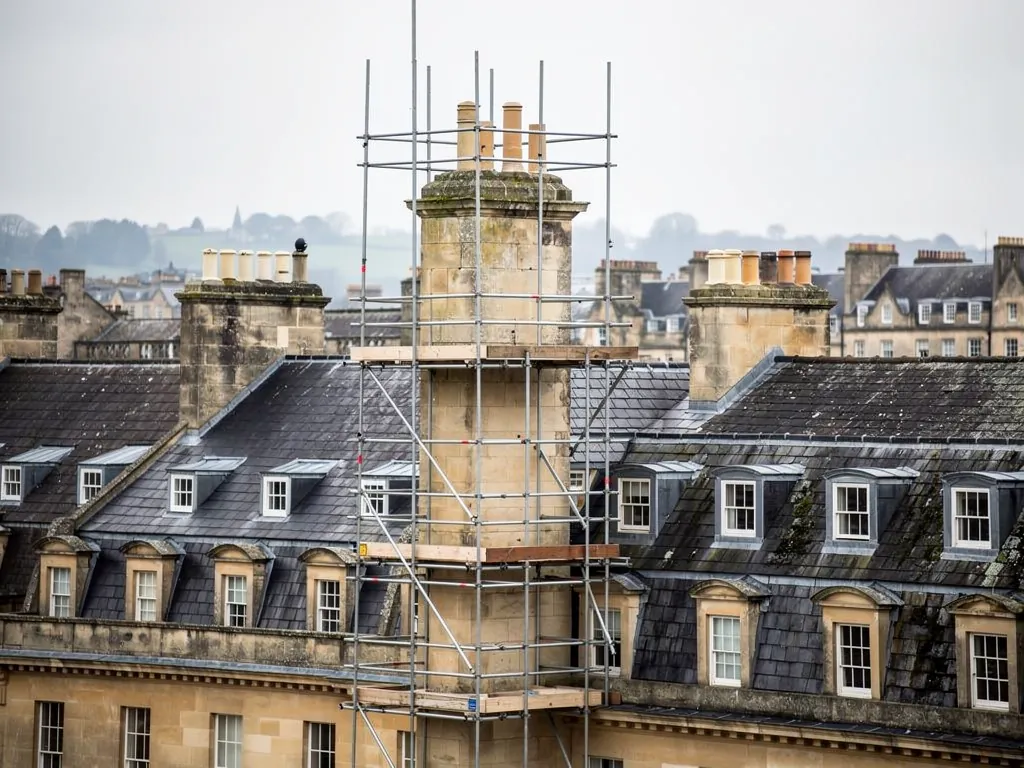
Where several pots stand together, each is set in the same bed, and the surface is finished so that no pool of water can sit between them. We check the pot bases for hairline splits before we bed them, because a pot that is cracked at the base will let water in again whatever the mortar does.
Words you will hear
- Flaunching
- The sloping mortar cap that holds the pots and sheds rain off the top of the stack.
- Flue
- The passage inside a stack that carries smoke up from a fireplace.
- Cowl
- A fitting on top of a pot that keeps out rain or birds, or helps the draw.
- Pot
- The clay tube set into the top of the stack at the end of each flue.
The guide to what flaunching is and how it is renewed covers the work in order, and chimney pots and cowls sets out the choices at the top. If a pot alone is damaged, the answer on replacing a chimney pot on its own explains when that is enough.