


Part 1 of 6
Moss on the tiles
Moss holds water against the roof, so the damage it does is slow and mostly hidden.
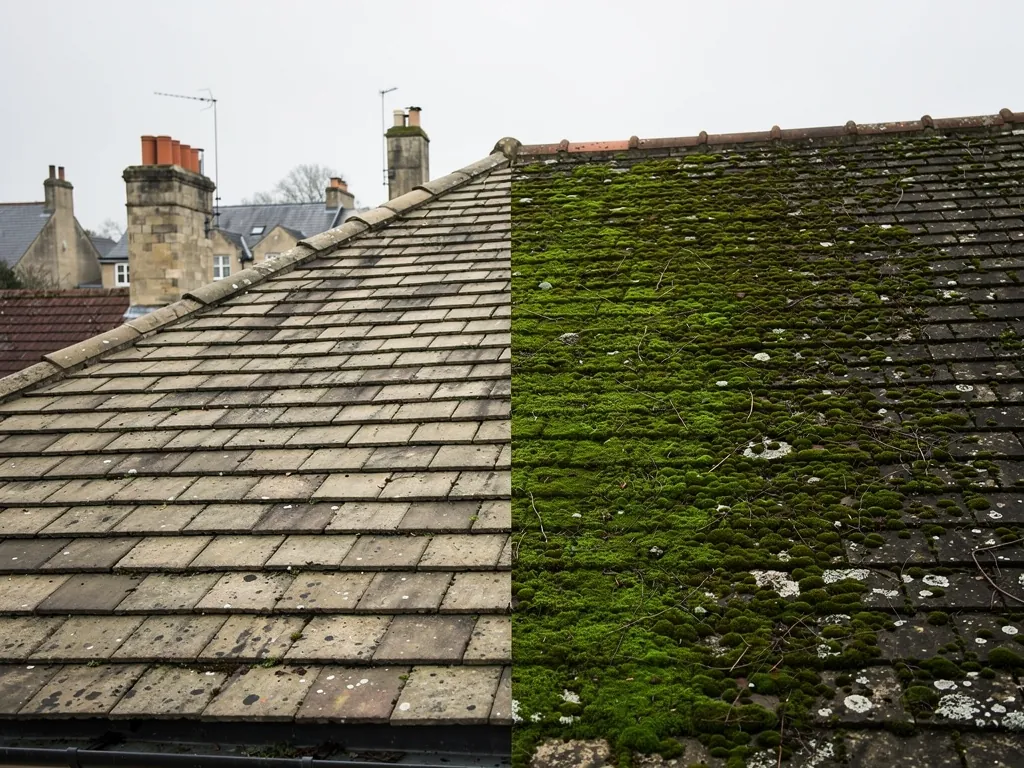
Moss needs very little. It has no roots in the usual sense, only fine threads that anchor it, and it lives off rain and the dust that settles on the tiles. It settles first where a roof stays damp the longest: the north-facing slope, the shaded side of a tree, the lower courses near the eaves, the joints between tiles where grit collects. Concrete tiles, which are porous and rough, give it a good grip. The 1960s concrete-tiled house in the drawing above is the textbook case, with a thick green mat running down the shaded slope and thinning towards the ridge.
A little moss is cosmetic. A thick mat is another matter, because it behaves like a sponge. It soaks up rain and holds it against the tile for days after the weather has cleared. In winter that trapped water freezes and thaws, and a surface that is already soft or crazed can flake. On interlocking tiles, which have shaped channels meant to carry water down the slope, a mat of moss blocks the channel and pushes rain sideways, towards the joint and the batten beneath. Battens are the sawn timber strips the tiles hang from.
Weight, and what falls off
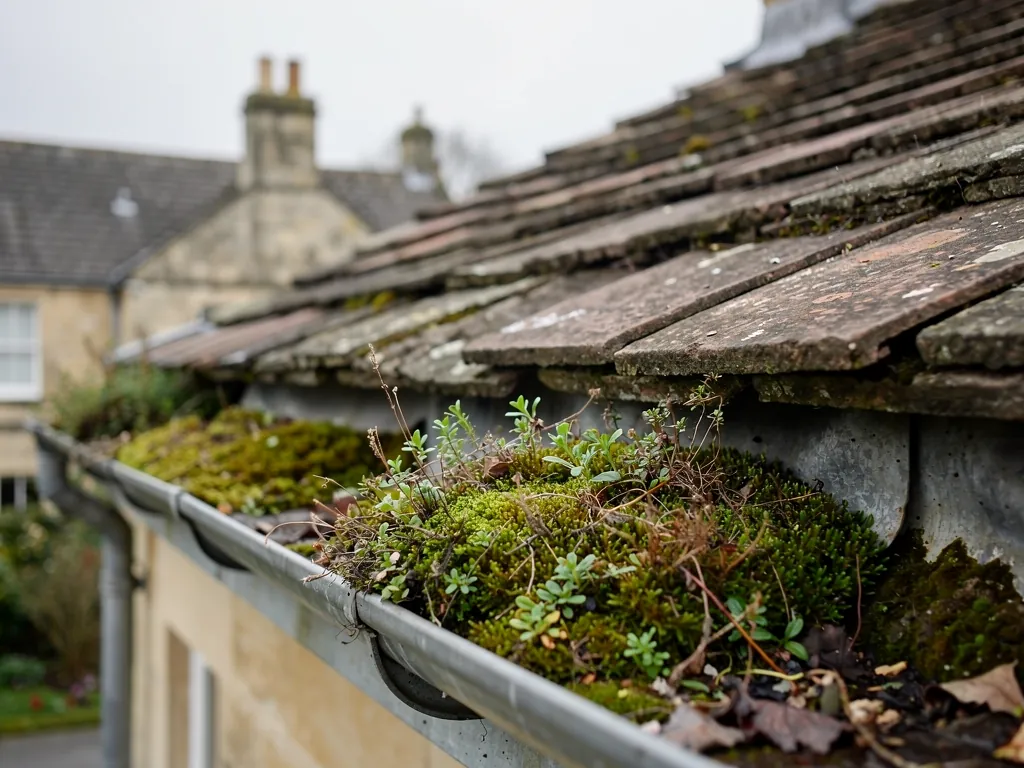
A saturated moss mat is heavier than it looks, though never enough to threaten the roof structure on its own. The more practical worry is where it goes. Moss dies back in dry spells, crumbles, and washes into the gutter with the next shower. That is how a roof that looks only a little green ends up with gutters packed solid, and why we take the moss out by hand instead of letting rain move it for us.
What we look at before cleaning
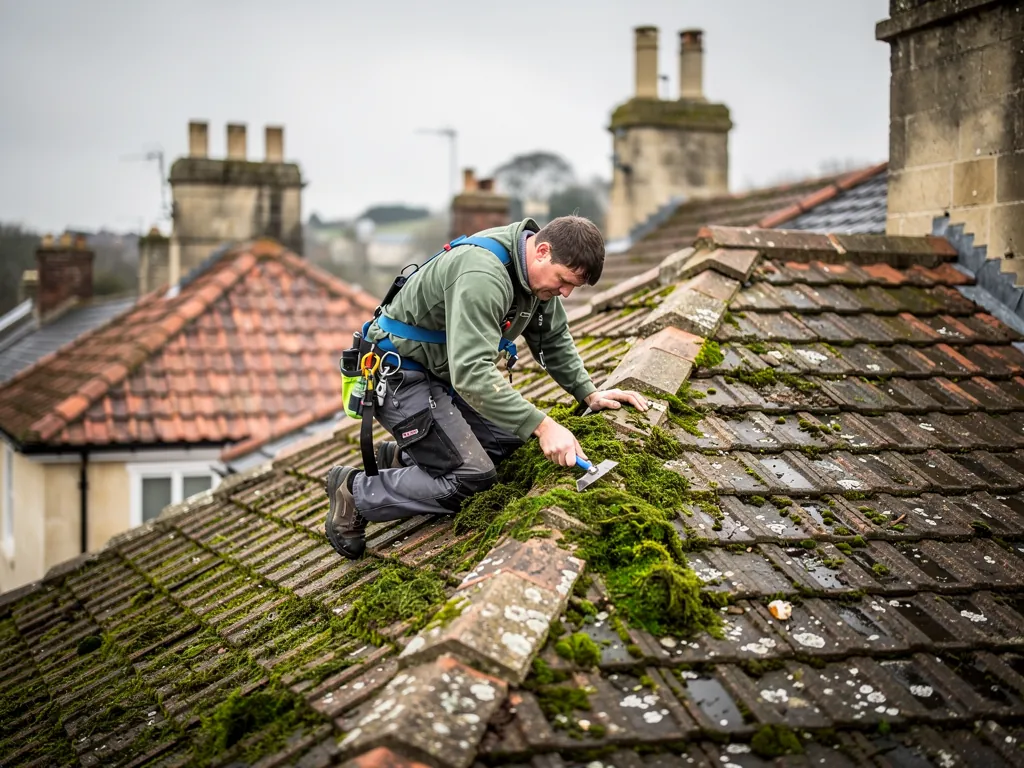
Moss can hide trouble. A tile cracked across its width, a ridge piece that has lost its bedding, or a small gap where a slate has slipped can all sit under a green mat for years. If we scrape the moss away and find loose or broken pieces, we stop and show you before going further, because a roof that needs repair is better repaired than cleaned over. We also check how well the roof sheds water at the lowest courses, since the moss there will be thickest.
Not every roof near Bath is concrete. Welsh slate roofs on older terraces grow moss differently, in the laps between slates, and clay tiles on older houses collect it in the rough face of the tile. The method changes with the covering, which is why the survey comes first and why we do not quote a flat rate for a clean before we have seen your roof.
Where overhanging branches drip onto the slope, expect the moss to come back in that spot first. We tell you on the day, so nothing comes as a surprise, and we point out which trees are the cause.
Myth
Moss is only a cosmetic problem and can safely be left to grow.
Fact
A thin patch is mostly cosmetic, but a thick mat holds water against the covering and blocks the channels and gutters, so it is best dealt with before it builds up.
For the full method, our guide to moss removal by scraping, brushing and biocide goes slope by slope. If you are weighing up a clean against doing nothing, the answer on whether moss damages a roof sets out when it matters and when it does not.