



Rooftop gardens: a waterproof roof under a living surface
Ninety-nine apartments with private roof terraces means a lot of flat roof carrying people and plants.
A rooftop garden is built in layers. At the bottom is the structural deck, then insulation, then the waterproof covering, and on top of that comes whatever the occupier has chosen: paving slabs, decking, planters or soil. We do not know the exact build-up on any particular SouthGate terrace until we see it, and it is a fair question to ask any roofer before they price a repair, because the answer decides what is possible.
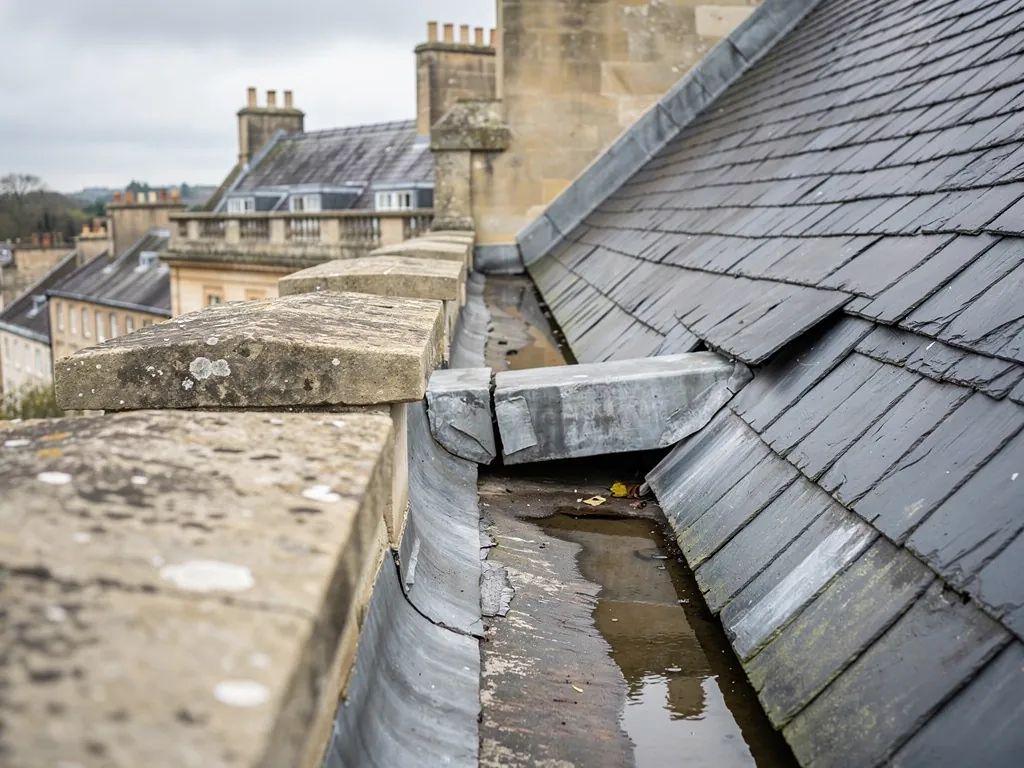
The covering is the part that matters. Flat roofs are waterproofed with a few common systems. EPDM is a synthetic rubber sheet, and a single piece can cover a whole terrace. GRP, short for glass-reinforced plastic, is resin and glass-fibre matting that cures hard. Lead and asphalt are older options and still found on stone-fronted buildings. Each wants slightly different care, but they share the same weakness: a hole in the layer admits water that travels sideways under the covering before it finds a way inside.
This is why a leak under a roof garden is rarely where it seems. A stain on a bedroom ceiling can come from a split at a planter, an upstand or an outlet several metres off. We trace it by lifting the surface where the evidence points, testing the covering and looking at the joints, not by guessing and sealing. A repair done to the wrong spot will hold until the next rain and then fail again.
Pedestals and paving make access harder but not impossible. We lift and relay slabs, protect plants where we can and put everything back as we found it. Because many roofs are private, we arrange access with the occupier first. Our flat roofing page explains the systems, the typical costs and how we decide between repair and a new covering.