


Slate, wind and the exposed slopes of the hill
Height gives a view and the weather gives a roof a harder life than it has in the valley.
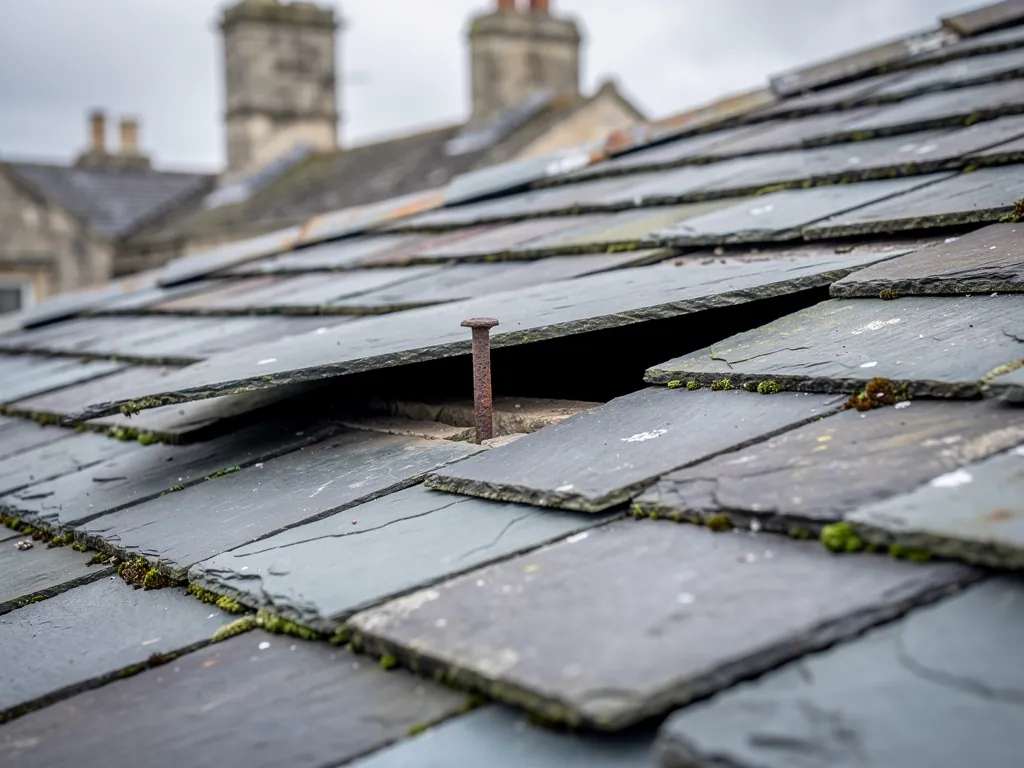
A roof on the side of a hill takes the wind from a different angle than one in the middle of the city. Where the ground falls away, the air comes up the slope and under the eaves, and a slate that would stay put in a sheltered terrace starts to lift. The cause is rarely the slate itself. It is the fixing: an iron nail that rusts through at the head or a hole that has widened with years of movement.
A slate roof is held by two nails at the head of each slate, or by a hook in some systems, and every course overlaps the one below by a calculated amount called the lap. If the nails fail, the slate slides down until it is caught by the course beneath. You can see the gaps from the street, and a run of slipped slates across a whole slope tells us the fixings are failing together, and patching them one by one will not hold.
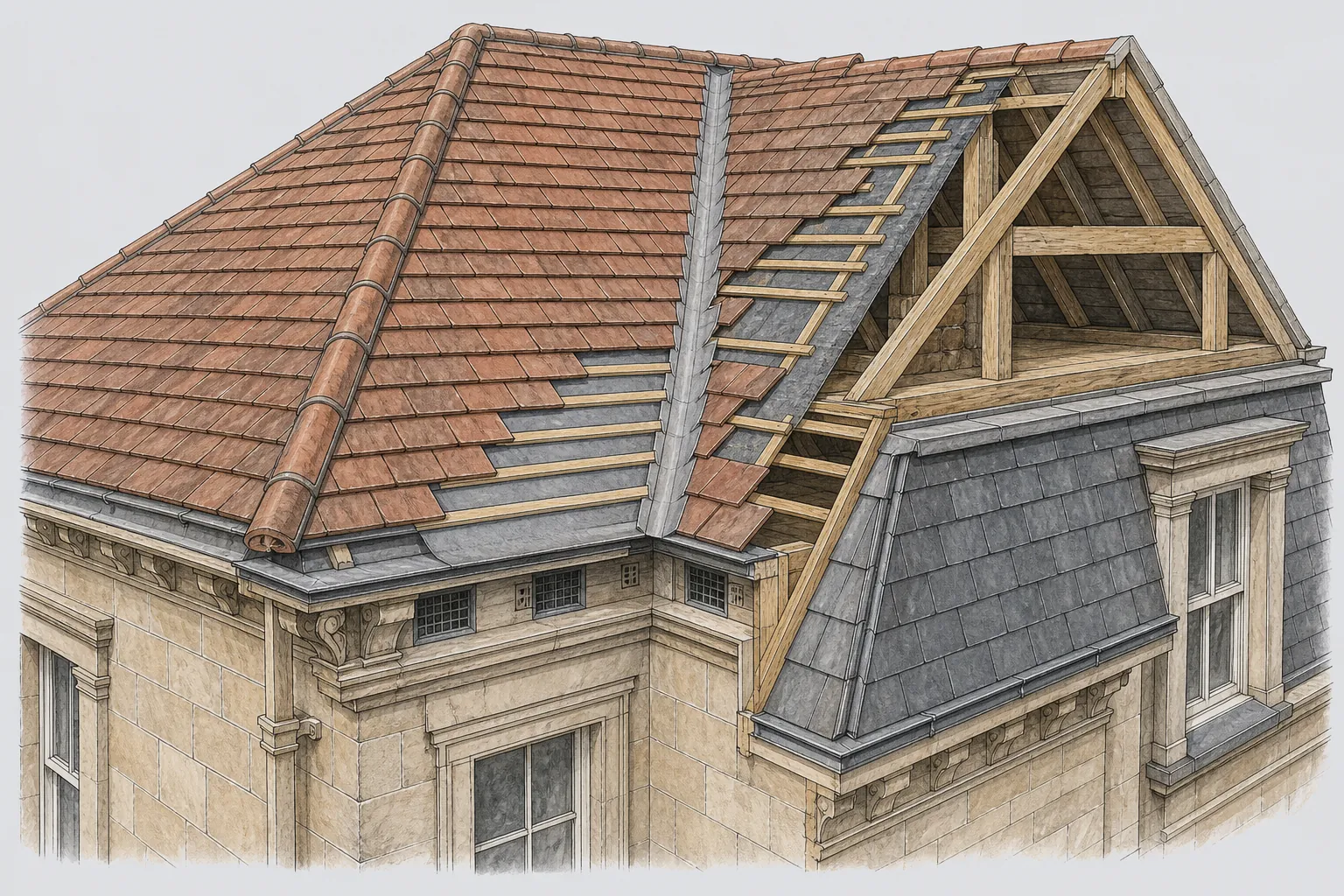
Underneath the slates there may be battens, laid across the rafters, and sometimes sarking, which is boards or felt fixed under the battens as a back-up against wind-blown rain. Older Lansdown roofs often show how they were re-covered at some point, with a mixture of old and newer slate. We keep good slate where we can and match it in size, colour and thickness where we cannot.
Wind also finds the ridge and the verge, where mortar can crack and slates lift at the edge. We re-bed or dry-fix them, which means clipping the ridge and verge in place without relying on mortar. Choosing between a repair and a full relay is covered under slate roofing, along with the way each is priced.