


Part 1 of 6
The old roof
Polycarbonate and old glass fail in ways you can see, hear and feel.
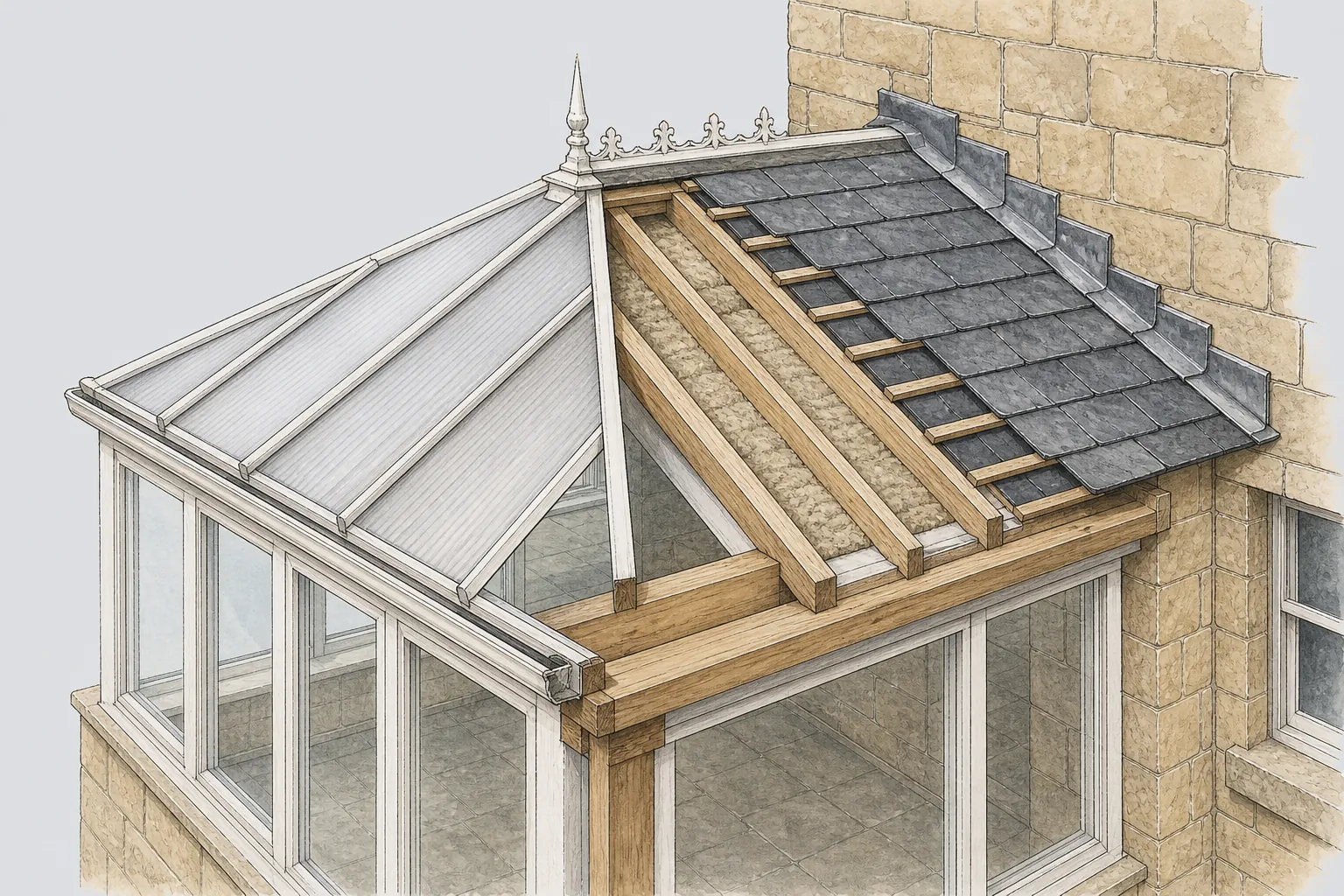
Most conservatory roofs we are asked to replace are polycarbonate or glass. Polycarbonate is a lightweight plastic sheet, usually twin-wall, with small air cells running through it. It is cheap to fit and light enough for a slim frame, which is why so many conservatories were built with it. Glass roofs are heavier and clearer, with the panes held between aluminium or uPVC glazing bars.
Both age. Polycarbonate yellows and clouds in the sun, turns brittle, and in time the ends of its cells let in dirt and algae, which grows visibly inside the sheet. It is also loud in heavy rain, since a thin skin drums under the drops. Glass keeps its clarity, but the seals at the bars perish, and a roof that was bright and pleasant in spring can cook a room in summer and lose its heat on a winter night, because neither material insulates well.
Is it a repair or a replacement?
A leaking bar, a failed seal or a single cracked pane can often be put right, and where repair works we repair. The case for replacement is stronger when the whole roof is tired: panels cloudy, bars corroded, gaskets hard, and a room nobody wants to use for half the year. Fitting new panels into the same old bars is possible, though it only repeats the same comfort problem with a fresher sheet.
What we look for on the first visit
The roof tells us a lot about what is underneath. Stains on the frame at the bar ends point to long-term leaks, and soft or darkened timber under them may mean a ring beam or wall plate needs attention. Sagging in the ridge line suggests the frame has moved. We look at how the roof meets the house, because a failed junction at the wall is one of the commonest causes of a leak that gets blamed on the glazing.
We also note the age and type of the frame. Frames in uPVC or aluminium differ in strength from a timber frame, and a very old or slim frame may not be suited to a heavier roof. That decides which of the new roofs is open to you, and we explain it before talking about finishes.
Taking the old roof off is quicker than most people expect, and it is done in dry conditions with the conservatory emptied. The room is temporarily weathertight under sheeting while the structure is checked, so the house is not left open to rain.
Where the house is listed, or lies within a conservation area, the conservatory may already have needed consent when it was built, and a change of roof can raise the question again. Ask B&NES before we begin.
Myth
A conservatory roof can only be replaced with another glass or polycarbonate one.
Fact
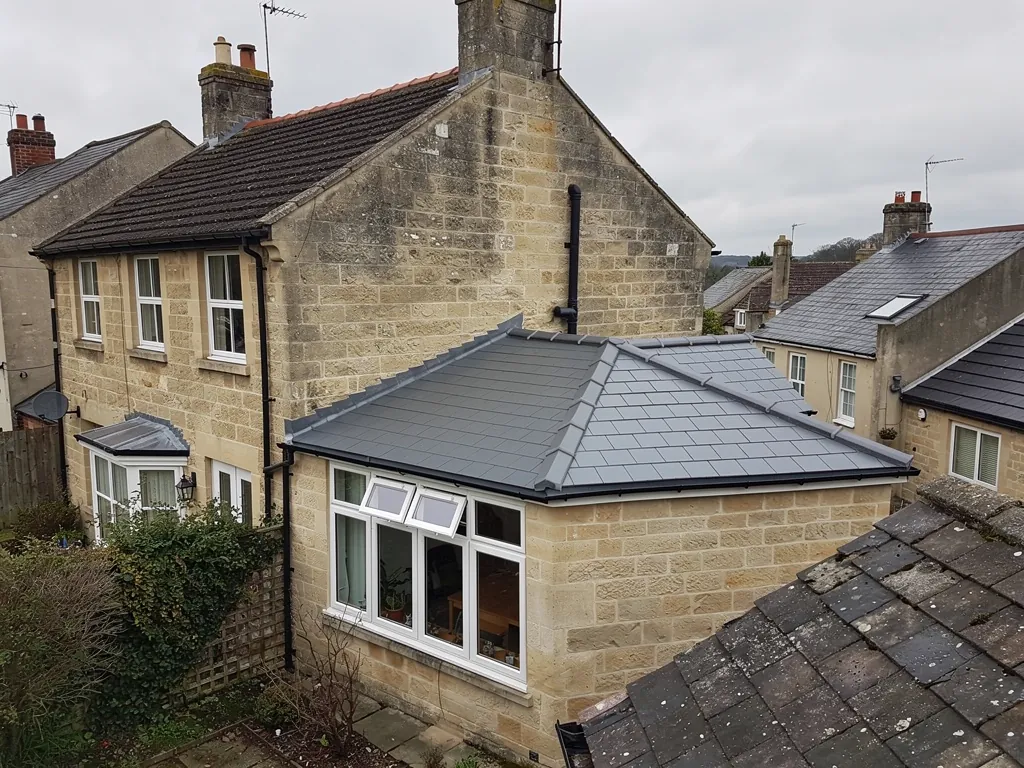
Many conservatories can take a solid tiled or lightweight warm roof, provided the frame and base are checked first and Building Regulations approval is obtained.
Our guide to glass, polycarbonate and solid conservatory roofs compares the three. If you are unsure whether to keep what you have, the answer on repairing or replacing a conservatory roof sets out the tests we apply.