The short answer
A roofer is normally responsible for a leak that comes from their own workmanship, such as a badly dressed flashing, a slipped tile they fixed or a poorly sealed joint. They are less likely to be responsible for a leak from a part they never touched, or from storm damage after the job. Report it in writing quickly, with photographs, and ask them to inspect before anyone else disturbs the roof.
When the leak is the roofer's problem
The question to ask is where the water is coming in and whether that spot was part of the job. A roofer who replaced a section of slating and then leaves a wet patch directly beneath it has an obvious case to answer. So does one who renewed the lead around a chimney and finds the stain on the chimney breast the next time it rains.
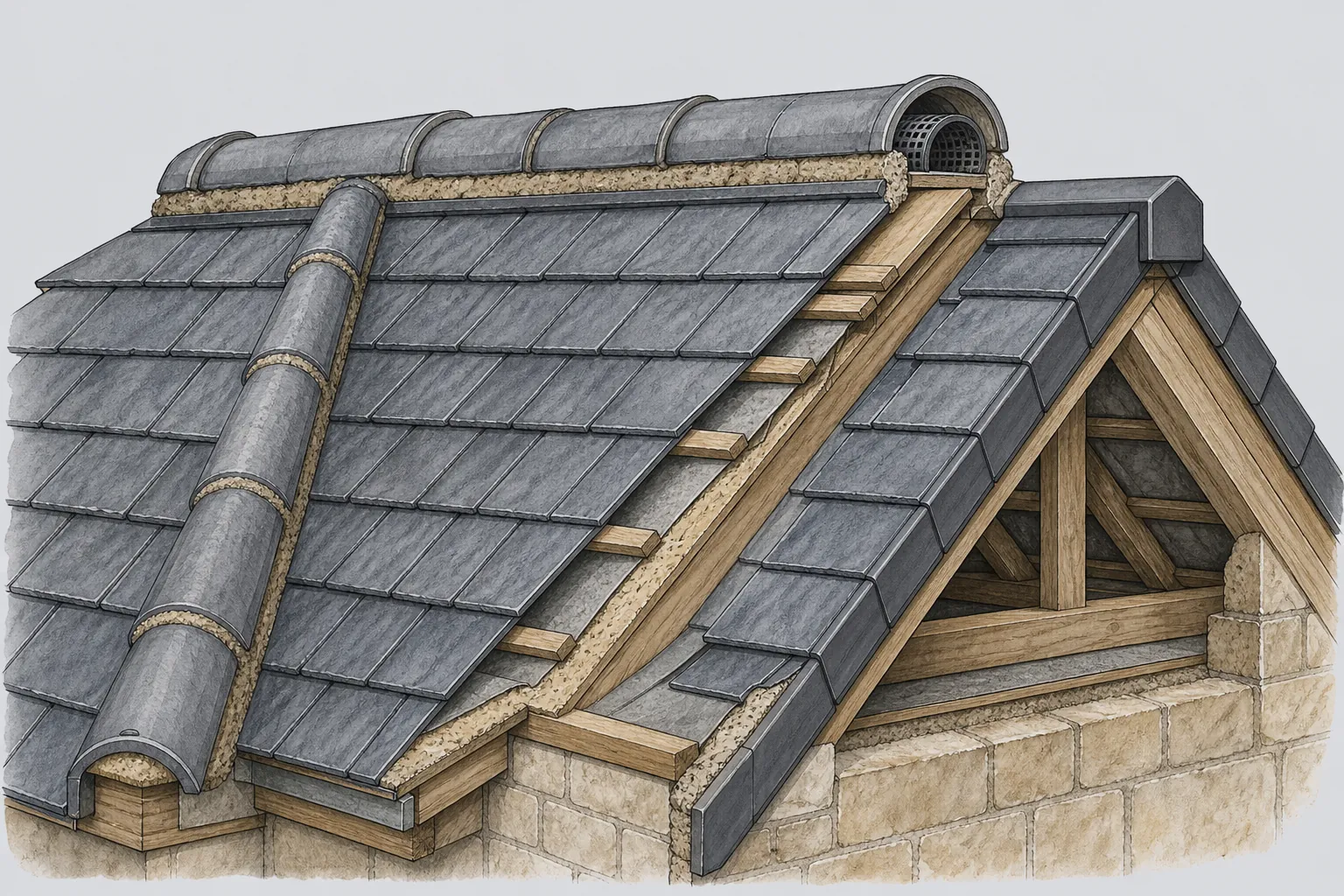
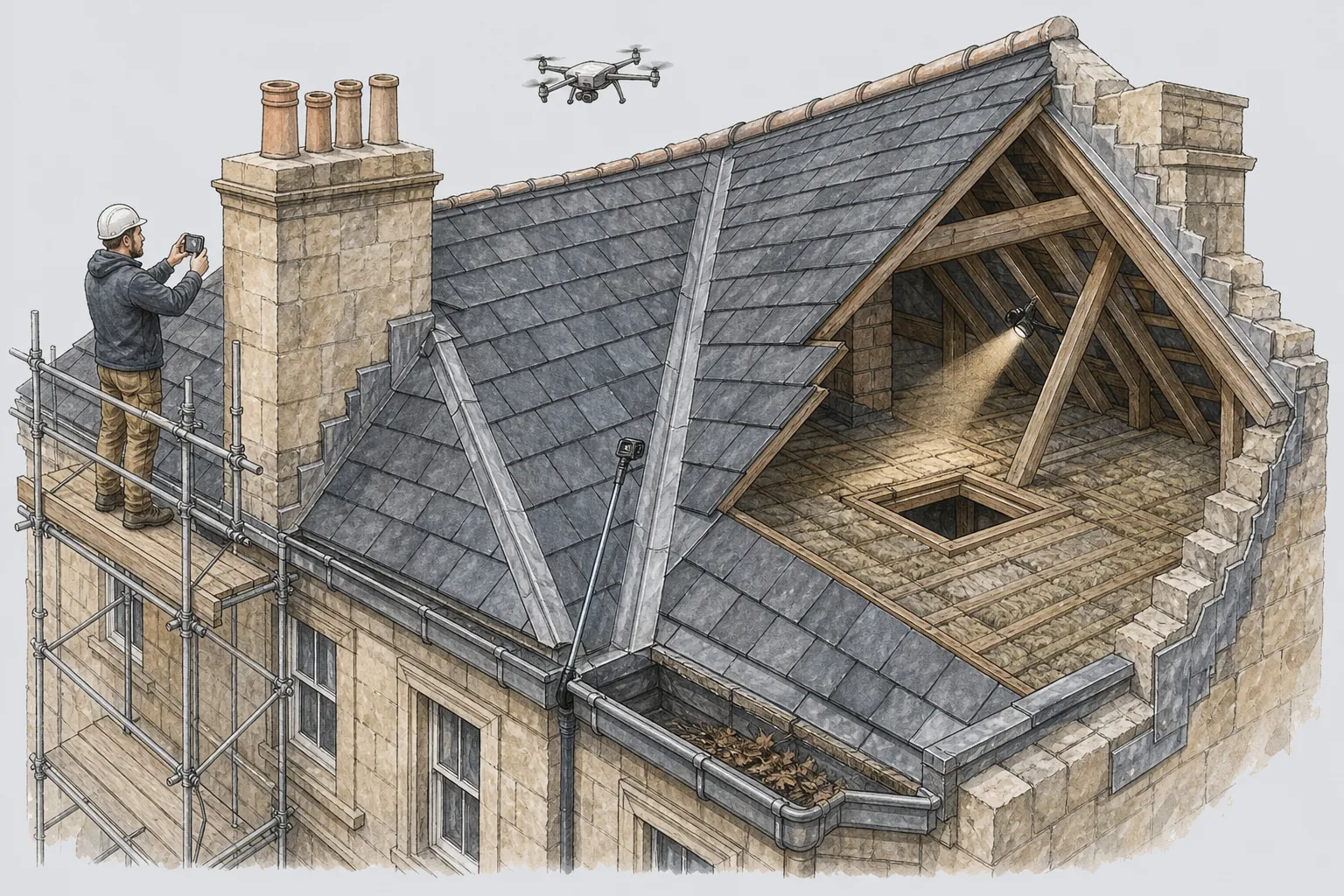
Workmanship faults tend to show up in a few places. Flashings are the first: a flashing is the sheet metal worked into the masonry to shed water at the abutment, and if it is not tucked into the masonry properly, or the joint is left unsealed, water follows the gap. Valleys come next, where two slopes meet and send water down the same channel, and any weakness in the lead lining there will leak quickly. Third are fixings: slates nailed too high, tiles not clipped where the exposure calls for it, or ridge tiles bedded in mortar with no mechanical fixing behind them.
If the problem sits in those places and the work is recent, it is reasonable to expect the roofer to come back, find the cause and correct it at their own cost. A decent firm would rather do that than have a poor result on its record.
When it might not be
Not every leak after a repair is the repairer's fault. Roofs are made of many parts, and fixing one often reveals the next weakness along. A roofer who replaced a handful of broken tiles may not have been asked to look at the lead in the valley three metres away, and if that is what has failed, the new leak is a separate fault.
Other causes sit outside the original job:
- Storm damage after the work. A gust that lifts tiles weeks later is a new event, not a fault in the repair.
- Blocked gutters or outlets. Water backing up under the eaves can look like a roof leak when the roof itself is sound.
- Condensation. Dampness inside the roof space can be moisture from inside the house, not water from outside. This is common in lofts where ventilation has been blocked or the insulation has been changed.
- Damage by somebody else. A satellite installer, a chimney sweep or a loft conversion crew can disturb tiles and flashings.
None of that lets a roofer off the hook for a fault in their own work, but it explains why the first step is investigation, not an argument. A proper inspection should settle where the water enters. The way a roof is covered while it is open also matters here, and rain during roof work is covered on its own page.
What a workmanship guarantee does and does not cover
A written workmanship guarantee is the clearest route to getting a leak fixed. It is a promise by the roofer that the work they carried out will be free from faults in the fitting for a stated period. If the guarantee is for ten years, a leak caused by poor fitting in year three should be dealt with under it.
It does not usually cover the things that wear out through age or weather. Slates and tiles themselves, for example, are covered by what the manufacturer says, which is a separate matter. Nor does it normally extend to damage from storms, third parties or lack of basic upkeep, such as gutters left to clog for years. Read the wording before you sign, and keep a copy somewhere safe. Our page on what a roofing workmanship guarantee covers goes through the usual terms.
If no guarantee was issued at all, you are in a weaker position, though not an empty one. The quote and any messages describing the work still show what was agreed, and a roofer is generally expected to carry out work with reasonable skill and care. For a view on your own rights, Citizens Advice is a sensible place to start, because we cannot give you legal advice.
How to raise it, step by step
The way you report a leak affects how quickly it gets resolved. Write to the roofer, by email or text so there is a record, and keep it factual. Say when the work was done, when you first noticed water, where it appears and what the weather was doing.
- Take photographs of the stain, the drip and the surrounding ceiling or wall, with the date visible. Video in heavy rain can help.
- Place a bowl or towels to limit damage, and move belongings clear. This is ordinary prudence, not an admission of anything.
- Contact the roofer promptly and ask for an inspection date. Keep the message short and polite.
- Do not let a different roofer take things apart before your original firm has had a chance to look, unless water is coming in so badly that it must be stopped at once. If you have to, photograph everything first.
- If nobody replies, send a second message setting a reasonable deadline, and keep copies of all of it.
A temporary make-safe, such as a membrane or tarpaulin, is a different matter from a full repair. Stopping water entering the house is reasonable even while the question of responsibility is still open, and a record of what was done and why will help later.
Reducing the chance of a dispute
Most leak arguments begin with a vague quote. If the paperwork says only "repair roof", nobody can tell afterwards what was covered. A quote that names the areas, the materials and the lead work, and that states the guarantee terms, leaves little room for disagreement. Our list of items a written roofing quote must state shows what to look for.
Choosing the right kind of firm also helps. Detail work around chimneys, parapets and valleys is where leaks start, and it is skilled work. The page on hiring a specialist instead of a builder explains why. Before you hire anyone, run through the steps for vetting a roofer.
Finally, pay attention to the end of the job. Ask for a walk-round or photographs of the finished work, check the loft after the first heavy rain, and keep a note of the date. A small drip noticed in week one is far easier to resolve than a ceiling stain found in the spring. We repair where repair works, put right the part that failed, and describe what we found in ordinary language. The home page sets out how we work, or look at the roof types you find in Bath to see why older roofs often need more care at the joints.