The short answer
Roofers usually pause work that needs dry materials or a safe, dry footing, such as lead welding, felt bonding, mortar and pointing, and they stop altogether in heavy rain or high wind. Slating and tiling can sometimes continue in light rain. Whatever stage the job is at, an opened roof is covered with a temporary sheet or finished off watertight before anyone leaves site.
Why rain changes what a roofer can do
Rain brings two separate problems: whether anyone can stand safely on the slope, and whether the materials will lay properly. A wet slope is slippery, particularly on slate and on any roof with moss or lichen. Scaffold boards and ladder rungs become treacherous, and the footing that was fine at nine in the morning may not be at ten. Wind that comes with rain makes it worse, because sheets, slates and lengths of lead behave like sails.
The second problem is the materials. Several roofing products need a dry, clean surface to bond or set. Mortar and sealants do not cure properly if they are soaked. Adhesives and bitumen products can fail if applied over moisture. Timber that is fitted wet may later shrink and open up gaps. A good roofer will not trade the quality of the work for a day's progress, and will wait when the conditions call for it.
That is why a sensible programme for any roofing job allows for weather. A date given on a quote is a plan, not a promise, and you should expect the roofer to tell you when rain has pushed things back and what has been done to protect the house in the meantime.
Work that can carry on, and work that waits
Not everything stops at the first drop. The main factor is whether the job needs a dry surface and whether the roof is safe to stand on.
Often possible in light rain
- Stripping old slates or tiles, where the roof is being taken off anyway and the underlay or a temporary sheet is kept ready to go over it.
- Fixing new battens and underlay, provided the timber and membrane are not left exposed for longer than they should be.
- Laying slates or tiles, on a roof with safe access and a dry fixing surface, in light and steady rain with little wind.
Usually paused in wet weather
- Lead dressing and lead welding, where damp metal and flaring conditions are a poor mix. Lead is also slippery and heavy to handle in wind.
- Bedding ridge tiles or pointing in mortar. Mortar washes out and weakens if soaked early in its set, and fixings should be mechanical in any case.
- Single-ply membranes, felt, adhesives and sealants on flat roofs, which need a dry deck.
- Working on very steep, mansard or parapet areas where there is no safe level footing.
Where there is any doubt, the roofer's call on site is final. Heavy rain, thunder or gusty wind will stop a job altogether, and the workers come down.
How an open roof is protected
The riskiest moment in a re-roof is the gap between stripping the old covering and finishing the new one. A good roofer opens only as much as can be made weatherproof by the end of the same day, and checks the forecast before stripping.
Several things keep the house dry:
- Underlay. Underlay is the membrane laid across the rafters beneath the battens. Once it is down it sheds a shower while the slates or tiles wait, though it is no long-term substitute for them.
- Temporary sheeting. Heavy-duty tarpaulins or sheets are fixed over the open area and battened down so that wind cannot get under them.
- Sectional working. A slope is stripped and re-covered in stages, or a repair is finished off before the work stops for the day.
- Loft checks. Before leaving, the roofer looks for any gap that rain could reach, especially at the edges of the opened area and around chimneys.
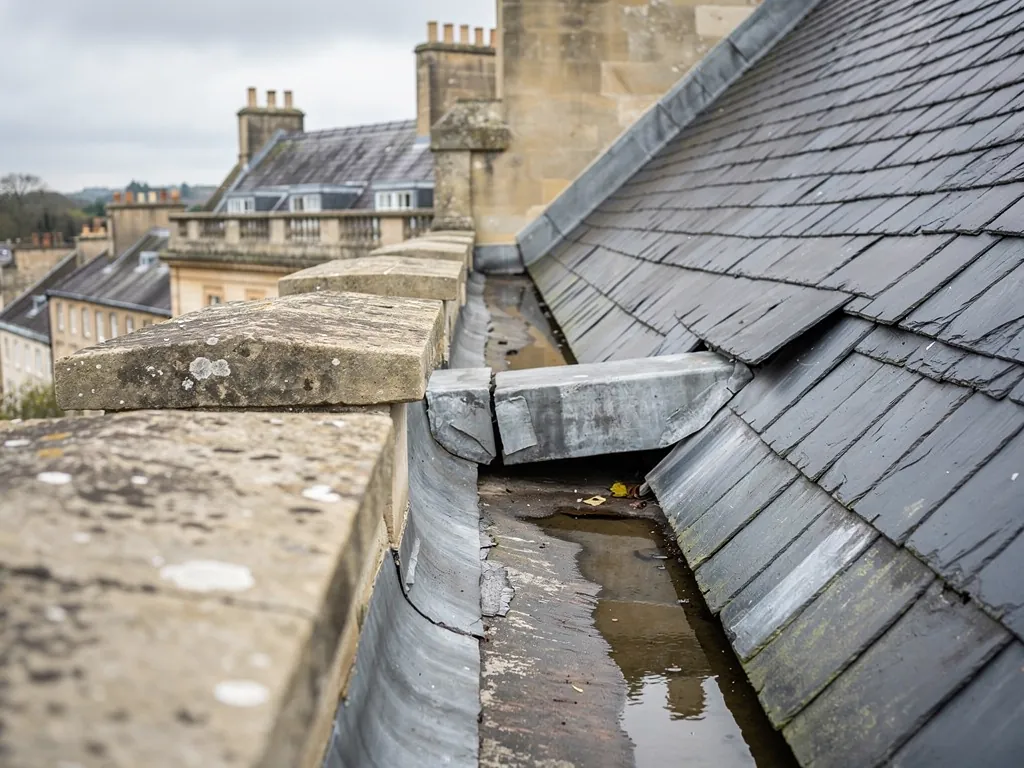
On a parapet or box gutter, where the lead lining is being replaced, the system is more delicate because the gutter itself carries water away. A box gutter is the lead-lined trough tucked behind a parapet or between two slopes. While its lining is out, the trough needs temporary cover and somewhere for the water to go. If that channel is mishandled, the water can end up in the room below. If you have a leak after work, our page on whether a roofer is responsible for leaks covers what to do.
What to expect if the weather turns during your job
Delays are a normal part of roofing, and it helps to know what a good response looks like. You should hear from the roofer, ideally the day before if the forecast looks bad, and again if work is called off. You should also be told how the roof has been protected while it waits.
On the day itself, the crew will usually do what they can that is safe and then finish for the day with the roof covered. They should not leave an area open overnight if rain is forecast. If a job is moved, ask for a new date rather than an open-ended wait, and for confirmation that the temporary cover is secure.
A delay is not a reason for extra cost in itself. Scaffold may stay up longer than planned, and some firms mention this in the quote, so ask before you sign how weather delays are handled. Our guide to roofing costs explained sets out what normally moves a price.
It also pays to be sensible about the time of year. Autumn and winter bring more wet days, and a large re-roof planned then may take longer. A repair that is urgent should not wait, though. Where a leak is active it is made safe straight away, and a fuller programme follows once conditions allow.
What you can do at home when rain is coming
You do not have to wait helplessly. If you are expecting rain and work is under way, check that the temporary sheeting looks secure from the ground, without climbing anything. Move furniture and belongings away from rooms under the affected slope, and put a bowl or bucket beneath any known weak spot.
If water does enter, photograph it with the time and date, and tell the roofer at once. A prompt message gives them the chance to come and fix the cause before more rain falls. Stay off the roof yourself. Wet slopes are dangerous, and a fall is far worse than a stain on a ceiling.
It is worth asking, when you choose the roofer, how they handle weather. A specialist who works on roofs every day will answer easily, as our answer on whether to pick a roofer or a general builder explains. Specialists tend to have the sheeting, the planning habits and the judgement to keep a roof dry. Roofs in older and listed buildings, with their lead gutters and stone parapets, need that extra care. You can read about our approach on the home page, and our survey gives you a clear picture of the roof before any work begins.