The short answer
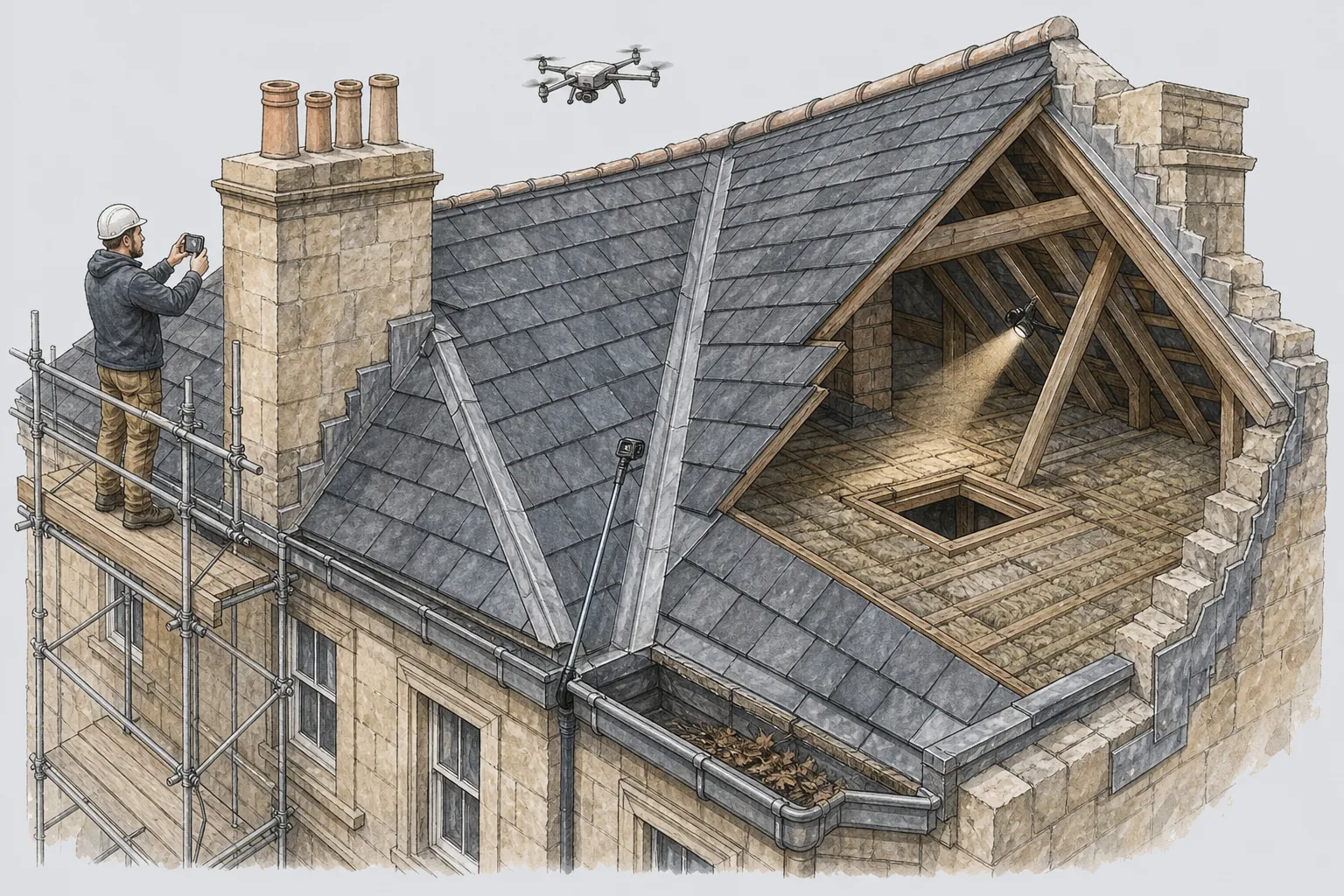
The first day usually begins with scaffold and protection rather than slates coming off. Expect a crew arriving early, materials delivered, boards and sheets laid to protect paths and planting, access to the roof made safe, and the first stripping or repairs started if time allows. There will be noise, some dust and a tidy-up each evening.
Before anyone climbs a ladder
Much of what makes a roofing job go smoothly happens before the first tile moves. By the start date you should hold a fixed written price from the survey, the scope agreed and any permissions sorted. If consent or a scaffold licence is needed, it should already be in place, because work cannot lawfully start without it. For what applies locally, see the regulations that govern Bath roofs.
On the morning, the crew will introduce themselves, walk the site with you and confirm the plan: which slopes are being done, where the skip will stand, which door or gate they will use and where they can park. This is the moment to mention anything the survey did not capture, such as a child's room under the work, a cat that needs shutting in, a neighbour with a baby, or a shift worker who sleeps by day.
Tell the crew about hazards too. Gas, water and electric services near the walls, a fragile conservatory roof, a satellite cable or an alarm sensor are all easier to protect when they are pointed out first.
Scaffold, access and protecting your property
On most pitched roof jobs the first practical task is scaffold, because it gives a safe working platform and a route for materials. A tower or a full scaffold goes up around the working elevations, with boards at the eaves to catch what falls. If it stands on the street, the licence question comes first, as covered in our page on scaffold licences.
Protection comes next. Expect dust sheets or boards over paths, patios and flower beds under the work, covers over garden furniture and cars moved if they stand within reach. Loft contents deserve the same care. Move anything valuable out of the roof space beforehand, and cover what has to stay, as stripping a roof can drop dust and debris through gaps in the ceiling.
A temporary covering is also part of the plan. Roofers strip only as much as they can make watertight by the end of the working day, using sheeting or felt where needed. If the weather turns, the crew should stop and make the open section safe, even if that costs time. Weather, not the clock, decides how a roof job runs.
Noise, dust, parking and neighbours
Roofing is loud. Stripping slate or tile means hammering, scraping and the rattle of material down a chute into a skip. Nail guns, power tools and shouted instructions add to it. The loudest stage is usually the strip, and the quieter work of battening and laying comes later.
Dust is mostly confined to the loft and the ceiling line, but old roofs hold years of settled grime, pigeon mess and insulation that comes down as the covering lifts. Keep windows on the working side shut and close loft hatches. If you have asthma or a sensitive chest, consider being elsewhere on the loudest days.
Parking needs thought. Deliveries arrive by lorry, a skip needs a space, and the crew's vans must go somewhere. In Bath, with narrow streets and resident bays, that can need a conversation with the council, a suspended bay or a neighbour's agreement. Tell the immediate neighbours about the work in advance. A short note with dates is a courtesy that usually pays off, and for shared walls the rules are explained in our Party Wall Act answer.
What gets done, and what gets cleared away
What actually happens to the roof on the first day depends on the job. A repair may be started and finished within it. A re-roof usually starts with stripping the first slope, sorting sound slates for reuse where the covering is being kept, and exposing the battens, underlay and any timber that needs replacing. Lead work, such as valleys or parapet gutters, normally comes after the covering, as it needs the roof prepared first.
When the crew leaves each evening, the site should be tidy and safe. Loose material is cleared from the ground, the skip is netted or covered if it stands on the street, the scaffold is secured and any open section of roof is made watertight. At handover the site is left clear and the waste goes with us.
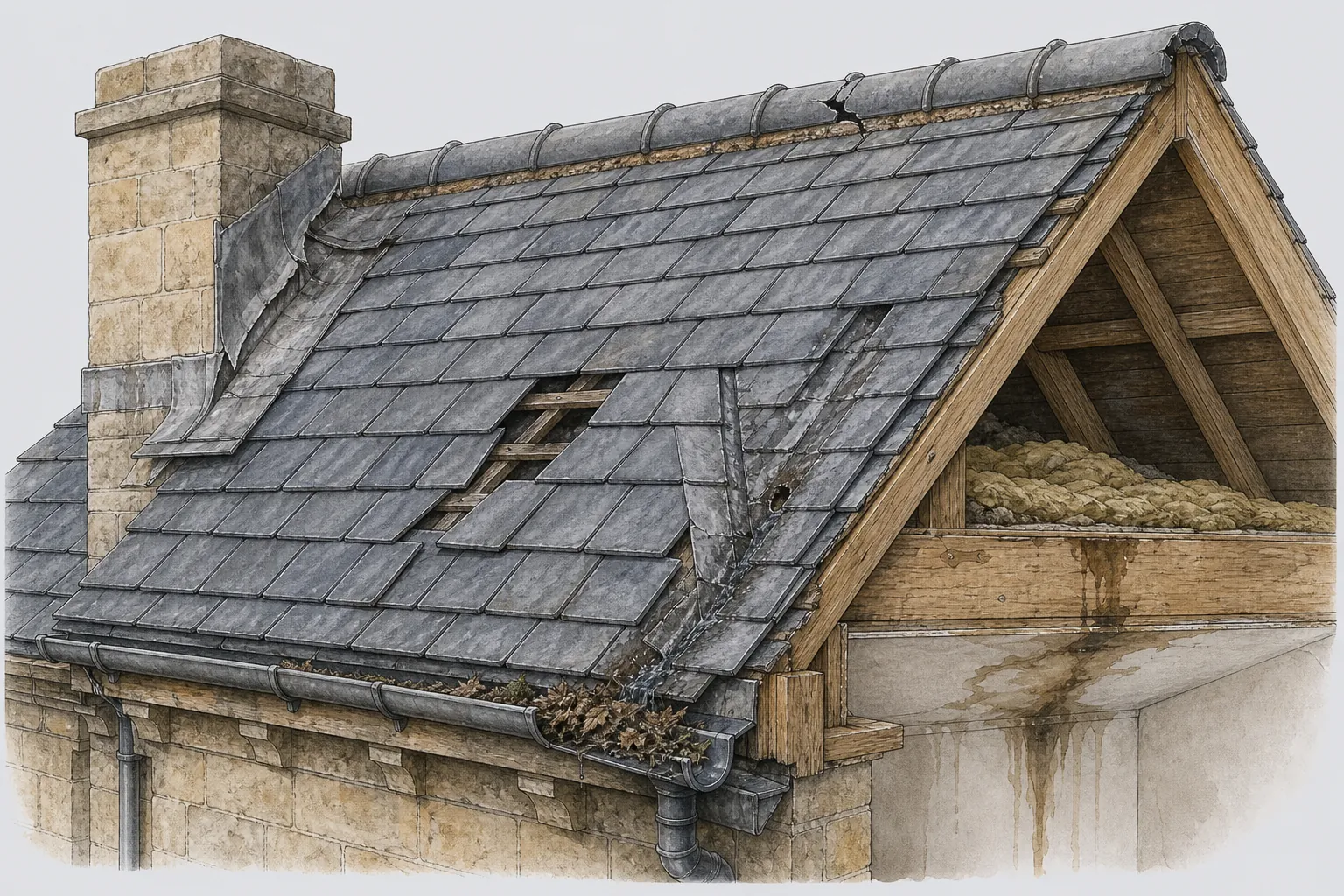
Expect the crew to check in before they leave. If an unforeseen problem has appeared, such as rotten battens, a hidden gutter failure or a nest, they should tell you the same day, explain what it means for the plan and agree any change before it is priced into the job. Protected species can affect a roof job, which is why bats in the roof is worth reading if your house has a history of them.
Making the first day easier for everyone
A little preparation on your side makes a visible difference.
- Clear access. Move cars, bins, bikes and pots away from the working elevations and from the route to the skip.
- Empty the loft edges. Take out boxes, luggage and stored items near the eaves and the hatch.
- Plan the day. Think about pets, children, deliveries and anyone working from home.
- Agree a contact. Know who is in charge on site and how to reach them by phone or WhatsApp.
- Keep a note. Photograph any existing damage to the garden or ceilings before work starts.
Be wary of anyone who turns up unannounced and asks to start straight away; our answer on doorstep roofers explains why. For anything to do with booking a survey, begin at the home page or call 01225 285181.