The short answer
If bats are found in your roof, the work stops and a bat specialist is brought in before anything further is disturbed, because a bat roost has full legal protection. Nesting birds are protected while a nest is in use or being built, so work waits until the young have gone. A survey is needed when a roof shows signs of use, and the timing of the job then follows the animals' calendar.
Why a roof is a home for wildlife
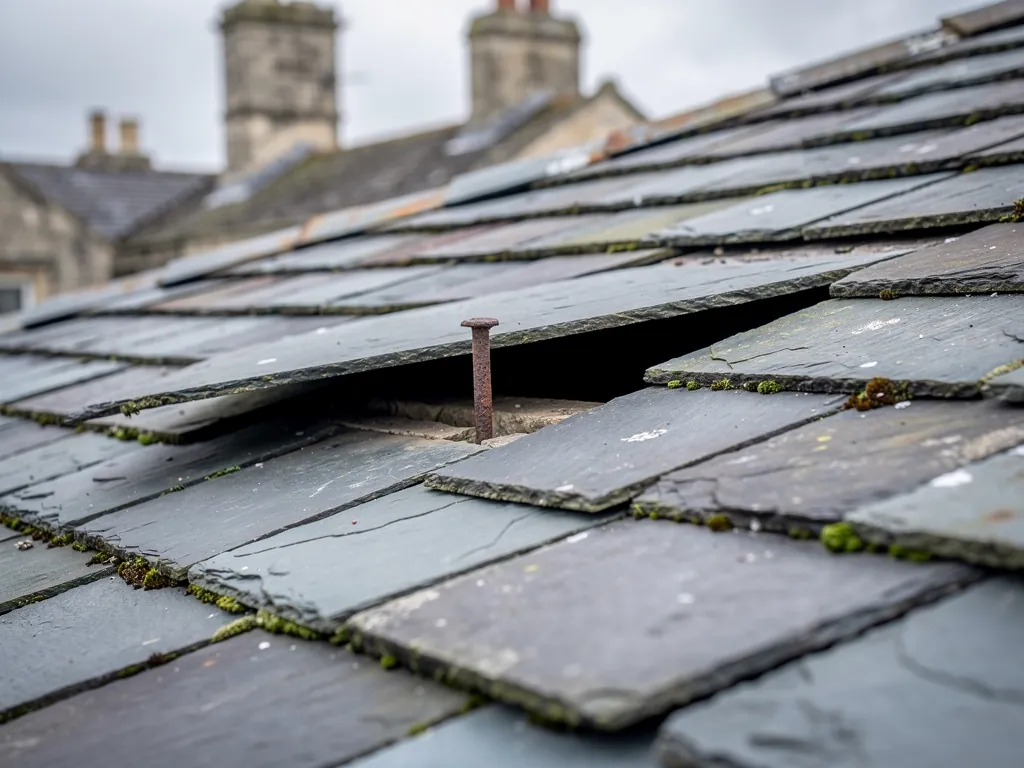
A roof is warm, dry and quiet, which is exactly what bats and birds look for. Bats slip through gaps beneath ridge tiles, behind lead flashings, under slipped slates and into the hollow between a tile and the underlay. Swifts, starlings, sparrows and house martins use eaves, soffit boxes and the corners of gables. None of this means the roof is in poor condition. Many well kept roofs, and plenty of old stone houses in and around Bath, offer plenty of small cavities.
The law treats these animals as occupants with rights. GOV.UK states that every bat species is fully protected by law, together with its breeding sites and resting places. That wording covers the roost itself, including a roost that bats are not using at the moment you look. Wild birds get a different kind of protection: it is an offence to intentionally take, damage or destroy the nest of any wild bird while that nest is in use or being built.
For a homeowner the practical meaning is simple. You cannot treat a loft or roof slope as an empty space just because nobody has seen anything. Where there is a reasonable chance of either, the job has to be planned around the possibility.
Signs to look for before the work starts
Roofers check for the evidence before lifting a single tile, and the survey photographs often show it. The signs differ between bats and birds.
- Droppings. Bat droppings are small, dark and crumble to a powder of insect fragments. They collect under roost entrances, on window sills below the eaves and on loft insulation.
- Staining. Oily marks around a gap at the ridge or beneath a hanging tile can be caused by bats entering and leaving repeatedly.
- Nest material. Straw, feathers and twigs pushed into the eaves or the end of a ridge tile show birds in residence.
- Noise at dusk or in the early morning. Scratching and chirping in the roof space, or small shapes leaving at dusk in warm months, are worth reporting to your roofer.
- Old roosting places. Large lofts with undisturbed timber, stone cottages and houses near trees, water or open land are more likely to hold bats, though that is a trend and not a rule.
Tell your roofer about anything you have noticed, even if you are unsure what it was. It costs nothing and it can change how the job is planned.
When a bat survey is needed
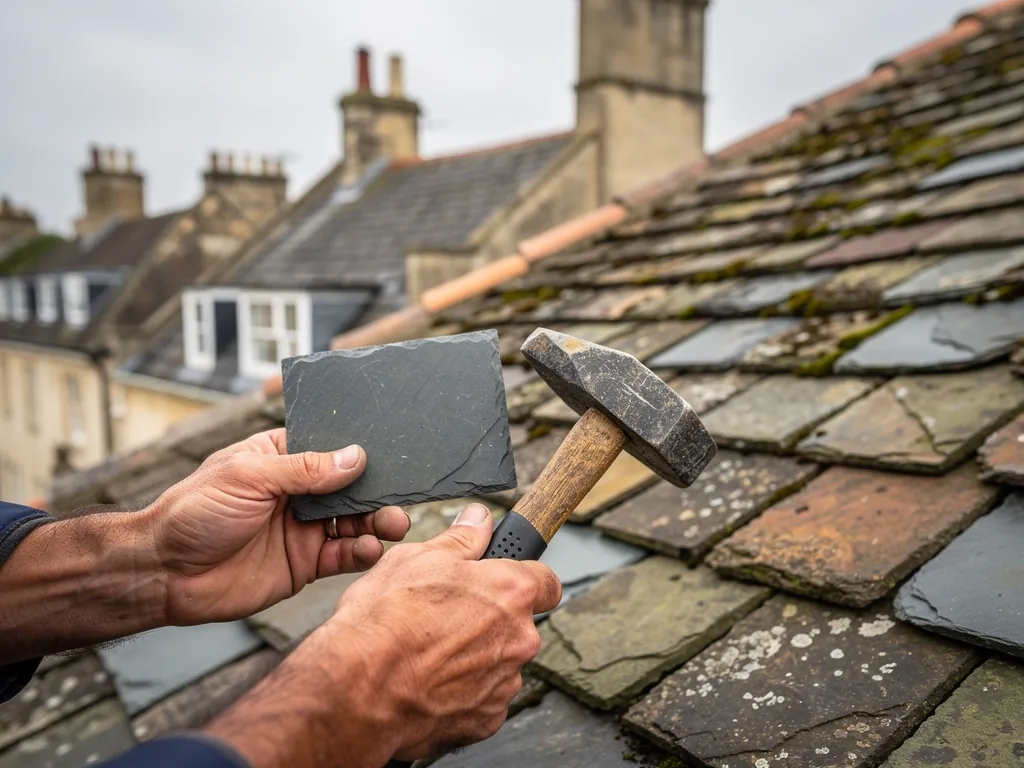
You do not need a survey for every roof. You need one when there is a real possibility that the work will disturb a roost or block or damage a roost entrance. A re-roof, a ridge rebuild, a new dormer or the removal of old slate or tile are the usual triggers, because each opens up the very cavities bats use.
The survey is carried out by a suitably experienced ecologist, and GOV.UK points owners to the CIEEM professional directory to find one. The surveyor inspects the outside and inside of the building, looks for signs, and may return in the active season to watch for bats leaving at dusk. Active-season checks are one reason bat surveys can affect the date of a roofing job. Nothing sensible can be done about that in advance, so ask early.
If the survey finds a roost, the ecologist advises what must happen next. Licences for work affecting bat roosts come from Natural England, and the application is usually made by the ecologist on the owner's behalf. The details of the licence, including permitted dates and any replacement roosting provision such as a bat tile or box, then become part of the plan for the job. Our guide to what happens on day one of a roofing job shows where that sits in a normal programme.
What a roofer must do on finding bats or a nest
If bats are found part way through a job, the roofer stops work in that area and does not handle the animals. Damaging or destroying a roost is an offence, so stopping is the safe course as well as the courteous one. Everybody on the roof should leave the roost undisturbed, put back anything that was moved and call a bat specialist for advice. The National Bat Helpline, run by the Bat Conservation Trust for Natural England, can advise on small-scale works.
With nesting birds the rule is gentler but just as firm. A nest in use cannot be taken down or blocked. Roofers leave that part of the roof until the young have flown, work on other slopes in the meantime, and check again before closing the gap. Deliberately blocking an eaves gap or fixing bird guard over a nest in use is an offence, so check before any gap is closed.
Plan for the stop. A roof on which work has paused for bats is made weatherproof with temporary protection where that is possible without disturbing the roost. If a leak is the reason for the job, an ecologist can often agree a way to make the roof safe quickly while a longer plan is arranged. Leaks and storm damage take priority with us, and the aim is to stop water entering wherever the law allows it.
How the animal calendar changes roof timing
Because bats and birds follow the seasons, so does the programme for the roof. Birds nest through the warmer part of the year, which overlaps with the months many owners prefer for roofing. Bats use roosts for different purposes at different times: some for raising young in summer, others for winter hibernation. Only a survey can say which applies to your building.
For a house that is likely to have a roost, the surveyor will recommend when the work can happen with least harm and what must be kept in place. That can mean starting later than you wanted, or splitting the job so that one slope is done at a time. It rarely means the work cannot proceed at all. Most bat roofs are re-covered successfully, with roosting access preserved or replaced.
The same principle applies to birds. Where swifts or sparrows have used the eaves for years, ask the roofer to keep a gap open or fit a nest box in the finished roof. It is a small design choice that sits easily alongside a good detail.
Insurance, listed buildings and who tells whom
A bat roost is not a defect and it does not make the roof uninsurable. It does matter if your job relates to an insurance claim, because delay while the specialist advises should be explained to the insurer in writing. Our page on roof insurance claims explains what photographs and reports help.
If your house has a listing or sits in a conservation area, the bat or bird plan sits beside the consent process and does not replace it. Listed building consent in Bath is decided by B&NES Council, so check early with its planning team, since where planning permission is also needed, protected species are considered as part of that decision.
If you share the building, the people with a say in the roof may include the freeholder and the other owners. Our answer on who is responsible for a shared roof in a converted flat covers how that works. Natural England's guidance on bats, protection, surveys and licences sets out the licensing side in full.
The survey from Empire Roofing Bath carries no charge, and its photographs are of your own roof. A written fixed price comes afterwards. Should the visit turn up traces of bats or nesting birds, you hear about it at once, with an explanation of the effect on timing.