A roof that has lost tiles in a gale, or let water through a ceiling, puts two problems in front of you at once: stopping further damage and getting the cost back from your insurer. The two are linked, because what you do in the first day or two shapes how the claim is read. Insurers sort roof damage into sudden events they cover, such as storms, and gradual deterioration they commonly exclude, such as wear and tear. Which side your roof falls on is decided largely by evidence: what the damage looks like, when it happened, and what a qualified person who has been up there says caused it. This guide follows the claim in order. It covers the storm and wear-and-tear distinction, the photographs and notes worth gathering, what a roofer's report should contain, and how the cost of making the roof safe is usually handled. Policies differ, so your own wording always comes first.
Storm damage and wear and tear: where insurers draw the line
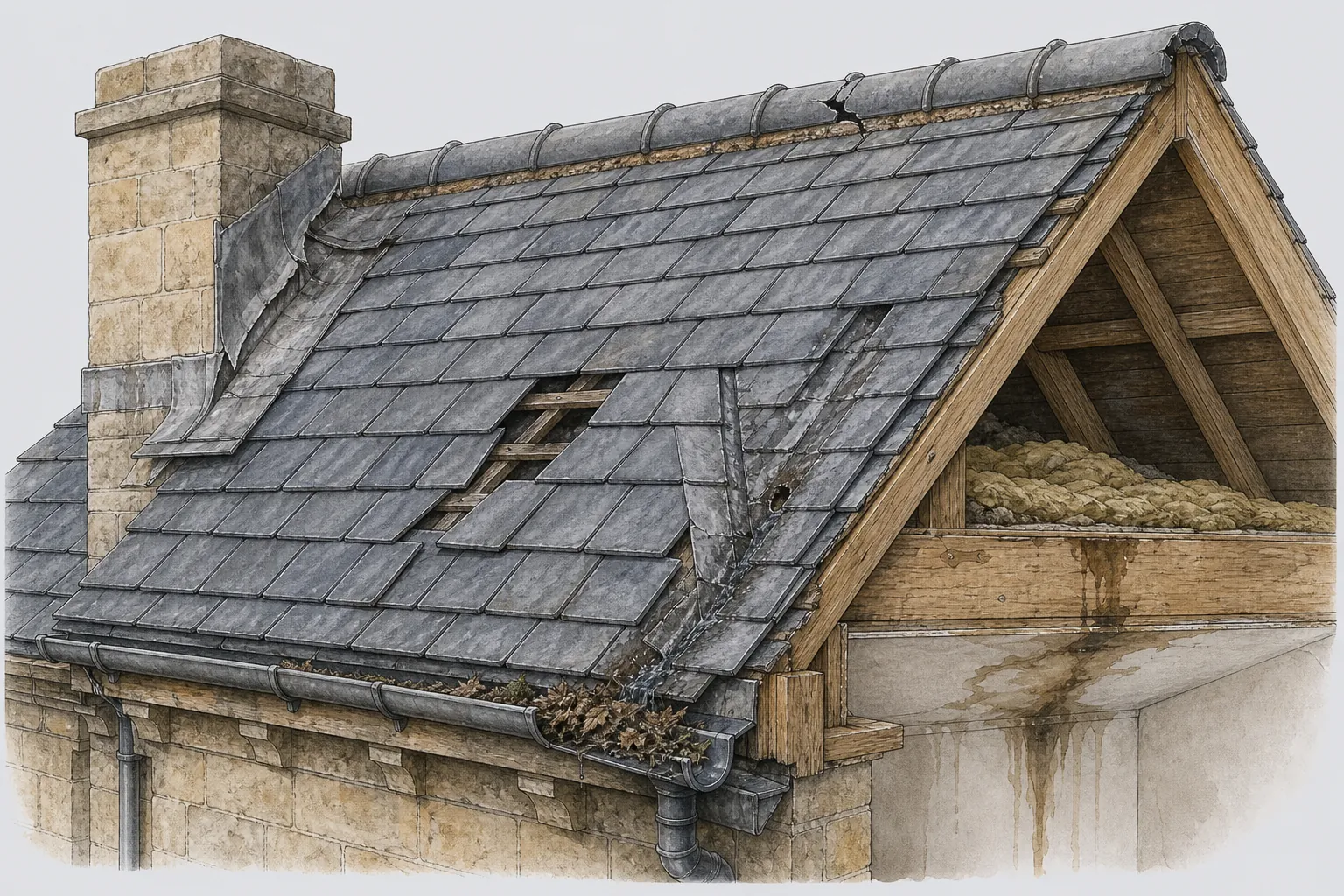
Most home insurance policies cover damage from named events, and storm is one of them. They then exclude damage that builds up slowly, usually under the heading of wear and tear, or gradual deterioration. Both can leave the same visible result, which is a wet ceiling and a gap in the roof covering, so the argument is almost always about cause.
Many insurers define a storm by wind speed. The Association of British Insurers definition, which many policies follow, includes gusts of at least 55mph. Standard policies may exclude general wear and tear, and give a poorly maintained roof letting water in as an example. Those points come from the Which? article on winter home insurance (November 2025), which also cites Financial Conduct Authority figures: 32% of 2024 storm claims ended in a payout. That figure is a reason to prepare a claim carefully, not a reason to expect one to fail.
Cause is rarely as tidy as a policy definition. A gale can pull slipped slates off a roof whose nails had been corroding for years. An insurer may say the nails were the real cause; you may say the wind was. A Financial Ombudsman Service case study shows how that kind of dispute can go: the ombudsman looked at local weather reports rather than relying on a wind-speed number, concluded that wind was the main reason the tiles came off, and noted that the wear-and-tear exclusion in that particular policy applied only to accidental damage. One case does not set a rule, but it shows that the weather on the day and the condition of the roof both count.
Read the section of your policy headed storm, the one on exclusions, and any condition about maintaining the property. It is the wording, not a general idea of what ought to be covered, that your claim will be tested against.
First steps once you find the damage
Safety comes before paperwork. Do not climb onto a damaged roof, and keep away from a ceiling that is bulging with water. If water is coming through, move belongings, set a bucket beneath the drip, and keep people out of a room with a sagging ceiling. Switch off lighting circuits that serve a wet ceiling if you can do so safely.
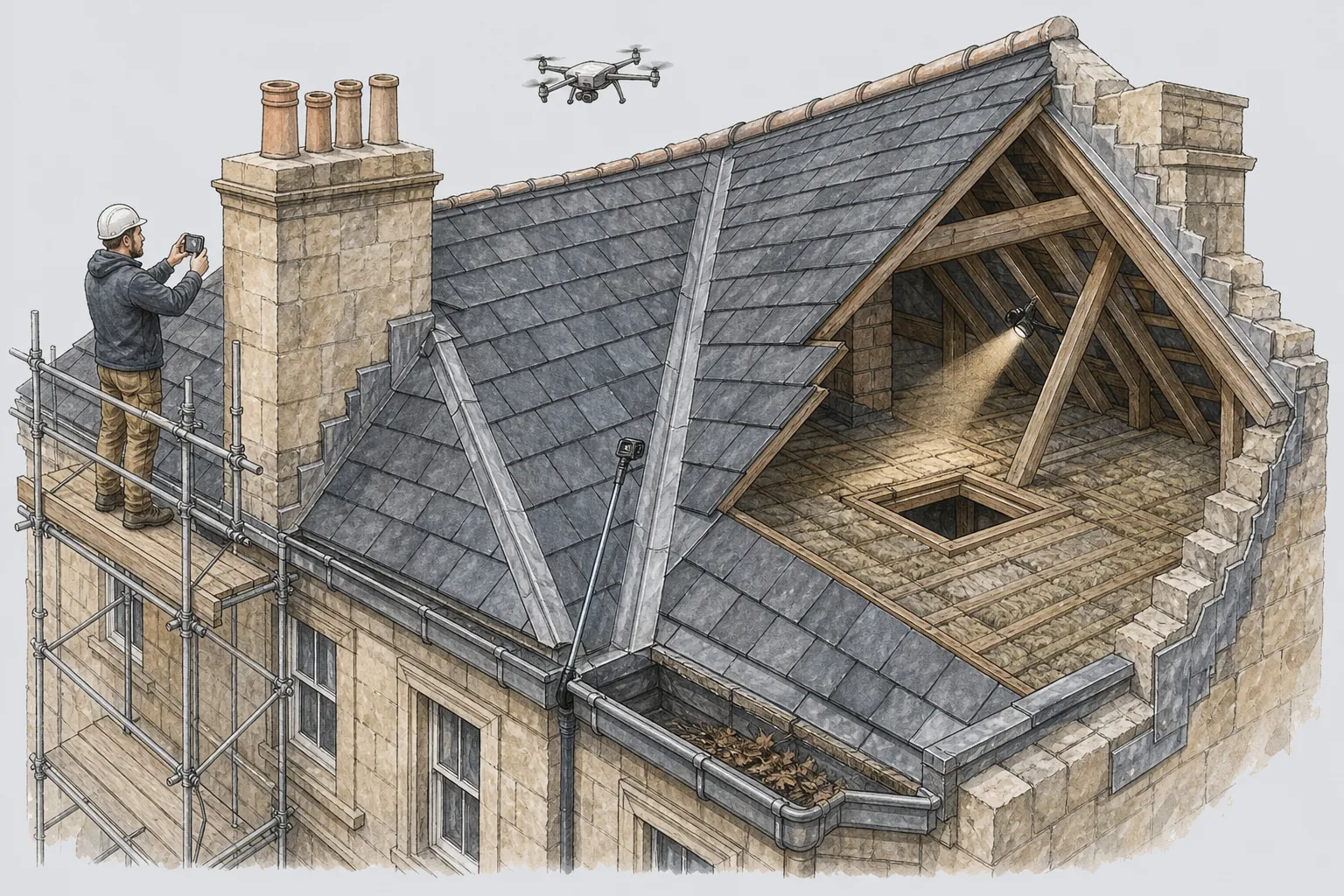
Then record the damage as visible from the garden and from indoors, before anything is moved or repaired. Insurers want to see the damage as it was. Take wide photographs of the house showing the slope in question, then close ones of any missing or broken tiles lying in the garden, a fallen chimney pot, or a bent ridge. Indoors, photograph the stain or drip with something in frame that shows scale, and note the date and time.
Contact your insurer early. Most have a claims line, and the first call usually records the date of loss, a description and a claim reference. Ask what they need from you, whether they want to inspect before repairs start, and whether they have an approved repairer, and write down the answers with the name of the person you spoke to. Telling them promptly matters because policies often include a condition to report a loss as soon as reasonably possible.
While you wait, the aim is to stop the damage growing, not to cure the cause. Moving furniture, mopping up and containing the leak are all sensible. Scrubbing away mould or throwing out wet plasterboard before it has been seen is not, because it removes the evidence of what water did and where it came in.
Make-safe work: what it is and how it is treated
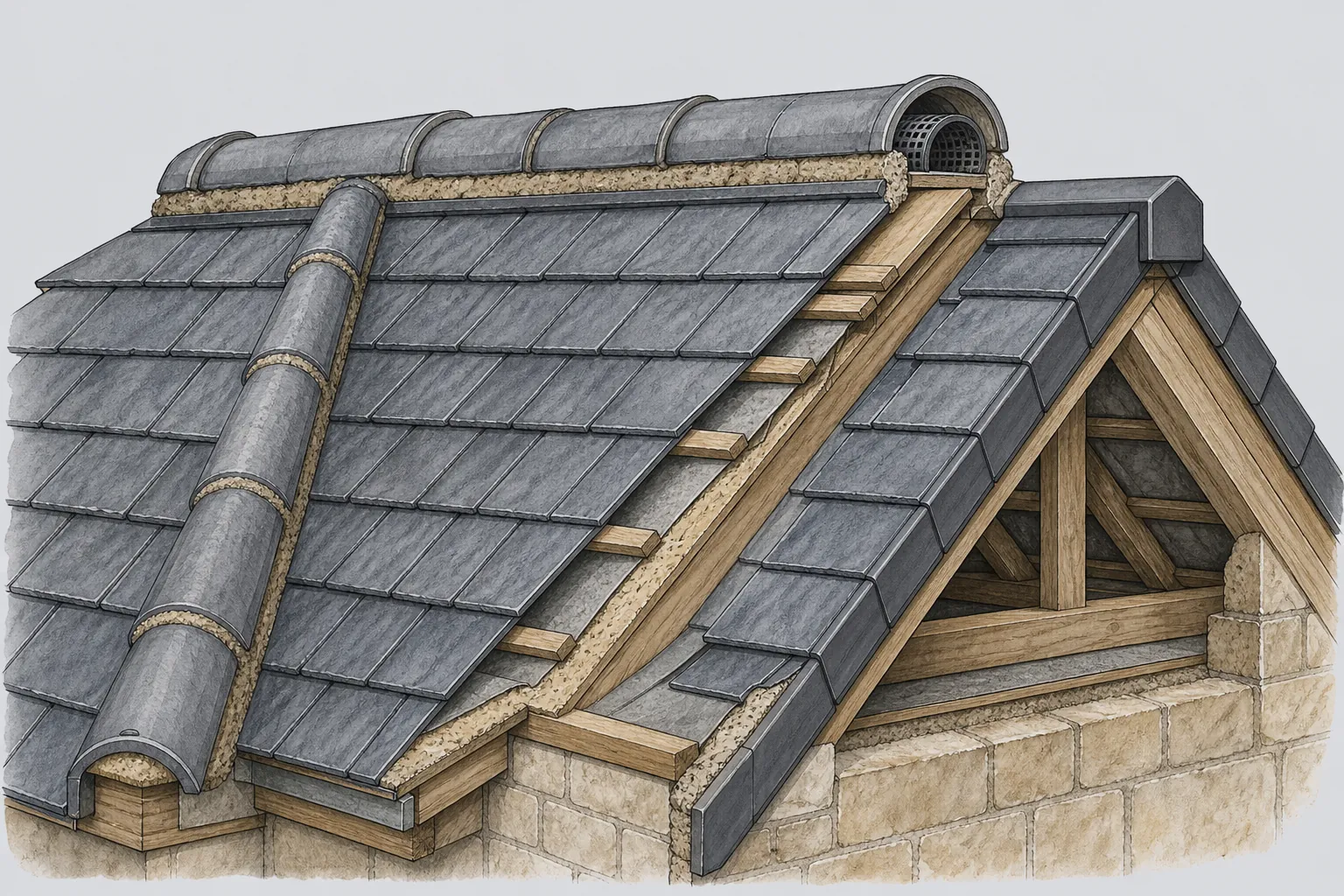
A make-safe is the minimum work needed to stop a roof getting worse and to remove danger. On a pitched roof that might mean covering an open area with a heavy-duty sheet fixed to battens (the cross timbers that carry the tiles), re-seating loose ridge tiles, taking down a leaning chimney pot, or clearing debris so a gutter does not overflow into the wall. On a flat roof it may be a temporary patch over a split in the membrane. It is deliberately not the permanent repair.
Policies usually expect you to take reasonable steps to prevent further loss, and many treat the reasonable cost of doing so as part of the claim. That is a general pattern, not a promise, so ask your insurer before you commit to a spend, and tell them what you plan to do. Keep the invoice, which should describe what was done and where, and take photographs before and after the work. With a leak, our order is to secure the roof first and write up the permanent repair as a separate item, so you can send each to your insurer as it stands.
On cost, MyBuilder's 2026 repair pricing gives a typical UK spread for storm-damage fixes of £500 to £1,500, while a minor leak or a handful of tiles sits lower at £100 to £300. Scaffold, if the damage is high on the building, is a separate item. These are national ranges for orientation. Any figure from us is fixed only after the survey.
Be careful with the order of work. If the insurer wants to inspect and you have already stripped and replaced the covering, they have nothing to look at. A make-safe, properly photographed, leaves most of the evidence in place and still protects the house. A permanent repair can usually wait until you have agreement on the scope.
The evidence that supports a roof claim
A claim stands or falls on how well it shows three things: that something happened, when it happened, and what caused it. Evidence builds up in layers, and the earlier layers are the ones you can only gather in the first few days.
Photographs and a simple log
Dated photographs of the damage, and of the same roof slope on earlier occasions if you have them, are the strongest ordinary evidence. Old estate agent pictures, a photograph from a family event in the garden, or an earlier survey can all show the roof was intact. Keep a short log of dates: when the weather arrived, when you first noticed the damage, when you phoned the insurer and who said what.
Weather on the day
If you are claiming for storm, the weather record matters. Note the date and the forecast warnings that applied to your area, and keep any local news or Met Office warnings that name it. As the ombudsman case above shows, local weather reports can carry weight where there is no measured gust at your own address.
Maintenance history
Because insurers test for wear and tear, evidence of care helps. Invoices for earlier repairs, gutter clearance or a past inspection show the roof was looked after. A history of repeated leaks in the same place cuts the other way, so be accurate about what you know.
Debris and damaged parts
Keep what has come down, such as broken tiles, a ridge section, or a cracked pot, until the insurer has said they do not need it. Photograph it where it fell.
What a roofer's report should say
An insurer's loss adjuster may visit, but a written report from a roofer who has been on the roof is often the most useful document a claimant can supply. It turns the photographs into a diagnosis. A good one is specific, and it separates what the roofer saw from what the roofer concluded.
Look for these parts. First, a short description of the roof: pitched or flat, the covering, its approximate age if that can be judged, and the access used. Second, photographs taken at the roof itself, labelled by slope and position. Third, the findings: which tiles or slates are missing, cracked or displaced, what condition the nails, battens and underlay are in where the covering has gone, and whether lead, flashings or a parapet gutter are involved. Fourth, a view on cause. If tiles have been lifted by wind, the report can say that the fixings were sound, that the break pattern is on the exposed slope, and that the displaced pieces were found downwind. If the cause is long-term, such as a perished underlay or corroded nails, the report should say so openly, because the insurer's own inspector may well find it.
The report should also set out the repair in scope: what is needed to restore the roof to its earlier state, and what is separate maintenance that would be needed anyway. Insurers generally settle the first and not the second, and a report that blurs them makes the claim harder to assess.
The report supports your claim; it does not decide it. The claim is yours to make and the insurer decides under the policy. A roofer supplies facts and a repair price, and our fixed price follows a free survey, with pictures taken on your own roof.
Quotes, excess and the repair itself
Once the insurer accepts the claim in principle, the question becomes who does the repair and at what price. Some insurers offer their own contractors, some ask for one or two quotes, and some will settle in cash against a quote you provide. Ask which applies before you instruct anyone, and ask whether you are free to choose your own roofer.
Your policy excess comes off the settlement, so it helps to know the figure early. If the repair is small, the excess may take most of the claim, and you can weigh whether making the claim is worth the effect on your record and renewal. That is a decision for you and your insurer, not something a roofer can advise on.
Where the house has natural slate, stone tiles or a lead-lined parapet gutter, ask that the quote describes matching materials. A modern concrete tile pushed into a gap on a stone-tiled Bath roof may not be what the policy intends by putting the property back as it was, and on a listed house B&NES Council can say whether consent is needed before the repair goes ahead. Mention that to the insurer early, along with any conservation area status, which applies to about half the city of Bath.
Compare the quote with the report, line by line. A quote that names the slope, the number of tiles, the ridge length and the lead flashing makes it easier for the insurer to agree. If the scope grows once the roof is open, which can happen when rotten battens are found, tell the insurer before the extra work is done and photograph what you find.
Our own route is a survey, then a written fixed price that itemises the work, so it can be read against the report.
If the claim is refused or cut back
A refusal is not always the end. Start by reading the reason in the decision letter, which should name the policy term relied on. If it says wear and tear, ask for the evidence behind that conclusion, such as the inspector's report and photographs. If you think the cause was weather, a roofer's written view and the weather record are what you set against it.
Ask for a review through the insurer's complaints procedure. It has to deal with a complaint within time limits and give you a final response. If you remain unhappy after that, or the time has passed, you can take the complaint to the Financial Ombudsman Service, which is free to use. The storm damage case study mentioned earlier shows the sort of evidence it weighs.
Do not leave the roof as it is while you argue. Water damage grows, and a policy duty to limit loss does not pause during a dispute. Keep the make-safe in place and keep the invoices. A permanent repair paid for yourself, with full photographs, still leaves you able to pursue the insurer for the cost afterwards.
Claims history can also come up when a house is sold. Our guide to what to check on the roof when buying a house explains what a buyer is likely to ask about past roof work, and the roofing regulations page for Bath covers consents. If you are weighing repairers, how many roofing quotes to get sets out a sensible number. The whole set of guides starts from our home page.