The short answer
Clay is usually the better tile if you want the longest life and a natural, weathering colour, while concrete wins on price and suits low pitches and modern houses. Typical UK lifespans are 40 to 60 years for clay and 30 to 50 for concrete, though sources disagree. Concrete is the heavier of the two, and on an older house in a conservation area, matching the existing tile counts for more than either figure.
Lifespan: what the sources say
Published lifespans vary, and they come from interested parties, so use them as a rough range and not a guarantee.
For clay plain tiles, MyBuilder's 2026 cost guide gives 40 to 60 years. The manufacturer Marley points to a 60 year BRE minimum life expectancy for clay, adding that real life could run well beyond it. The Building Conservation Directory goes further and calls the idea that clay lasts only up to 60 years an unreliable guide, because peg-tiled roofs survive for several hundred years.
For concrete interlocking tiles, MyBuilder gives 30 to 50 years, while Marley puts it at around 60 and says that is not a guarantee. A 2020 HomeBuilding article is gloomier, saying concrete tiles lose colour with age and may need replacing within 20 to 30 years.
Read across those and a pattern appears. Clay has the stronger record at the top end, and concrete the wider spread. The sources do agree that the real figure turns on exposure, how well the tiles were fixed and whether the battens and underlay beneath have held up. A well-fixed concrete roof can outlast a neglected clay one.
Weight and what it means for the roof
Concrete tiles are the heavier covering, and the difference is felt in the structure. A roof built for light clay plain tiles, or for slate, was sized with that load in mind. Putting concrete on it increases the weight the rafters, walls and foundations carry.
The rule that matters comes from Planning Portal guidance. A covering that is 15 per cent heavier or more than the one it replaces brings Building Regulations approval into play, together with a structural check. Our page on heavier roof tiles explains how that works in practice.
Going the other way is simpler on the structure, though a very light covering can be lifted by wind if it is not fixed to the right standard. In both directions, the sensible step is to find out the weight of both coverings per square metre from the manufacturer, and have the roof checked before choosing.
Look and character
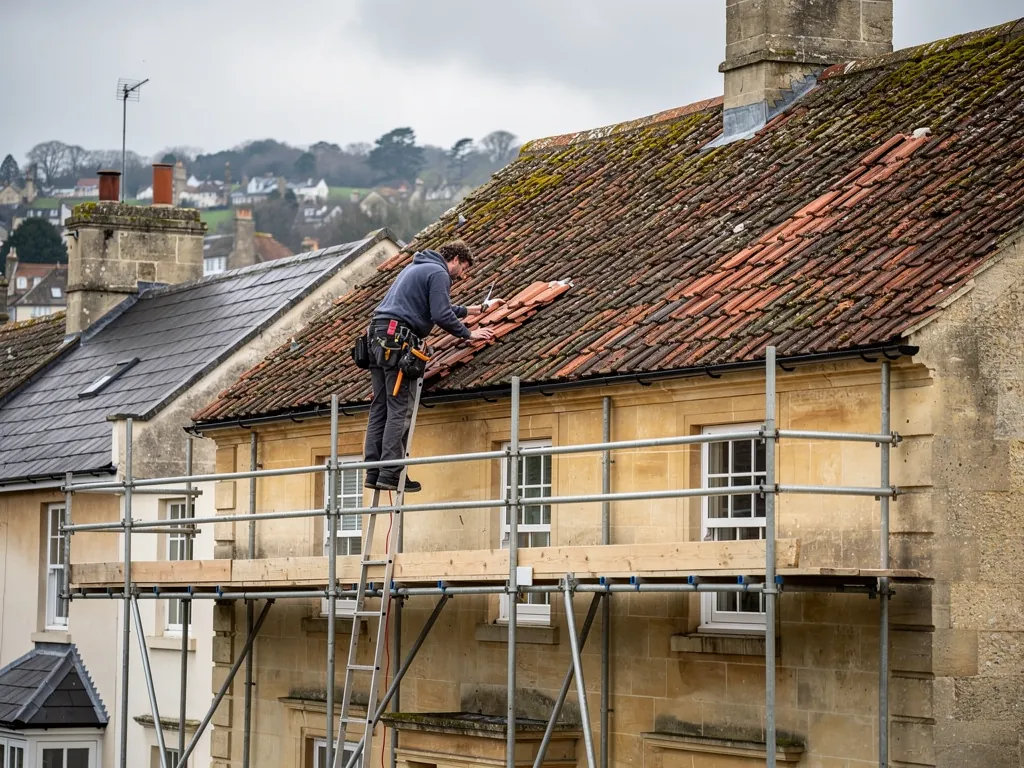
Clay is made from fired earth, and it shows. Colour runs through the body of the tile, so a chip does not expose a different material. It tends to weather with moss and lichen in a way that settles into the roof, and no two tiles are quite alike. Clay plain tiles, small and slightly cambered, give a house the textured, rippled roof many people associate with older English buildings. Clay pantiles, with their S-shaped profile, give a different look entirely.
Concrete tiles are made in moulds and coloured on the surface, so the finish is more uniform. Newer ones can look good from the street. Over time the surface colour can fade, which lets the grey of the concrete show through, and the edges stay sharp and regular where clay mellows.
Appearance matters most where the street sees the roof. In the village of Freshford, the council's own conservation appraisal calls concrete re-covering a marked loss to the older buildings. If your home is in a conservation area, or listed, the planning team will care about this, and listed building consent comes from B&NES Council. Ask before changing the type of covering.
Pitch, profile and fit
The minimum pitch a tile can be laid at is a practical limit, and the two materials differ. Manufacturer figures from Marley give 35 degrees as the minimum for its concrete plain tile, but its concrete interlocking ranges go much lower, from about 12.5 degrees up to 25 depending on the profile. Marley's clay plain tiles are listed from 30 to 40 degrees depending on the model. These are manufacturer figures, so check the exact tile and the exposure of your site.
That matters in practice. A low-pitched roof, such as a garage or lean-to, may only suit an interlocking tile, and some of those are concrete. A steep Georgian or Victorian roof can take plain tiles in clay quite readily.
Profile counts for fit as well. Switching from plain tiles to large interlocking ones changes the number of laps and the gauge, the distance between battens, so the roof is re-battened. The roofline also changes, and so does how the roof looks at the eaves and verge. This is the reason many repairs on older roofs stick with the same type of tile.
Cost, and where it shows up
Concrete is the cheaper tile to buy, and generally cheaper to lay, because the tiles are larger and cover more of the roof per hour of labour. Clay costs more, particularly handmade plain tiles, and is slower to fit.
We have no sourced per-tile price to give you, so we will not quote one. What the national guides do give is a typical range of £5,000 to £12,000 for a roof replacement, with roofing labour at £50 to £130 per square metre (MyBuilder, 2026), and the covering is one of several things that moves a quote. Scaffold, roof shape, access and the condition of the timber below all shift the total as well.
Across the whole life of a roof, the cheaper tile is not always the cheaper choice. If a clay roof lasts longer, the cost is spread over more years, though that relies on the underlay and battens lasting too. Our page on roof underlay lifespan shows why those layers often fail first.
Which one should you choose?
Match the roof you have. If your house has clay plain tiles and you need repairs or a re-lay, clay is the right answer, and reclaimed tiles often suit best for blending in. If you have concrete tiles on a modern house, concrete usually stays.
Choose clay when the house is older, the roof is visible, the budget allows and a long life is the priority. Choose concrete where cost leads, where the pitch is low or where the roof is rarely seen.
If the roof is a mansard or has a particular shape, ask what the covering needs to match. Our page on mansard roofs covers the roofs where that matters most.
Our survey is free, and you get pictures of the roof you actually own before any price is set. The main pitched roofing page gives the wider view.