The short answer
There is no single published price for re-felting alone, because the felt is a minor line on the bill. The work is stripping the tiles, fitting new underlay and battens and relaying the covering, so a re-felt sits close to a re-roof. MyBuilder's 2026 guide reports typical UK roof replacement at £5,000 to £12,000, with labour at £50 to £130 per square metre. A firm price needs a survey first.
What re-felting actually involves
People say re-felt when they mean replacing the underlay, the sheet that lies under the battens. You cannot reach it without taking the covering off. So a re-felt is really a partial rebuild of the roof's hidden layers, with the original tiles or slates laid back on top.
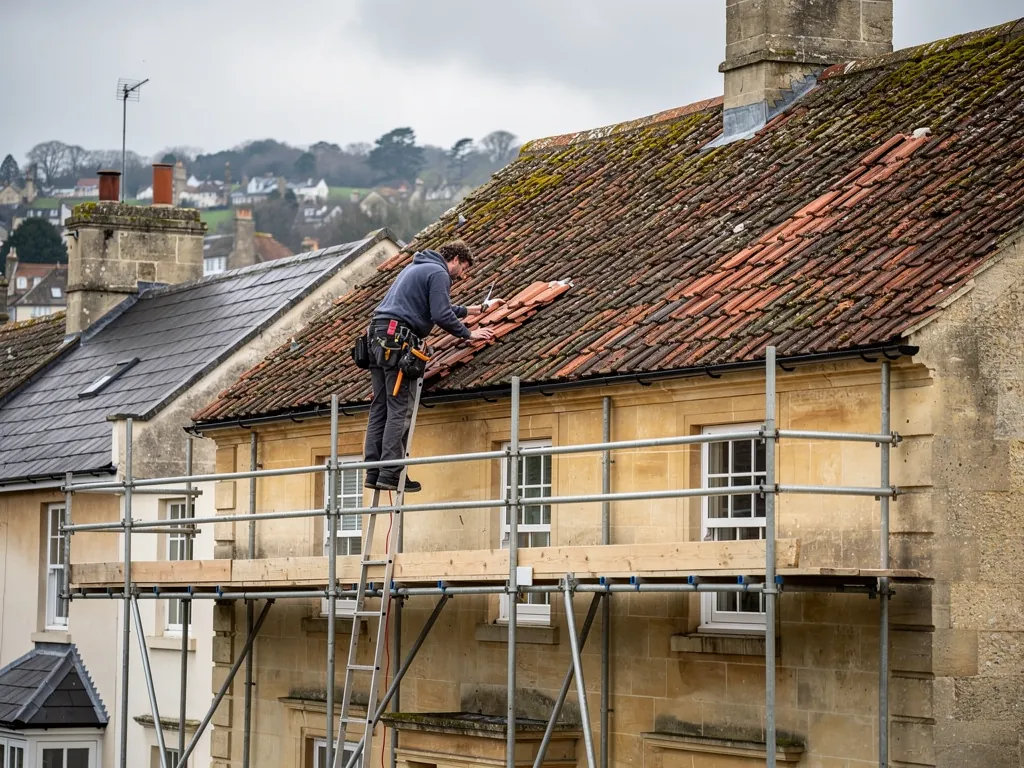
The sequence is the same on most pitched roofs. The scaffold goes up first. The covering is lifted slope by slope and sorted, with sound tiles stacked for reuse and broken ones set aside. Next the worn underlay comes away, together with the battens, which are the slim timber laths holding every tile. Any rotten rafter ends or felt-stained boarding is dealt with at this stage, while it is open and visible.
New underlay goes on, then new treated battens at the gauge the tile size requires. The covering is relaid, with replacements for the broken pieces, and the ridge, hips and verges are re-finished. Lead at chimneys and valleys is usually renewed at the same time, because it is far easier to do it now than to lift fresh tiles later.
Labour is the larger part of the price. The membrane itself is inexpensive. The days spent handling every tile are where the money goes.
Typical UK ranges for a re-felt
We can give you sourced national figures, but not a figure for re-felting on its own. No cost guide we have checked prices it separately from a re-roof.
MyBuilder's 2026 cost guide reports these typical UK ranges for pitched roofing.
| Item | Typical UK range |
|---|---|
| Whole roof replacement | £5,000 to £12,000 |
| Gable-ended roof | £5,000 to £8,000 |
| Hipped roof | £8,000 to £12,000 |
| Roofing labour | £50 to £130 per square metre |
| Roofer's day rate | £250 to £300 |
| Scaffolding | about £1,125 added |
A re-felt reuses the tiles, so the materials are lower than a full replacement and the labour is not. Use the replacement range as a ceiling for comparison, never as a quote. A firm written price only exists once we have seen the roof ourselves.
What pushes the price around
Four factors do most of the work.
- Roof size and shape. More area means more tiles to lift, sort and relay. A hipped roof carries extra ridge lines and a longer perimeter than a gabled house on a similar plan, which explains the higher hipped range in MyBuilder's guide.
- The covering. Large concrete interlocking tiles go back quickly. Small clay plain tiles, natural slate or stone slates take far longer, and each is more fragile to handle. Where tiles are too far gone to reuse, new or reclaimed ones add to the bill.
- What is found underneath. Sound battens can sometimes stay. Rotten ones, damp rafter ends or damaged boarding add timber and time. We cannot see these until the roof is open, so the survey flags the likely risk instead of promising a figure for hidden faults.
- Access. Scaffold, parking, a steep pitch or a tight terrace street all add to labour. MyBuilder puts scaffolding at about £1,125 on a typical house, and waste disposal at £100 to £1,000 depending on volume.
Detail also counts. Lead flashings, new vents and fascia repairs sit beside the re-felt and appear as separate lines on a good quote.
Does a re-felt need Building Regulations approval?
It can. The Planning Portal sets the line for re-covering. Below 25 per cent of the building envelope and below 50 per cent of the roof, approval is not normally needed. A re-felt of the entire roof is past that point, so building control normally gets involved and the insulation may need upgrading under the thermal element rules.
A covering that is 15 per cent or more heavier than the existing one also triggers approval and a structural check. If you are putting the same tiles back, that does not apply. If you are switching to something heavier, read our page on roof felt lifespan first, which covers what the underlay does and when it has failed, then ask about weight.
We explain which rules apply to your roof and take care of the paperwork when the job is notifiable. Where your home is listed or within a conservation area, B&NES Council is the first call for consent.
When a re-felt is the wrong answer
A re-felt only makes sense if the tiles themselves are worth keeping. If they are flaking, crumbling or porous, you pay a high labour price for a roof that will need doing again, and a fresh covering is the wiser spend.
The other reason is cost against benefit. A localised leak with sound underlay elsewhere is a repair. Replacing a few tiles and a flashing is a fraction of the labour of stripping the whole roof, and where repair works, we repair. Our guide to pitched roof maintenance shows what owner checks can catch early, which keeps you from paying for a major job sooner than necessary.
The decision usually comes down to the three layers beneath the covering. If the underlay is brittle, the battens are soft and the fixings are failing together, then lifting the covering once, renewing all three and relaying is the sensible route. If only one layer has failed, ask whether a targeted repair does the job.
How we survey and quote
Our free survey looks at the roof from outside and then from the loft. You receive pictures taken on your own roof alongside the findings, so the condition is plain to see.
From that we set out whether the roof needs repair, a re-felt or a full replacement. The fixed written price that follows itemises stripping, underlay, battens, relaying, scaffold, lead and waste removal on separate lines, so you can compare it fairly with other quotes. Where the roof is concealed, such as hidden valleys or timber under old felt, we say clearly what could change the price and why.
The job ends with the rubbish taken off site, and our 10-year workmanship guarantee is given to you in writing. For the wider picture of what a tiled roof needs, see the roof tile types guide, and for the full service, the pitched roofing page.