


Four generations of houses in one parish
A population that grew sixfold in sixty years leaves roofs of every age on the same road.
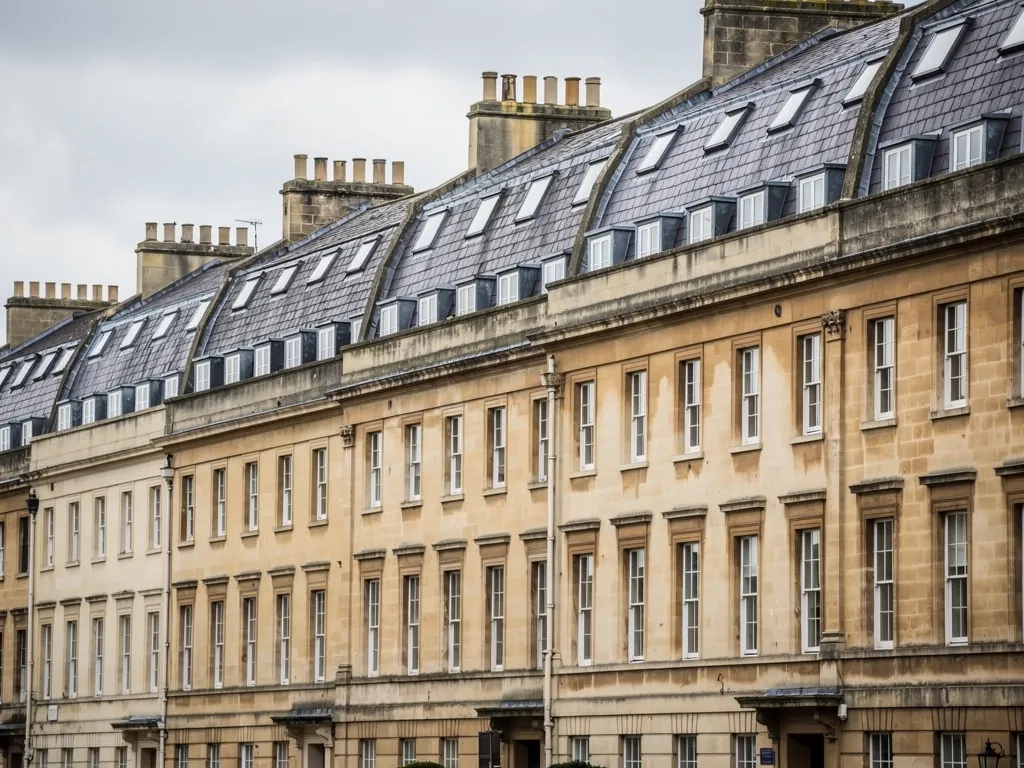
When a place grows this fast, its roofs do not age together. A cottage near the church may carry its third or fourth covering. A house put up in the 1970s has another covering, another pitch and another weak point. A home from the last twenty years is different again, and its trouble tends to begin at details rather than across the main slopes.
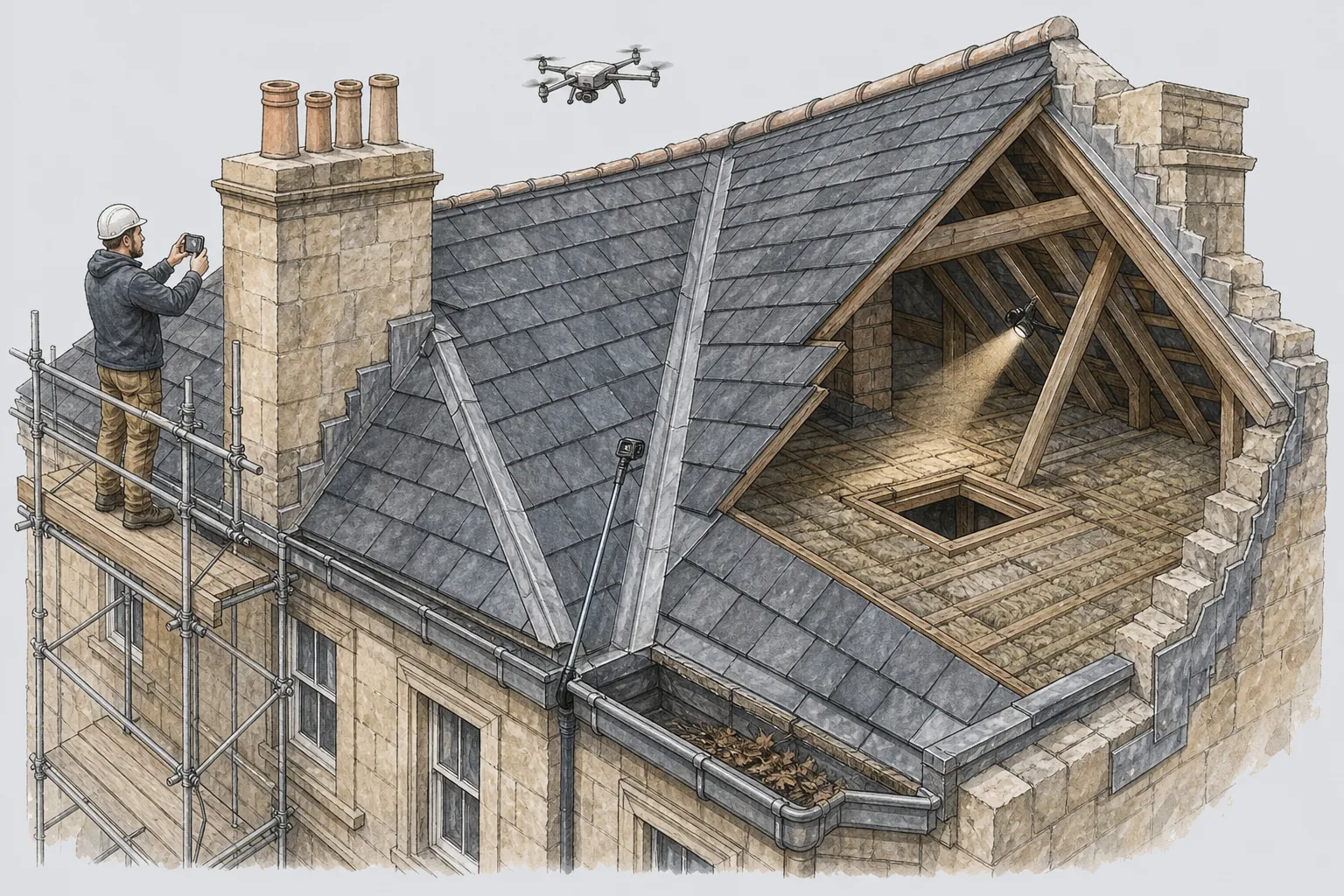
That is why we do not start from the age of a street. We start with the roof. On the first visit we identify the covering, then look at the battens, the laths under the tile courses, and check whether any underlay survives at all. From the loft side we look for daylight, damp marks on the rafters and tiles that have been swapped in out of sequence. Each fault is photographed and goes into the report, so the report shows you each defect we describe.
The choice that follows is usually between repairing and replacing. Where four or five tiles have dropped on an otherwise healthy roof, we will recommend a repair and nothing larger. Once a whole slope is spent, patching only postpones the bill, and you get a fixed price for a proper re-cover.
Size decides whether Building Regulations come into it. The Planning Portal sets the tests. Work that touches a smaller share of the whole building than a quarter, and under half the roof, is not normally notifiable. Larger jobs are, and may pull in an insulation upgrade. Weight is a separate trigger: once a new covering gains 15% over the old, approval and a structural check follow, whatever the area. Any notification is ours to make, to the council's own team, or to a registered private approver.
Often the most useful step is simply to learn what you have. Our pitched roofing work begins with exactly that.
825
People in Hilperton parish in 1951
1,928
People in the parish in 1971
4,967
People in the parish in 2011
Figures: Hilperton parish history, Wikipedia, checked October 2026