

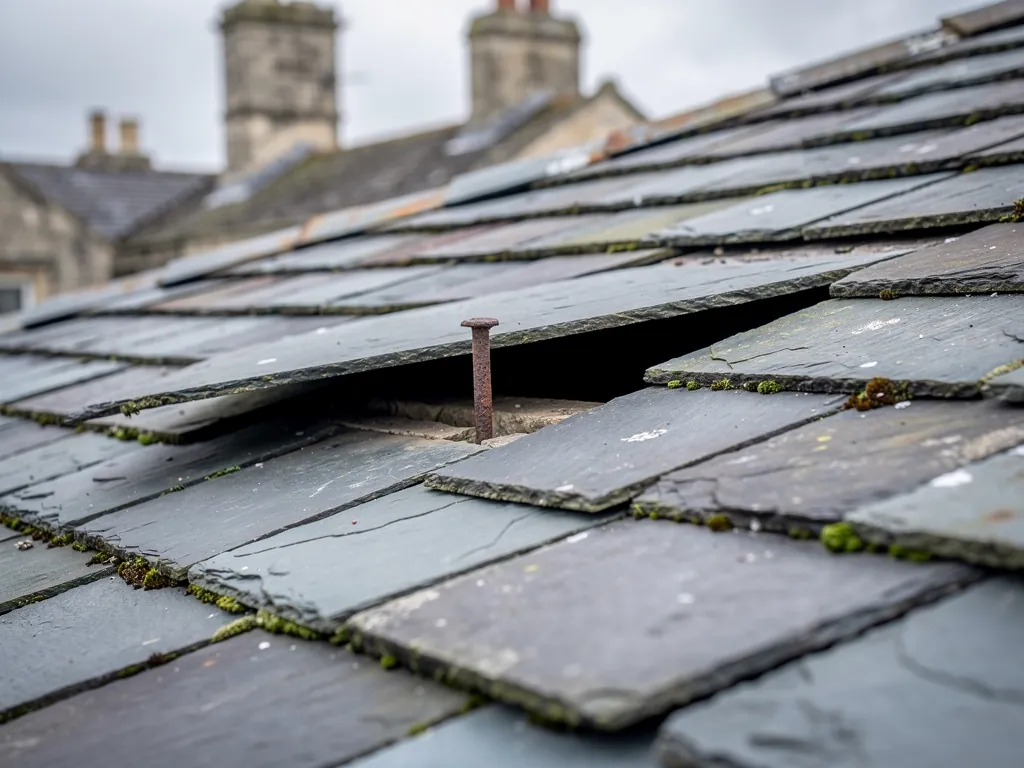
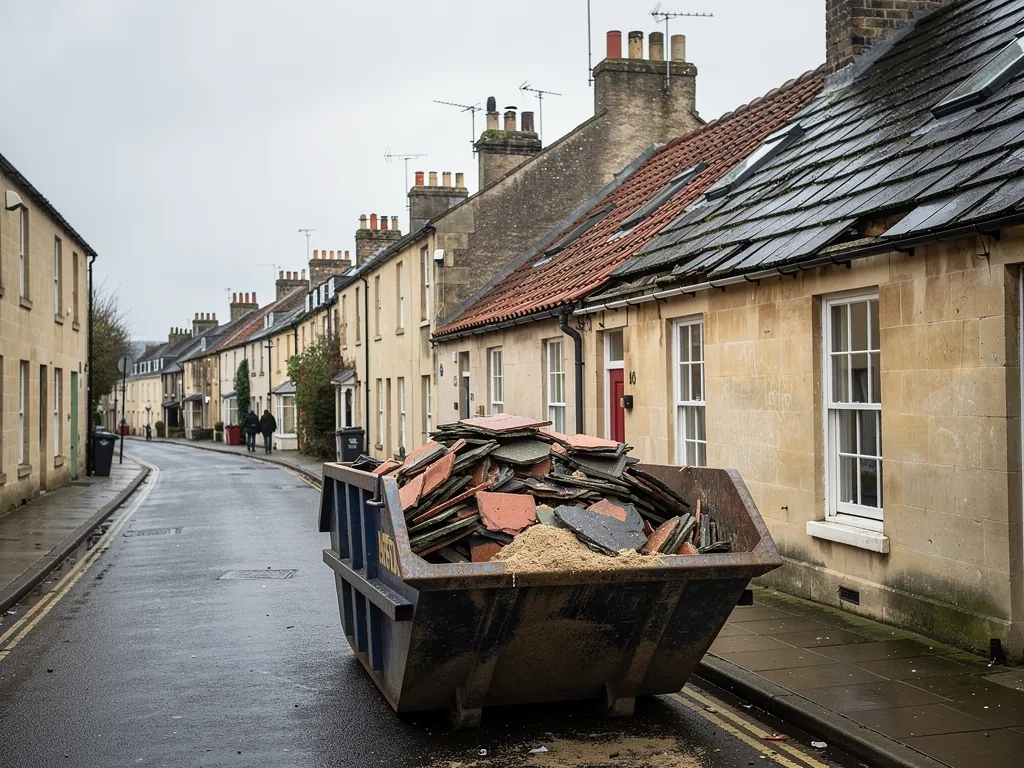
A Wiltshire market town street with stone and brick houses and clay tile roofs

Roofers in North Bradley

North Bradley is 11.6 road miles south-east of Bath, a village with an identity of its own, parted from Trowbridge by small fields with the River Biss running through the parish. The roofs run from a 15th century church to a corrugated iron chapel and the units of a business park, and each is mended in the material it already has.

Local roofs

A parish apart from the town next door

North Bradley sits about 1.75 miles south of Trowbridge town centre, yet it does not read as a suburb. Small fields separate the two, the River Biss crosses the parish, and the village has kept its own church, chapels and lanes. That separation matters to a roofer because the setting is rural in character even though the town is close: gardens with big trees, damp ground near the river, and weather that comes across open fields.

The oldest building is the Anglican church of St Nicholas, which dates from the 15th century, was restored in 1862 by T.H. Wyatt and is Grade II* listed. Its neighbours include a Baptist chapel whose 1780 predecessor was pulled down when a new building opened on the same site in 1961, and, at Brokerswood, the corrugated iron All Saints Church, a so-called tin tabernacle first put up at Southwick and re-erected at Brokerswood in 1905.

Road history has left its mark as well. The north to south road through the village was once the A363, but the route was moved to the north in the late 1990s when White Horse Business Park was developed. The park brings a different kind of roof into the parish, wide and low-pitched or flat. We look after both ends of that range, and each survey is written up with photographs of the roof itself.

Council
Wiltshire Council
From central Bath
11.6 road miles, south-east
Church
St Nicholas, 15th century, Grade II* listed
Tin tabernacle
All Saints, Brokerswood, re-erected 1905
River
The Biss flows through the parish

What we find

Rusting tin, wet gutters and wide business roofs

Rust at the laps of corrugated sheetsWhere one iron sheet overlaps another, moisture sits and the zinc coating fails first. We look along each lap and around every fixing for bubbling paint and pinprick holes, which show a sheet is losing metal from the inside.
Moss and blocked gutters under treesVillage plots near the Biss are often wooded, and fallen leaves pack into gutters and valleys. We clear the channels first, then look for the stained patch of roof below where an overflow has been soaking one spot.
Slow failure on wide commercial roofsOn a business park unit the roof is large and rarely visited. We check seams, sealed joints around rooflights and the outlets, because the first sign of trouble is usually a damp ceiling tile rather than a drip.

St Nicholas and listed roofs in the parish

The Grade II* church has its own faculty route, but a listed house roof is the council's business before any work starts.

St Nicholas has stood in North Bradley since the 15th century. It was restored in 1862 by T.H. Wyatt, with a Grade II* listing that puts the building firmly inside the system. Yet because St Nicholas remains an active Anglican church, the ecclesiastical exemption applies and a faculty granted by the diocese is what permits its roof work. For other listed buildings, anything that affects the roof is the council's business, and in this parish the council is Wiltshire Council.

The point reaches well beyond one church. Houses, farm buildings and converted chapels in the parish may be listed too, and the quickest check is Historic England's National Heritage List for England. A roof is part of the listed structure, so changing its material, its pitch or its chimney usually needs listed building consent before a single tile moves. The two permissions are distinct, and holding one does not cover you for the other.

For work on a church or any old stone building the unseen parts decide the cost. Water that gets past a cracked covering runs down the face of the timber and into the masonry at the top of the wall, where it can rot the ends of the rafters. Lead valleys and flashings do much of the real work, and they fail at the points where lead is folded or lapped. We lift the surrounding covering and follow the damp back to where it entered, because stopping a stain without finding the entry only moves the trouble elsewhere.

Where consent is needed, the council will want specifics. We can set out in writing the covering we would match, the lead we would specify and the way it would be worked, so the application is about real materials. Keeping the sound original covering is usually the simplest case to put to the council. Our lead roofing page explains how the hidden gutters and flashings are done.

Corrugated iron and the tin tabernacle

A roof of galvanised sheet ages in a way that slate and tile never do.

All Saints Church at Brokerswood is a tin tabernacle, a building of corrugated iron that was first erected at Southwick and moved to Brokerswood, where it was reassembled in 1905. Buildings like this were designed to be taken apart and put up elsewhere, which tells you how they are fixed: with bolts, screws and washers rather than mortar and weight.

That makes the roofing different from a tiled roof. Each sheet is formed into corrugations for stiffness, and the sheets overlap so water runs down the troughs and off the lower edge. The weakness is the metal itself. When the protective coating wears, rust begins at the cut edges, around fixing holes and along the laps, and it spreads under the paint. A sheet that looks sound from the ground can have a pitted underside.

The repair choice is between mending and re-sheeting. Patching a few holes with sealant or lapped plate buys time on a roof whose sheets are otherwise firm. When rust has reached the ribs, or when the fixings have corroded in their holes, new sheets in matching profile are the sound answer. The profile matters: a different corrugation pitch will not lap against the old one, and on a building of character it changes the look of the elevation.

Metal roofs also carry a particular risk with old fixings. Rusted bolts snap when disturbed, so we work from crawl boards and avoid walking across the sheets themselves, spreading the load over the rails beneath. Chapels, sheds and outbuildings with sheet roofs elsewhere in the village raise the same issues. If you are unsure what a sheet is made of, we identify it before anything is cut, rather than guessing. How we deal with a leak in any covering is covered under roof repairs.

Myth

A rusty corrugated roof can simply be painted over to stop the leaks.

Fact

Paint holds a sheet together only while there is sound metal under it, and holes and thinned laps need patching or new sheets first.

White Horse Business Park and commercial roofs

The road that was moved for a business park left a different kind of roof beside the village.

When the through road was diverted to the north in the late 1990s, the move came about because White Horse Business Park was being developed. The park's units sit in a different category from the cottages and chapels a mile away: large floor plates under wide roofs that are often flat or only slightly pitched, with long runs of gutter and rooflights set into the slope.

A roof like this is priced on survey, since no standard figure fits. The covering may be a single-ply membrane, a bitumen system, profiled metal or fibre-cement sheeting, and what lies beneath varies from unit to unit. Things that decide the work include the condition of the insulation, access for a lifting platform, the way edge details are finished and whether rooflights have been fitted. Our approach is to look first and quote after.

Where do commercial roofs fail? Seldom in the middle of a sheet. Trouble appears at junctions: the upstand against a wall, the flashing round a rooflight curb, the outlet at a low point, and the lap between lengths of membrane. Ponding is another sign. Standing water adds weight, speeds wear on the surface and often means the deck has dipped. Moss and leaf litter in a gutter can be nothing more than tidiness, but the same debris in a sump can block an outlet during heavy rain.

A maintenance visit is cheaper than an emergency. A tenant or landlord who has a roof checked once a year, with photographs, has a record of its condition if a lease dispute or an insurance claim arises. Our commercial roofing page sets out what a survey covers and how we report on it.

Common faults on commercial roofs and where to look

PartUsual faultWhat we check
Membrane lapsJoints opening with ageEdges and seams along each run
Rooflight kerbsFailed sealant or flashingCorners and the base of each kerb
OutletsBlockage and pondingDebris in the sump, fall towards it
Wall upstandsLifting at the top edgeTermination bar and fixings

Houses near the Biss: gutters, moss and damp ground

A parish of fields and a river has roofs that spend a lot of their time wet.

Houses in the village stand among gardens, hedgerows and mature trees, with the River Biss flowing through the parish and open fields on either side. Those surroundings are pleasant, and they are hard on a roof. Shade keeps slopes damp, leaves fill gutters, and moss gets a hold on the north-facing pitches that dry slowest.

Moss is often treated as a cosmetic matter, and mostly it is. The harm comes from what it holds against the covering. A thick mat keeps water on the surface, lifts the edges of tiles and clogs the valleys, and frost can then break a tile that was already holding moisture. We scrape rather than blast, because a pressure jet can strip the surface from older tiles and drive water under the laps. Our roof cleaning page describes the gentler methods, including soft washing, and when a treatment is worth doing.

Gutters take the brunt. An overflowing gutter sends water down the wall face, where it stains the brickwork and can saturate the base of a wall. At the roof edge, a blocked gutter holds water against the fascia and the ends of the rafters, so rot starts quietly where nobody looks. We clear and flush the channel, check the falls towards the downpipe and examine the joints between lengths. Cast iron, aluminium and plastic each fail differently, and on an older house a section can often be replaced in matching material instead of replacing the whole run.

Ground near a river can also move slightly with the seasons, which shows up in cracks at the gable and a ridge line that is no longer straight. A sagging ridge may be the roof, or it may be the wall under it, and we sort out which before recommending any work. That avoids spending money on a new covering to cure a fault that comes from below.

Moss or replace

Moss on a sound roof calls for careful removal and clear gutters, and a tile that crumbles when lifted is the sign that the covering itself is finished.

Map showing the location of North Bradley.

Nearby

Roofers near North Bradley

Roofing services in North Bradley

Local questions

Tin chapel to business park, North Bradley asks

Can the corrugated iron roof on a village hall or chapel be repaired rather than replaced?

Often, if the sheets are sound under the paint. Patching suits a roof with a few holes and firm sheets, while widespread rust at the laps or ribs points to new sheets in the same profile. We look at the underside and every fixing before saying which, and we never walk the sheets themselves.

Do I need consent to repair a roof near St Nicholas church?

Only when your own building is listed or lies in a protected setting, which Wiltshire Council can confirm. Being close to a listed church does not by itself bring a house under the listing. If yours is listed, ask the council before the covering, lead or chimney changes.

Why does the north slope of my roof keep growing moss?

A north-facing slope gets the least sun, so it stays wet for longer, and trees or a nearby river add to the damp. Moss grows in that moisture and then holds more of it. Gentle removal and clear gutters help, and cutting back overhanging branches does more than any treatment.

Our business park unit has a damp ceiling tile but no visible leak. Where do we start?

The wet patch is rarely under the entry point, because water can travel along the deck for some distance. We survey the whole roof, with attention to rooflights, seams and outlets, and record our findings in photographs and notes. A roof that size is priced once we have seen it, so the figure comes with the report.

Get your free survey

Get your free roof survey

Tell us what's happening and we'll call you back to arrange a visit. Prefer to talk? Call 01225 285181.

  • Photos of your own roof
  • A fixed price in writing
  • 10-year workmanship guarantee
Call Free survey