



Houses of the 18th century and older
A roof that has stood for two hundred years or more has been repaired many times, and the repairs tell a story.
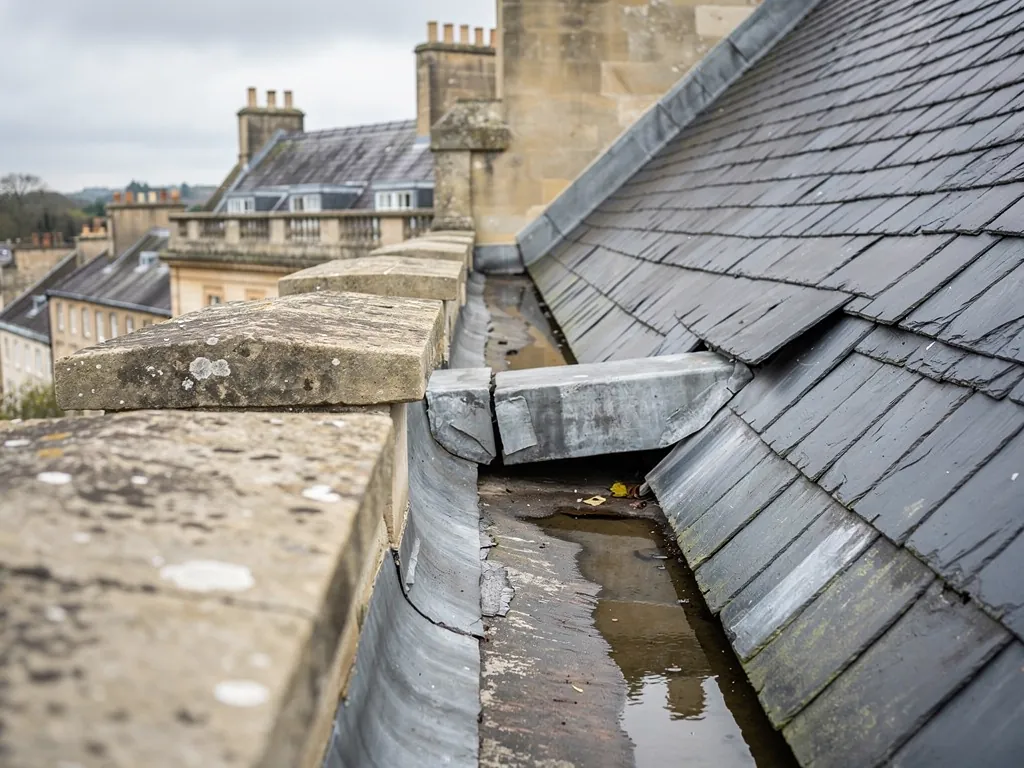
When most of a village is 18th century or older, a roof survey becomes a form of reading. Each patch is a decision someone took in another era, with whatever material was to hand. A slate replaced with a clay tile, a flashing renewed in the wrong metal, a run of mortar laid over a broken edge: all of these can be read from the loft and the ladder if you know where to look.
The first thing we want to know is whether the structure is sound. In a house this age the rafters were cut by eye and often reused, and the timbers may have moved by a few centimetres over the centuries without anyone noticing. A roof that is slightly out of true is not necessarily failing. A roof where the slope has suddenly dipped, or a ridge has sagged since the last survey, deserves a closer look at what is carrying it.
The second question is the covering. Where a roof is made of one natural material from end to end, the right repair is to keep that material. A patch in something visibly different shows from the road, and in a village where many buildings are listed, it can also draw the attention of the council. So we match: the same material, the same size, laid in the same pattern.
The third is moisture. Old walls do not have a damp-proof course, and old roofs do not have a modern membrane. They manage water by letting it dry out, which is why too much cement or too tight a seal can do more harm than the leak itself. We choose repairs that let the building breathe.
If the plan is a bigger intervention, from stripping a slope to reinstating battens, our pitched roofing page explains the stages and how we sequence them so that no slope is left unprotected overnight.