The short answer
A domestic flat roof replacement is a matter of days for most house extensions and garages, and longer for large or complicated roofs. Four things set the time: the roof area, the covering chosen, the deck underneath and the weather. A rotten deck, a lead detail or a wet week adds time, so ask for a firm programme in writing before work begins.
What sets the length of the job
There is no single figure that fits every flat roof, and any roofer who gives one before seeing the roof is guessing. Four things set the programme.
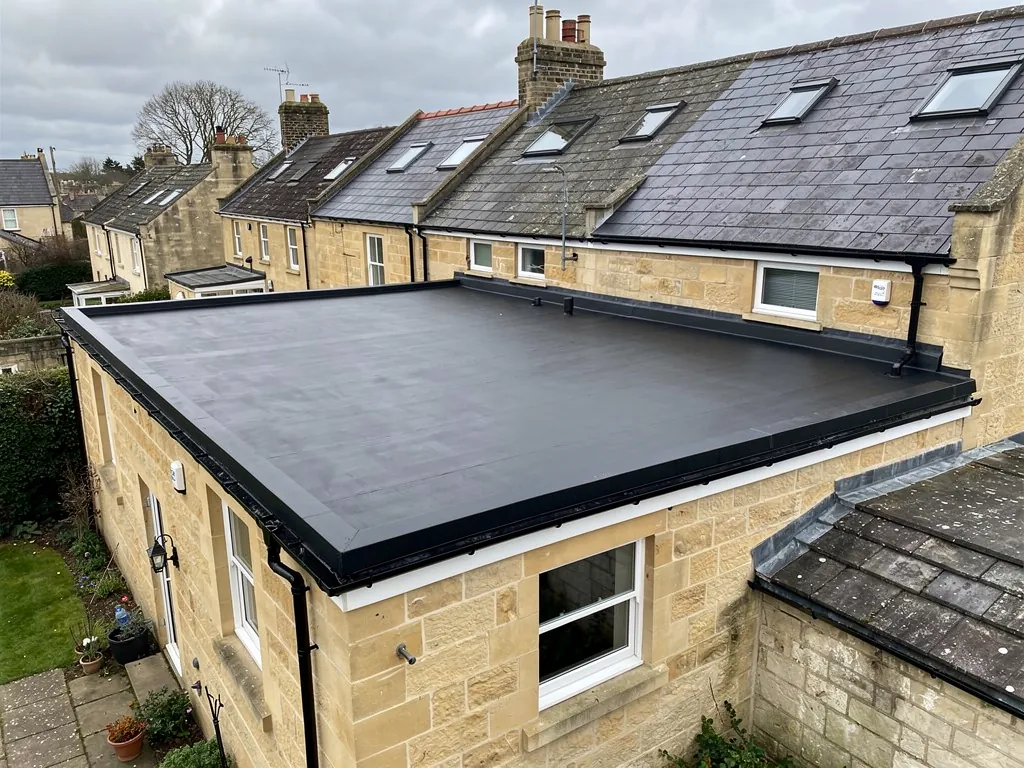
The first is size and shape. A single-storey kitchen extension with a plain rectangle of roof is quick. A long roof with a parapet, several outlets, a rooflight and a step up to a neighbour is much slower. The second is the covering. An EPDM sheet can be laid over a prepared deck in one go, GRP needs to cure, and torch-on felt goes down in layers. Lead is the slowest, as each piece is cut, bossed and dressed by hand.
The third is the deck. If the boards under the old covering are sound, they can be kept. If they are damp or rotten, they come out and new ones go in, and the roof structure may need repairs. The fourth is access. A roof that is reachable by ladder or a low scaffold is easier to work on than one that needs a tall scaffold tower, a hoist and a protected route for materials.
Which covering suits which roof is compared in our best flat roof material answer, including what each covering involves.
The order of work from strip to sign-off
A typical replacement follows the same sequence, and understanding it explains where the time goes.
- Set up. Scaffold or access is put in, the area is protected, and skips or waste bags are positioned.
- Strip. The old covering is lifted in sections, which limits how long any part of the roof stays exposed to rain. Felt, boards and old flashings are cleared away.
- Inspect and repair the deck. Any damp or soft boards and joist ends are repaired, and the fall is corrected.
- Insulation and layers. If a warm deck is specified, insulation boards and a vapour control layer go on before the membrane.
- Cover. The membrane is laid and stuck, and the edges, upstands and outlets are finished.
- Trims and gutters. Drip edges, fascias and rainwater goods are fitted or renewed.
- Clear and check. We sweep up, take the waste off site and give the new roof a final inspection.
Stripping is usually the quickest stage. The slow stages are repairing the deck and forming the details, such as upstands, corners and outlets, which cannot be rushed without risking a leak later.
What delays a flat roof job
Most delays come from things that were not visible at the start. The most common is the deck. A roof that has leaked for some time can hide rotten boards, wet insulation and even damaged joists. Until the old covering comes off, nobody can know the full extent, which is why a good survey looks at the ceiling below, the edges and the history of the leak, and why a quote may be revised if the deck is worse than it looked.
Weather is the second. A flat roof must not be left open in rain, so a wet forecast pushes the strip back. GRP is the most sensitive, because the resin needs dry conditions to cure properly. EPDM and felt are more forgiving, but adhesive and torch work still need dry surfaces. Cold and damp slow everything down.
Other delays include a lead or metal order with a longer wait, a listed building or conservation area consent that has to come through before work starts, and building control sign-off where the work is notifiable. Neighbours can matter too. If a flat roof abuts a party wall or you need scaffold on a shared boundary, agreements take time to arrange.
Why GRP, EPDM, felt and lead run differently
Each covering has its own rhythm, and the choice can change how long the roof is exposed.
EPDM arrives as a single large sheet. It is stuck to the deck and cut to fit, so on a simple roof the covering itself goes down quickly, and the upstands and trims take the remaining time. Sources give EPDM a life of 20 to 30 years or more, so the speed is not at the expense of durability when the detail is right. See our page on EPDM rubber roofs for how it is fitted.
GRP is laid wet, built up in resin and glass-fibre layers and left to cure. It gives a continuous skin with no joints, but it needs a dry window and a stable deck, and the work cannot stop halfway. Torch-on felt goes on in two or three layers, each fused to the one beneath with a flame, so it takes longer than a single sheet but can be paused between layers. Lead is the slowest and the most durable, with sources reporting 50 to 100 years for lead flat roofs when properly laid.
There is a trade-off here. The quickest covering is not always the best for the house, and the best covering for an old building may take longer. A matched material often wins on appearance and life even where it adds days.
Planning your own programme
Before work starts, clear the area around the roof. Move garden furniture and plants from beneath the edges, agree where skips and materials can go, and tell neighbours when scaffold will be up. If the roof covers a living space, plan for noise and for the room being cut off from light for part of the time.
Ask for the programme in writing. A good one lists the stages, names any items that could change it, such as deck repairs or lead, and says what happens if the weather turns. It is a plan rather than a promise, and the roofer should tell you promptly if it shifts. The fixed price follows the survey, with the programme alongside, with any changes explained before the work goes ahead.
If the roof is small, such as a dormer, the programme is shorter but not proportionally so, because the set-up and the edge details are fixed costs of time. Our answer on how a dormer flat roof is replaced shows why. For the wider picture, see our flat roofing service. Our survey costs nothing and includes photographs of the roof. At the end we leave the site clear and the waste removed, and because most coverings need a dry spell to lay, a booking in late spring or early autumn is less likely to be pushed back by rain.