The short answer
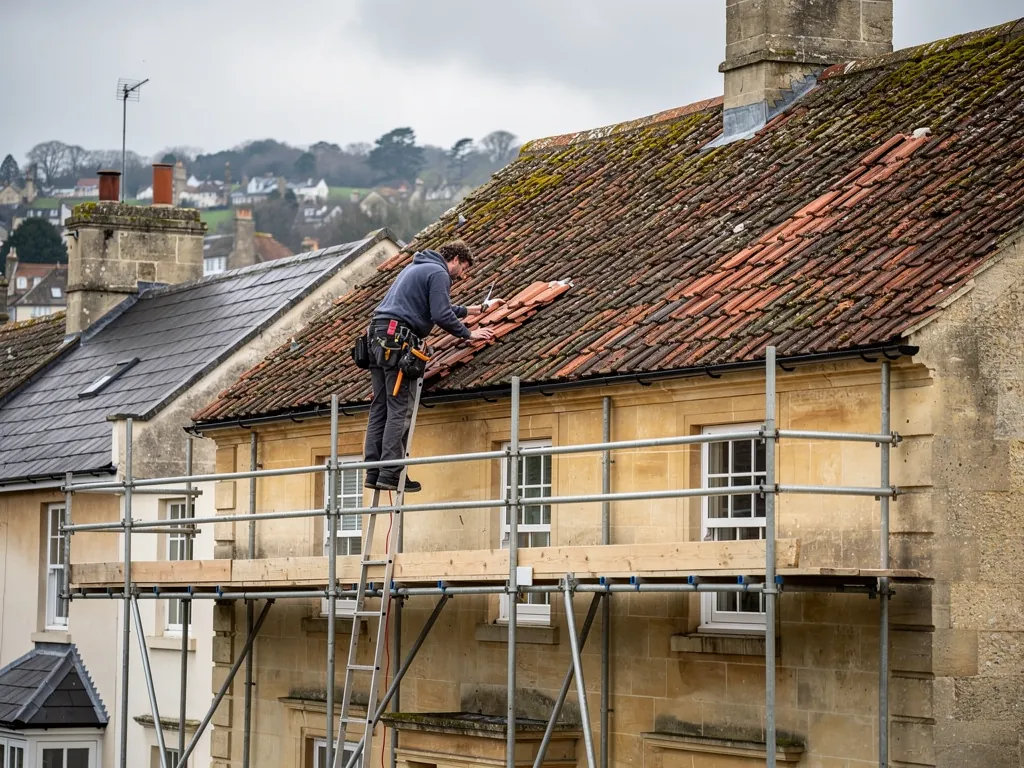
Reclaimed tiles can be used on a listed roof, and conservation officers often prefer them because they match the age, colour and texture of the original covering. They must be frost-sound, uniform in size and free of flaking. Where the house is listed, the tile itself forms part of the proposal, so the order should wait until B&NES planning has replied.
Why reclaimed tiles suit an old roof
New tiles of the right pattern are made, and some are excellent. But a roof that has weathered for a century or two has a colour range and a surface that a new batch takes a long time to acquire. Salvaged clay tiles arrive already softened by lichen and sun, with the small variations in shape and tone that give an old roof its life from the street.
That is why reclaimed material turns up so often in repair specifications for older buildings. Matching drives our approach to older roofs. Slate gets slate, stone gets stone and clay gets clay. Where only part of a slope is being repaired, new tiles beside old ones show as a patch for years. Reclaimed ones blend in much sooner.
There is a second reason. Reusing tiles is a sound use of material, and it keeps a roof's character without asking a manufacturer to copy a pattern that may no longer be made.
What the planning authorities say
Listing protects the covering along with the walls. Changing it in a way that alters the building's character calls for listed building consent, which B&NES grants and which stands apart from planning permission. Ring the planning team first. Work without consent can be a criminal offence, and a wrong tile is an expensive thing to lift again.
The council's published appraisals show the thinking. Take Wellow, south of Bath. Its appraisal describes steep roofs in red clay tile, with just a few original Cotswold stone tiles surviving, which the document calls rare and says to protect. The Freshford and Sharpstone appraisal reads differently: clay tiles are common there, plenty of houses keep stone tiles, and a switch to concrete tiles is described as detracting markedly.
Neither document sets a rule for your roof. Both show what officers prize, which is the original material kept, or replaced like for like. Inside the city, the Bath Preservation Trust voices much the same view in its remarks on particular roofs. B&NES has the last word.
How to test a reclaimed tile
Not every salvaged tile deserves a second roof. Some were taken off because they had failed. Any batch should be examined before you buy it.
- Surface condition. Look for flaking faces, powdery edges and layers lifting. Frost has already worked on these. They will spall again, and our page on frost damage to tiles explains why.
- The ring test. Hold a tile by one edge and tap it. A sound clay tile rings. A cracked one gives a dull note.
- Size and thickness. Hand-made tiles are never identical, but they ought to stack and lap together evenly. If sizes wander across the pile, leave it.
- Fixing holes and nibs. Nail holes should be intact and the nibs that hook over the batten should be whole.
- Cleanliness. Old mortar stuck to the tile can stop it lying flat. Mortar has to be knocked off, and some tiles do not survive that.
Expect some wastage. A sensible order allows extra tiles so that rejects do not leave a shortfall. Ask for a few spares beyond that, too, because the same pattern may be impossible to find again in ten years and a small stock in the shed makes later repairs easy to match. Store them flat or on edge under cover, never in a heap on bare ground where frost and moss can get at them. If a supplier cannot say where a batch came from, treat that as a reason to walk away, since provenance tells you how the tiles were stored and whether they were taken off a sound roof or a failed one.
Where reclaimed tiles come from
Sources fall into a few groups. Architectural salvage yards sell tiles from demolished buildings, usually sorted by type and age. Specialist dealers deal in clay tiles and stone slates by pattern. Sometimes the best supply is the building itself: tiles lifted from a slope that is being rebuilt or from an outbuilding that does not matter can be sorted and moved to the visible slope, with the sound ones reused and the rest kept as spares.
That last approach is a habit worth knowing about on older properties. If a house has a rear slope that is hidden from the road, the best tiles can be taken from there and used where the street sees them, and replaced behind with new material. On a listed house, agree it with the council first, because a rear slope is still covered by the listing.
Ask any supplier where the tiles came from and whether they have been stored under cover. Tiles left standing wet through winters can be affected by frost before they arrive.
Fitting reclaimed tiles properly
A reclaimed tile still needs the right pitch. Clay plain tiles, for example, have a minimum pitch that depends on the pattern. Marley lists 40 degrees for Canterbury, 35 for Ashdowne and 30 for Hawkins and Acme single camber, and an old tile may be less forgiving than a new one. The pitched roof guide gives more context, and checking your slope starts with how to tell a hip from a gable roof, since the shape affects the cut tiles.
The hidden parts matter equally. Fresh battens, sound underlay and proper fixings go underneath. BS 5534 expects mechanical fixing at the ridge, hip and verge, so old mortar alone is not relied on. Where tiles are re-laid after a storm, check your insurer's position before starting work: see slipped tiles and insurance.
Our free survey brings back pictures of the tiles in place, and a written price follows once we have seen them. More on tiled and slate work is on the pitched roofing page.