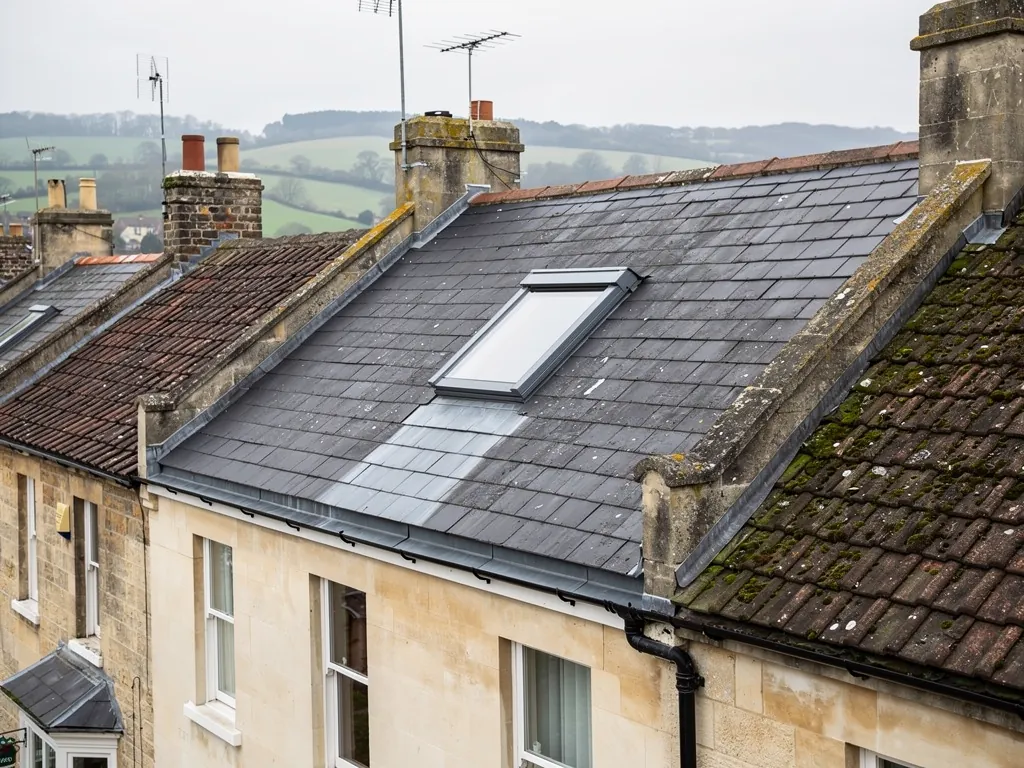
The short answer
Home insurance can cover a roof window that is smashed or torn out by a storm, because storm damage is an insured event on most buildings policies. A slow leak from a worn seal, failed flashing or years of neglect is usually treated as wear and tear and excluded. Your policy wording decides, so read it and ask your insurer before any repair begins.
Storm damage versus wear and tear
Insurers draw a hard line between a sudden event and a gradual failure. A branch through the glass, a sash blown open and wrenched off its hinges, or a flashing lifted clean away in a gale all look like storm damage. A seal that has hardened over the years, a flashing that has corroded or a timber frame that has rotted looks like something else: the building simply wearing out.
Plenty of insurers apply a gust threshold of around 55mph when they decide whether weather counts as a storm. Which? has also pointed out that ordinary policies can exclude gradual deterioration, citing water that gets in through a poorly looked-after roof. Citing FCA figures, it reported in November 2025 that only 32% of storm-related claims made in 2024 ended in a payout. Read that as a prompt to prepare carefully, not as a reason to assume the answer is no.
Policies differ in how they define a storm, how they treat glass, and what excess applies. Some lean on wind speed, others on local weather reports, and a high excess can make a small roof window claim pointless.
How a leak at a roof window is judged
Water around a roof window usually comes down to a short list of causes. The flashing, the metal or lead surround that seals the frame to the roof covering, may have lifted or split. The seal between sash and frame may have perished. Condensation may be running off the glass and mimicking a leak. Or the glazing itself may have cracked.
A loss adjuster, the person an insurer sends to assess a claim, looks for a clear point of damage and a date it happened. A pane smashed during a named storm is easy to explain. Brown staining that has crept around the frame across several winters points the other way, because the harm is clearly older than any single event.
That is why the cause matters before the repair does. If you are not sure whether you have a leak or condensation, our roof windows and skylights page explains how each shows itself. A roofer who has examined the window can say what failed, and a straight report will say so even when it is not the answer you wanted.
Evidence that supports a claim
Whatever you can prove carries the claim. Before anything is moved or mended, take clear pictures of the window from inside and, if it is safe, of the roof around it. Keep broken glass or debris that came down. Write down the date and hour you spotted the problem and the sort of weather that preceded it.
If water is coming in, the first job is limiting the harm. Put a bucket under the drip, shift furniture and lay towels. Where the glazing is smashed, a temporary cover over the opening cuts the rain, and insurers generally expect a policyholder to take sensible steps like this. On our side, the make-safe comes first, and we can set out in writing what we found and what we did.
A roofer's report helps because it names the cause without trade jargon: which pane, which stretch of flashing, and whether the damage looks recent or long-standing. It does not settle the claim, and we are not the ones to pursue it for you. The insurer makes its own decision on the policy and the evidence. Keep every receipt, including any emergency cover.
When the insurer says no
A refusal can be challenged. Start by asking the insurer, in writing, which term in your policy it relied on and what evidence it used. If the letter blames gradual deterioration and you hold a roofer's report pointing to a storm event, send that in.
You can make a formal complaint to the insurer, and if its final reply leaves you unhappy, the Financial Ombudsman Service can examine the case. One published case study shows how much rides on evidence and wording. There the ombudsman looked at local weather records rather than a measured gust, concluded that wind had caused the loss, and read the exclusion in that policy as applying to accidental damage only.
None of this promises a result. Each claim turns on its own facts, and nobody can tell you beforehand what an insurer will accept.
Repairing the window whatever the decision
If the claim is paid, the insurer may specify who carries out the work or let you pick your own contractor. If it is refused, the repair is still worth doing promptly, because water through a roof window soaks the lining, the insulation and the rafters beside it.
The repair depends on what failed. A cracked pane may need only new glazing. A lifted or split flashing is a leadwork or flashing job. A rotten frame, or a window that has simply run its course, means replacement. MyBuilder's 2026 cost guide puts roof window installation at typically £350 to £600 for standard jobs, with the window itself extra and scaffold adding about £500. These are typical UK ranges; once we have surveyed the roof, the quote we give is fixed.
Bigger glazed features carry different seals and bars, so a leaking lantern is a separate matter, covered on our roof lantern page. If you are planning a larger change to the roof, compare it against dormer cost. And for how long a straightforward replacement occupies a day on site, see roof window fitting time.