The short answer
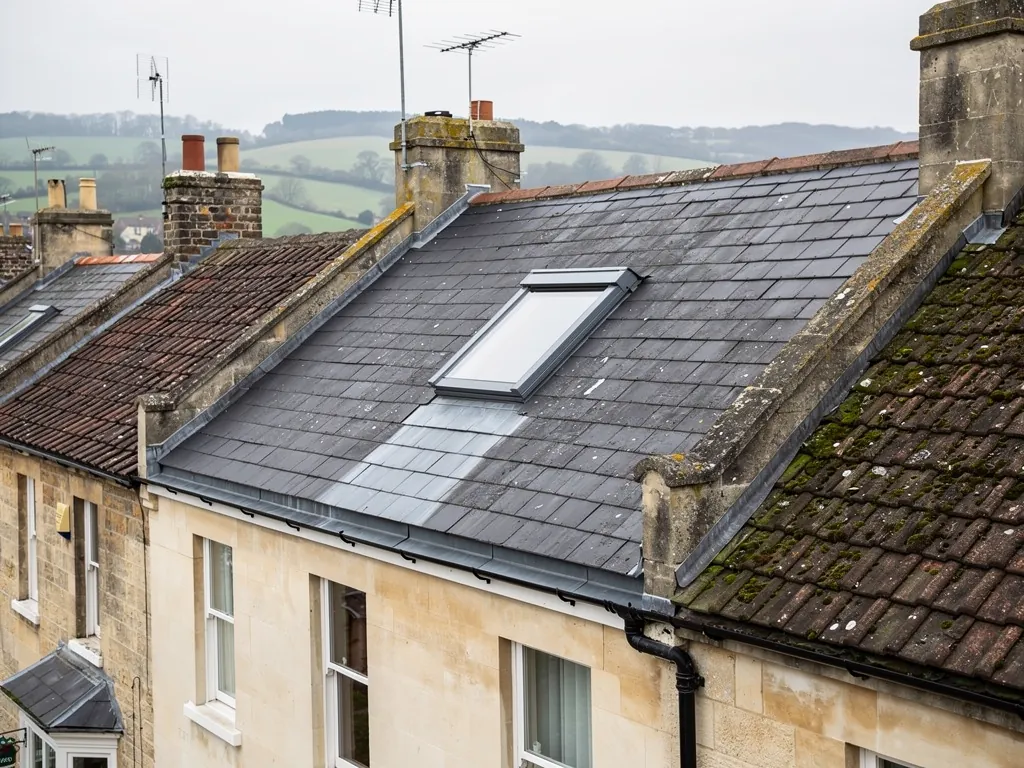
A straightforward like-for-like roof window replacement is a short job, often finished in a single visit. A new opening takes longer because rafters are cut and trimmed, the covering is rebuilt and the flashing is fitted. Access, the type of roof covering, a larger or electric unit and any consent or building control step all add time. We confirm the programme in writing after the survey.
The simplest job: swapping like for like
When the opening already exists and the new window is the same size, most of the structural work is done. The old unit is lifted out, the opening is checked for rot, the new frame is set and fixed, and the flashing is built around it in order. The lining inside is then finished and the window tested for opening and closing.
That is a matter of hours, not days, for a single window on a straightforward slope. It is still not a rushed job. The flashing needs to be fitted in the right sequence, and the slates or tiles around the frame need to be relaid with the correct lap, or the window will leak next winter. A roofer who takes the time to do it carefully is protecting you from a repeat call.
Our page on replacing a roof window sets out each stage. If the window itself is in doubt, settle whether it needs swapping before booking, and check the escape rules if the room is a bedroom.
On the day, expect noise, some dust at ceiling level, and people moving between the roof and the room below. Furniture under the window should be moved out, and the floor covered. Once the unit is in, the lining is finished, the window is opened and closed to test it, and the area is left clear.
A new opening takes longer
A new opening means altering the roof. Slates or tiles are stripped back from the area, and the rafters, the main sloping timbers of the roof, are cut and framed with a header and trimmers to carry the load around the hole. The new window is then fitted, flashed and finished inside. Adding a window to a loft room usually includes new plasterboard and finishes, which add time of their own.
This work is done in stages, and a new opening in a slate roof typically takes longer than a replacement because the slate must be handled with care, and any broken pieces replaced to match. On older roofs, the condition of the battens and underlay beneath the opening is a further variable.
If the window is going into an unfinished loft, the structural work can run ahead of the finishes. In a room that is already decorated, protecting the floor and furnishings takes extra care. Dust sheets and a clear route through the house are the sensible preparation.
What adds time
Several things stretch a programme.
- Access. A roof that needs scaffold takes time to set up and take down. MyBuilder's 2026 guide puts scaffold at about £500 on a roof window job.
- The covering. Natural slate and stone tiles are slower to cut and relay than interlocking concrete tiles.
- Window size. A larger unit is heavier, and may need more than one pair of hands to lift into the roof.
- Electric or solar models. Wiring, sensors and setting up the controls add a step.
- Several windows. Each opening is its own sequence, though one visit may cover a pair.
- Rotten timber. Rafters or battens that are soft need replacing before the window can be fixed.
Weather is the other variable. We cover that in fitting a roof window in winter.
Consent, building control and insurance
The fitting is only part of the timeline. Before anything is ordered, listed buildings and homes inside a conservation area need a word with the council's planning team. Our page on a rooflight in a conservation area covers Bath, and consent decisions are not instant. Plan for that wait before the booking is fixed, and ask whether the window must be a particular design, since that can change both the lead time and the work on the slope.
Where Building Regulations apply, such as for a new loft opening or a change that affects escape, the building control body needs to be told and may inspect at stages. For notifiable work, we deal with that step as part of the job.
Insurance matters too, although we cannot advise on your policy. If a claim is involved, for example after storm damage, keep photographs of the damage and the repair. Our page on roof window insurance explains the general position.
Cost range and what we give you
For planning your budget, MyBuilder's 2026 cost guide reports a typical UK installation of £350 to £600 for a standard job, covering the fitter's labour but not the window, which is bought separately, with about £500 more for scaffold where the roof needs it. Electric models can add £200 to £500. Treat those as national guide figures from one source rather than anything Empire charges. A fixed quote is given after the survey.
The survey takes in the roof, the existing opening and the access, and your roof is photographed as part of it. We then give you a written programme with the fixed price, covering how many visits the job needs and what we expect to happen on each. If the room below needs clearing or covering, the programme says which day, so furniture and carpets can be moved before the opening is cut.
The window type affects the work too. Our page on rooflight versus roof window explains the difference, and the roof windows and skylights hub has the wider set. Our area is Bath plus every town inside 30 road miles.