
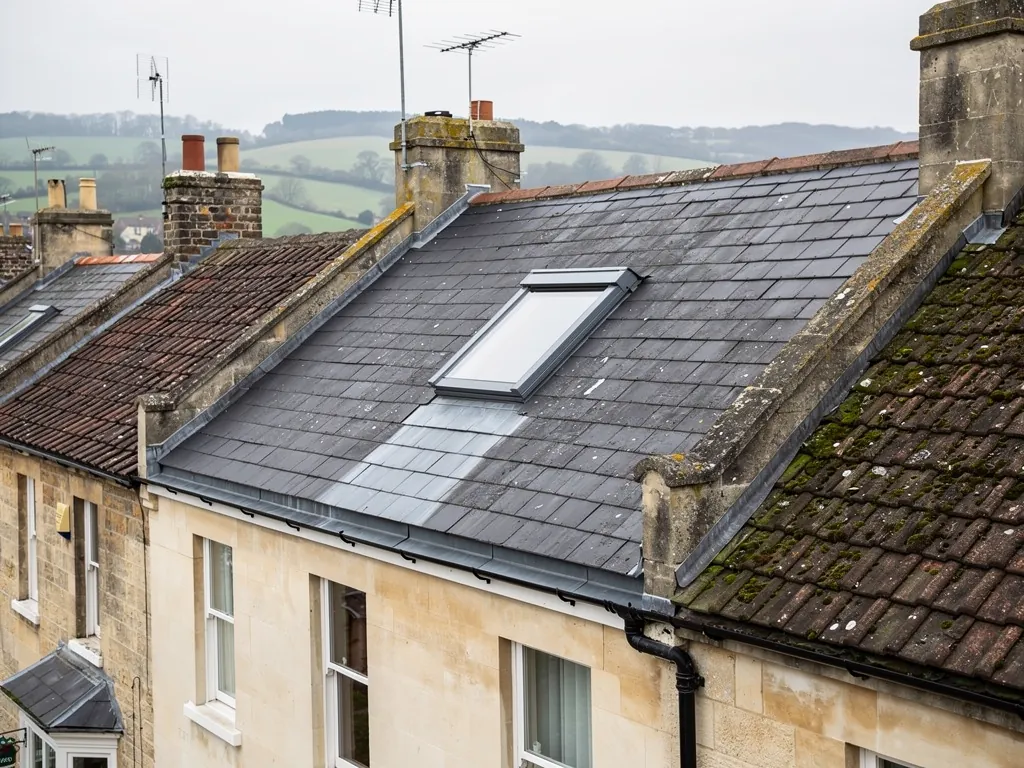
Putting a fresh roof window where a worn one stood is one of the more contained jobs on a roof, provided it is done in the right order. The opening already exists, the rafters have already been trimmed around it, and the room below is already lit. What is left to get right is everything that is hidden: the timber round the frame, the way the old flashing was lapped, and the lining on the inside that has been sitting against the old frame for years. This guide walks through a like for like replacement from the first measurement to the last bit of finishing. It covers what comes out, what is checked, how the new window is sealed into the covering, and who deals with the inside face. Cost, flashing detail and regulations each have their own guide, and we point to them where they apply.
Is it really like for like?
Before anything is ordered, it is worth asking whether the replacement truly matches the original, because that decides how simple the job is. A like for like swap means the new window goes into the same opening, at the same size, in the same position in the slope. If any of those change, the work is no longer a swap. A wider window means cutting rafters. A higher one means moving the head of the opening. A different type of window may need a different kit or change the lining depth.
The first step is therefore a survey and measurement from the roof and from inside. We measure the opening, note the make and model if a label is still readable on the old frame, and look at the way the window opens. Roof windows have been made in a limited range of standard sizes for a long time, so a modern equivalent often exists for an old unit, but a window from many years ago may not map exactly onto today's sizes. Where the nearest size is a little smaller, the gap is closed with extra flashing and lining. Where it would be larger, it is not a swap.
It is also worth asking why you are replacing it. A window that leaks, mists between panes, will not close, or is simply cold on a winter morning can each point to a different remedy. Sometimes only the sash, the opening part, needs renewing and the frame can stay. Sometimes the leak is the flashing and not the window at all. We repair where repair works, and our guide to repairing or replacing a roof window sets out how to choose. If the survey shows that the unit is beyond saving, the replacement is specified from the measurements, and the price you agree is written down before work starts.
Finally, there is the question of what the window is for. If it lights a bedroom and is counted as an emergency exit, the new one must still open wide enough and sit low enough to do that. That is part of the Building Regulations, which we deal with in our escape window guide.
Preparing the roof and the room
A roof window replacement lasts a day or so on a straightforward unit, though the time varies with access, the covering and whether the lining is being redone. The preparation, though, starts earlier and is partly about protecting your home.
On the roof side, access comes first. A window low on a rear lean-to slope needs only a ladder and a roof ladder. One high on a three-storey house, or behind a stone parapet in Bath, may need scaffold or a tower. MyBuilder's roof window guide (2026) reports scaffold adding about £500 to a typical UK job, on top of the fitting charge. We tell you at survey whether scaffold is needed so that it is in the quote and not a surprise.
On the inside, the room below needs protecting. Dust and debris fall as the old frame comes out, and a tarpaulin or sheeting on the floor is not enough if the room has furniture beneath the window. We clear the area under the window, lay dust sheets over what cannot be moved, and ask you to take down pictures, curtains and blinds that hang near the lining. If the window has an internal blind, the blind and its brackets come off before work begins.
Weather is the other part of the preparation. When the old window is lifted out, the opening is exposed until the new one is in. We watch the forecast, work in a sequence that never leaves the roof open overnight, and keep a temporary cover to hand. Cold and damp conditions change the plan, and the winter installation guide explains how.
Finally, there is the matter of timing against other trades. If a plasterer or decorator is booked to redo the lining, the roof work needs to come first, with the roof sealed, so the inside finish is not damaged by rain. A sensible order saves a second visit.
Taking the old window out
Removal is done in reverse of installation, working from the top of the window down. The covering round the old flashing is lifted course by course: tiles or slates are unhooked and stacked, not broken. The old flashing pieces come off, the sash is released from the frame and lifted away, and the frame is unscrewed from the rafters and trimmers.
It is when the old frame is out that the opening can be assessed. This is the moment the hidden condition appears. The checks are straightforward.
- The rafters and trimmers on either side and at the head and sill. They should be sound, dry and square to each other.
- The battens around the opening. Where an old leak has run, battens can be soft or rotted and need renewing before the new frame is set.
- The underlay. A torn, perished or missing section gets replaced locally so the new window has a sound membrane to connect to.
- Any insulation in the opening, which may be damp, compressed or missing.
If an old leak has damaged timber, repairing it is part of the job. The sound timber is kept, the bad length is removed and a new timber is bolted or screwed beside it, so the opening is firm before the frame goes back in. A rotted rafter is a structural matter, and we explain what we find and what we propose before we go ahead with it.
The old window is also an opportunity to find out why it failed. A frame with water staining along the bottom edge points at the lower flashing or apron. A frame rotted at the head points at water running down from above. Knowing which means the new one is sealed against the actual cause, not just fitted in the same way as before. In the case of the covering round the opening, any slates or tiles that break during removal are replaced with matching ones, because an older roof should not be left patched with unlike material.
Fitting and sealing the new window
With the opening sound, the new frame goes in. It is set to the rafters at the correct angle and height against the covering, checked for square and level, and fixed through the brackets or fixing points the manufacturer specifies. Packing is used where the opening is slightly out, and nothing is forced. A frame fixed under strain will bind when the sash is opened, and will often leak around the corners.
The sash is then hung and tested. It should open and close freely, seat evenly all round, and latch without being pushed. Electric or solar-powered units add wiring or a control; MyBuilder's guide (2026) puts the extra for an electric window at roughly £200 to £500 in typical UK figures. Their installation includes a power supply or battery and the programming of the controller.
The sealing sequence follows the order the kit requires, working from the underlay collar to the bottom apron, the side pieces and the top piece, each lapped over the one below. The reason for the sequence, and the types of kit used for tiles and for slate, is set out in the guide to roof window flashing kits. For a like for like swap, the one rule worth repeating is that the old kit is not reused. A fresh kit goes in with the fresh frame, matched to the window model and the covering.
Round the frame, insulation is packed to fill the gap between window and rafters without being compressed, and a vapour control layer is lapped to the frame on the room side so that warm, damp air does not reach cold timber. These details matter most to the window's thermal performance and to condensation on the lining.
The covering is then relaid around the flashings, with the original tiles or slates reused where they are sound, and new matching ones for any lost. The result should be a roof that reads as one surface, with the flashing visible at the edges but the window sitting level with the slope.
What happens to the lining inside
The lining is the finished surface on the inside of the opening, between the window frame and the ceiling or wall of the room. In a loft room it is typically plasterboard, sometimes with a timber or plastered finish, and it often forms a splayed reveal that angles light into the room. It is the part you see every day, and it is the part most affected by a replacement.
There are three common situations.
The lining is sound and the new frame is the same size
If the window is the same size and the lining is dry and undamaged, the new frame is fitted so that the existing lining meets it. A neat bead of paintable sealant or a small trim covers the join, and little more is needed. This is the best case.
The lining is stained or damaged
Where water has marked the lining, the cause is first confirmed as cured. The damp area is allowed to dry, because paint over wet plaster fails. Damaged plasterboard is cut out and patched, and the area is left for a plasterer or decorator to finish. A roofer can renew the lining boards and leave them ready to be skimmed or painted, but the final decoration is usually the job of a decorator.
The new frame is a different size
A slightly different frame leaves a gap or an overlap against the old lining. The gap is closed with new lining board cut to suit, and the splay is reformed. This is more work, and it is why it is worth confirming at survey whether the window size is available.
In all three cases, the question to settle before work starts is who finishes the inside. We state at survey what we will do, usually making good the lining to a paint-ready stage, and what is left for you or a decorator. Painting a splay, matching old plaster and re-hanging blinds are usually the owner's, and it is clearer for everyone if that is said at the start.
Consent, clearing up and what to keep
Most replacements in the same opening need no new permission, but two checks are worth making. On a listed house, altering the roof window in any visible way, whether size, type or look, is a matter for the council's conservation team, and unauthorised work is an offence. If the house is unlisted yet sits inside the conservation area, a window that looks unlike the original is best discussed with B&NES planners before you order. Our guide to rooflights, roof windows and skylights helps if you are not sure which product you have, and we avoid restating the planning rules here since they sit with the planning guide.
The thermal side is simpler. A replacement should be at least as good as what it replaces and should reach the Part L figure for roof windows, so the new window comes with its performance data. Building control may need to be told, depending on the work, and we advise at survey.
At the end of the job we clear the site. The old window, the flashing offcuts and any broken covering are taken away, the roof and gutters are checked for slipped tiles and debris, and the room is left clean. You receive the paperwork for the new window, and it is worth keeping with your house records. The label that stays on the frame, together with the kit code, tells the next person who works on the roof exactly what is there.
Leave the new lining and plaster to dry out for a few weeks before decorating, since filler around a fresh reveal can crack if it is painted too soon. If anything is not right after the first heavy rain, such as a drip at a corner or a sash that binds, tell us and we come back to put it right.
For the wider picture of what we offer, including new openings, repairs and rooflights, see skylights and roof windows.