The short answer
Yes, rain tends to sound louder on a roof window than on a wall window, because the glass sits in the slope, takes the full drop of each raindrop and has little between it and the room. The effect depends on the build. Thicker or laminated glass, a well-insulated roof around the frame and a sound-absorbing lining reduce it noticeably, and an old, thin unit is usually the noisiest.
Why a roof window sounds louder
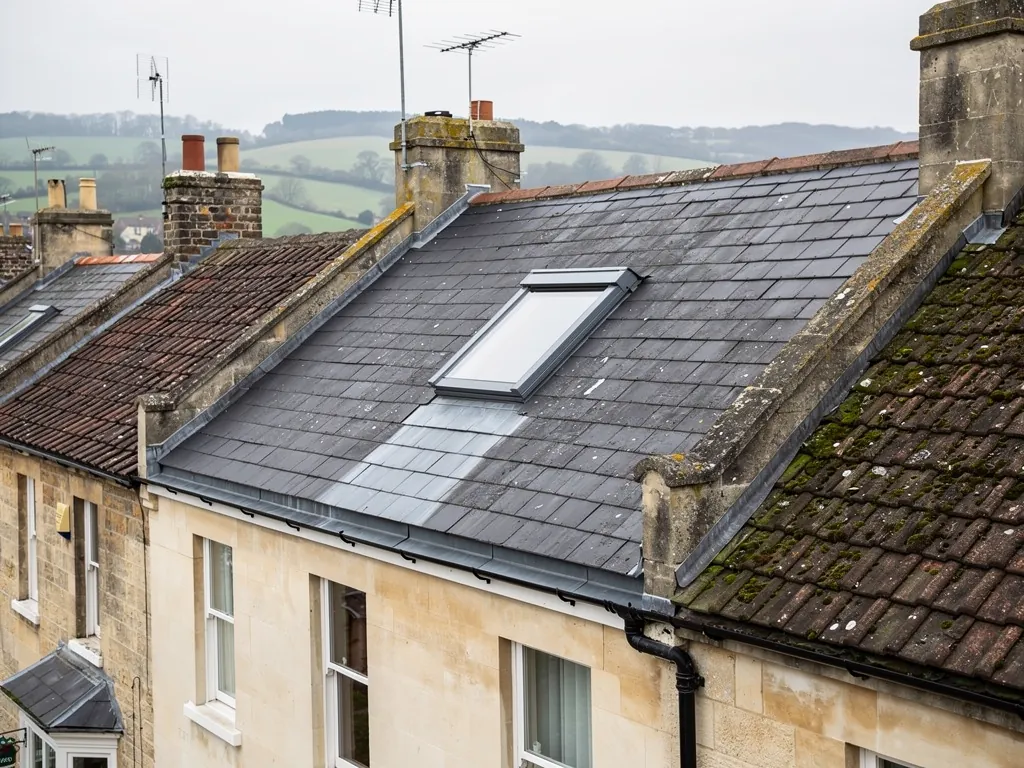
A wall window is shielded. It stands upright, so rain strikes it at a glancing angle and runs off, and the wall around it is heavy masonry that blocks sound. A roof window lies along the slope, so drops fall onto it almost square on. Each impact sets the glass vibrating, and the vibration passes into the room almost directly, because the loft or bedroom beneath has little between it and the weather.
The room matters as well. A converted loft is a small, hard-edged space under a thin roof build-up, and it often has sloping ceilings that reflect sound. The same shower that is a soft patter downstairs becomes a drumming above.
Hail is louder than rain, and heavy rain with wind louder again. The sound also depends on what the drops land on. They strike glass with a sharp tap, but they strike slate, tile or a lead-covered cheek with a duller one, which is why a roof window often stands out among the quieter covering around it.
What the glazing does
Glass is the first line of defence. A thicker pane vibrates less, and a laminated pane, two sheets glued by a plastic interlayer, damps the vibration that carries sound into the room. A unit with panes of unequal thickness also helps, because the two sheets resonate at different pitches and do not reinforce each other.
Some manufacturers offer an acoustic specification, normally a laminated outer or inner pane and a different gap, as an option for rain noise. Triple glazing improves insulation more than it improves sound, although the extra mass helps a little. If you are weighing the options, our answer on which glazing is best for a roof window compares the choices for heat, noise and safety.
Older roof windows are usually the loudest. A single-glazed rooflight or an early double unit with thin glass has little damping, and its seals have often hardened, which lets the frame rattle. Where the noise has worsened over time, ageing seals are a likelier cause than the weather.
The roof around the window
The window is only one part of the sound path. Rain also drums on the roof covering and the flashing around the frame, and the build-up under the roof decides how much of that reaches the room. A dense covering such as slate or clay over a good layer of insulation between the rafters reduces it. A thin, lightweight roof, or one with no insulation at all, lets more through.
The flashing, the metalwork that dresses the frame into the covering, can add its own noise. If it is loose or poorly fixed, it can tick and chatter in wind and rain, and a buzz that seems to come from the window can really come from the metal around it. That is a straightforward repair once identified, and it needs doing for waterproofing anyway.
The lining inside matters too. Insulation packed behind the window splay, the angled reveal inside, and plasterboard rather than bare timber, gives the sound something to be absorbed by. A tidy fit makes a quiet room, and a gappy one lets noise and draughts pass.
Noise, leaks and what a fault sounds like
Not every sound in rain is ordinary drumming. Dripping, trickling or a hollow gurgle inside the lining suggests water is getting in, not just making noise. A rhythmic tapping that follows gusts can be a loose flashing or sash, and a whistle on windy days points to a worn seal.
If the sound is accompanied by staining or damp around the frame, treat it as a leak and get someone to look soon. The weak points at flashing joints are listed in why a dormer leaks, and a roof window in the slope fails in much the same ways. A dormer window has a vertical face under its own small roof, so it is exposed to rain differently, and the dormer windows guide covers the differences.
Condensation is a separate matter. It makes no noise but can look like a drip, and it should be ruled out before anyone assumes a leak.
Reducing the noise you have
Start by finding what is making it. If the window is old and the glass thin, replacing it with a modern unit with laminated glazing is the biggest single gain, and it will also improve insulation. Replacing a fixed unit with an opening one raises other questions about the roof pitch and the size of the opening, which are covered in our answer on swapping an old fixed skylight.
If the window is sound, small changes help. Refix a loose flashing, add insulation around the frame, line the splay properly, and soften the room with curtains, rugs and soft furnishings, which all absorb sound. An external blind can also take the sting out of raindrops, because they land on fabric before the glass.
Noise is a comfort question and rarely a safety one, but it is worth raising at survey, since the right specification is cheap to choose before a window is ordered. A free survey lets us photograph the window and its surround, and a fixed price is written down afterwards. The overview is on our roof windows and skylights page,, and the number to ring is 01225 285181.