
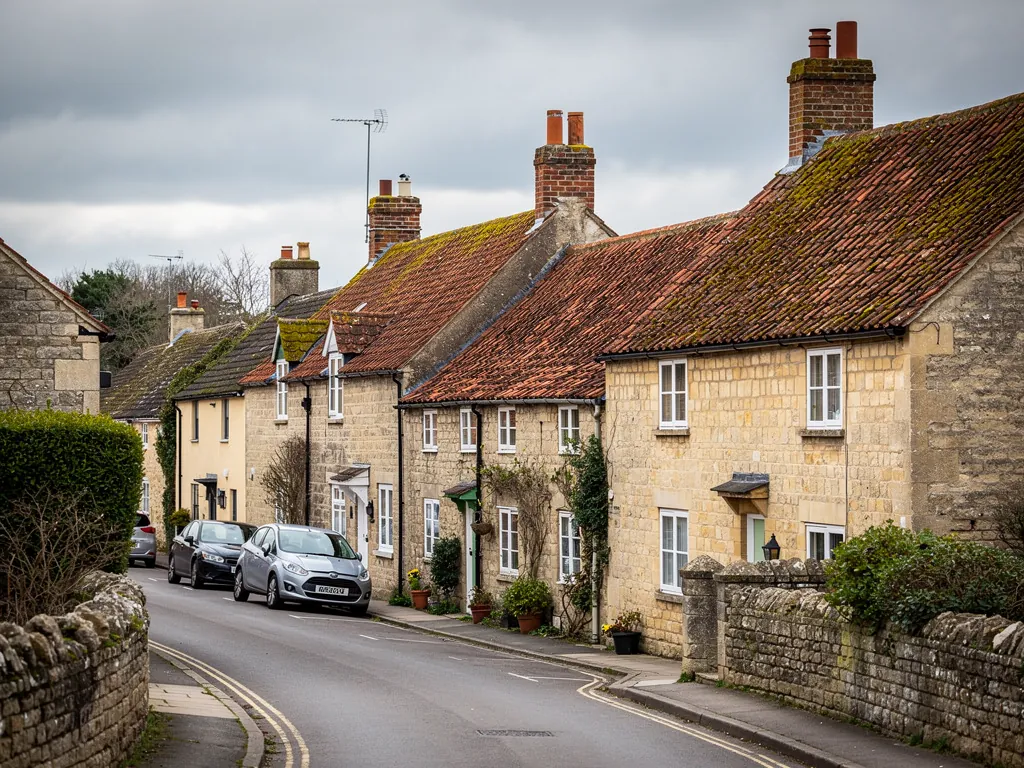



Houses from 1672 to 1729 and the roofs above them
A clothier's house and an architect's own home share a village, and both want a roofer who reads old timber.
Batheaston has several houses with firm dates. Pine House is from 1672. Batheaston House was built in 1712. Eagle House was remodelled in 1724 and again in 1729. Between them sit later villas and cottages, but those dates give a fair idea of the age of the better houses along the village streets. A roof of that age is rarely a single piece of work. It has been repaired, re-covered and altered, usually by people who left no record of what they did.
The structure comes first. Older roofs were framed in oak or in softwood cut to the size of the tree, not to a standard schedule, so the rafters are not evenly spaced and the roof plane is not truly flat. That is part of what makes them handsome, and it matters when you re-cover. New battens (the thin timbers the slates or tiles are fixed to) have to be set to follow the line of the roof, not forced straight, or the new covering will look wrong and sit badly.
Next is the layer under the covering. Many roofs of this age have no underlay, or a later felt that has perished. The sheet we lay under the battens is not a luxury: it catches the rain that is blown past the slates and takes it to the gutter. When we strip, we record what is there, keep any slate or tile that is sound, and lay new underlay and battens before returning the covering.
Where the covering is natural slate, we match it. A house of this quality that has been patched with a different slate or with concrete tile will show the patch from the street, and the new material will wear differently from the old. The approach is set out on our slate roofing page, and the pitched roofing page covers other coverings and the timber beneath them.
1672
Date of Pine House in Batheaston
1712
Year Batheaston House was built for Henry Walters
1729
Year of the second remodelling of Eagle House
Figures: Batheaston entry, Wikipedia, checked October 2026