
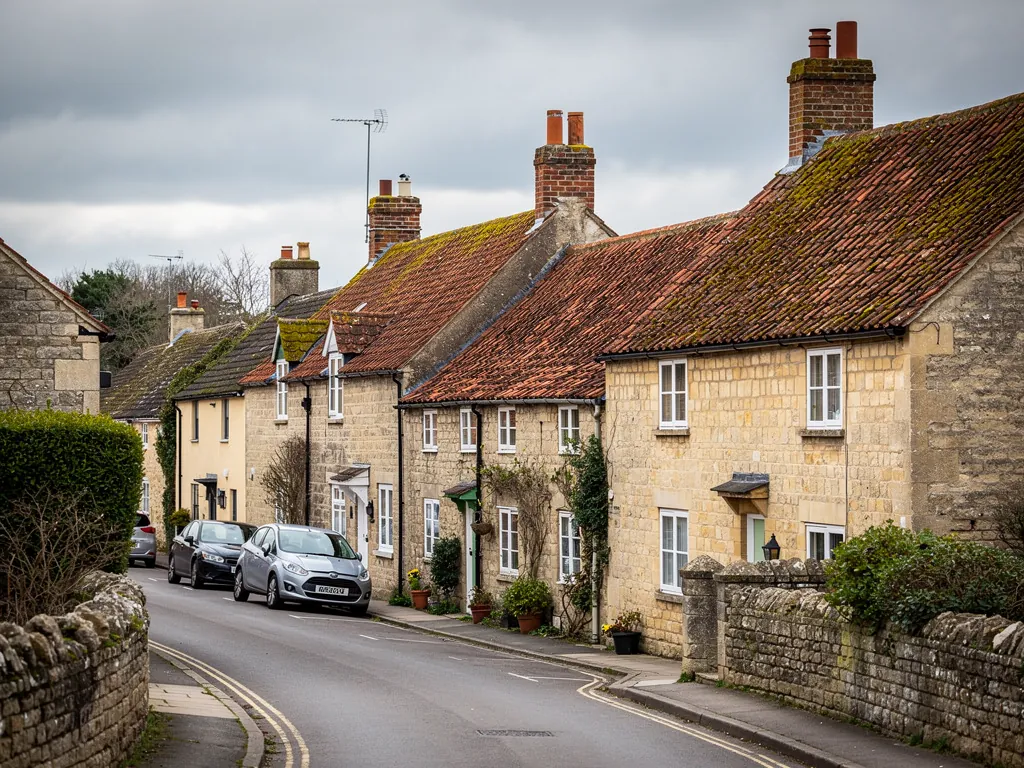


Roofs on a hillside that was quarried
Steep ground changes how a roof is reached, scaffolded and drained.
The slope above Bathampton was heavily quarried towards its top, and the ground below it is steep enough to matter before a roofer has lifted a single slate. A house set into that slope can have a rear roof that sits close to the hillside, a front that drops away, and a garden with no flat patch for the base of a scaffold. We look at access first, because it decides how the work is done and what it costs. Scaffold is a named cost driver in the national roofing price guides, and on sloping ground it deserves careful pricing.
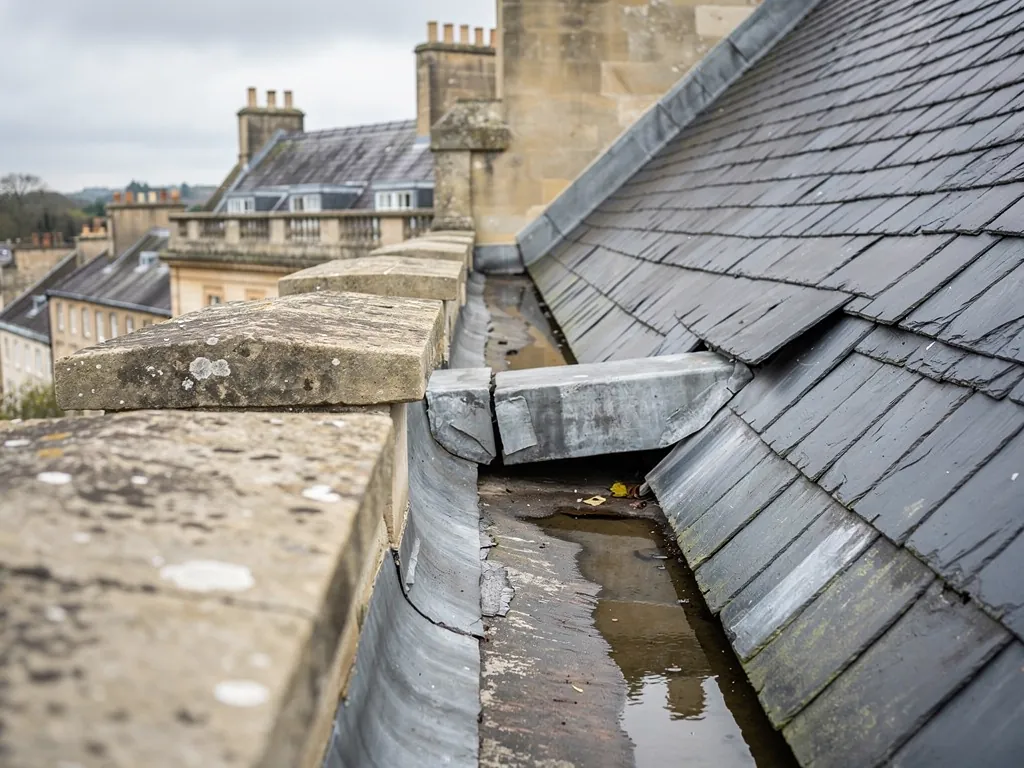
The second effect of a hillside is water. Whatever falls on the slope behind a house has to go somewhere, and the roof and its gutters are the first things it meets. A gutter that is slightly out of fall, a downpipe that discharges too close to the wall, or a bed of leaves along the back run can send water into the eaves rather than away from them. We clear and check these before we recommend anything larger, because a cleared gutter costs far less than a rotted fascia board and a stained ceiling.
Underneath the covering, the part that tires first on an older roof is usually the timber at the eaves. The wall plate (the beam bedded on the wall head, which the rafters sit on) and the lowest few rafters take every drip that gets past a failed gutter. When we lift the first courses of tiles or slates at the eaves, we are looking at that timber with a screwdriver and a torch. Sound timber can stay. Soft timber is cut out and spliced, and the covering goes back over it.
The rest follows from what we find. A few slipped tiles on a sound roof call for a repair, and we will tell you that. A roof that has failed across every slope is a replacement, and we will tell you that as well. The choice between the two is set out in our roof repairs guidance, and the full re-covering process, from stripping to waste removal, is on the roof replacement page.