
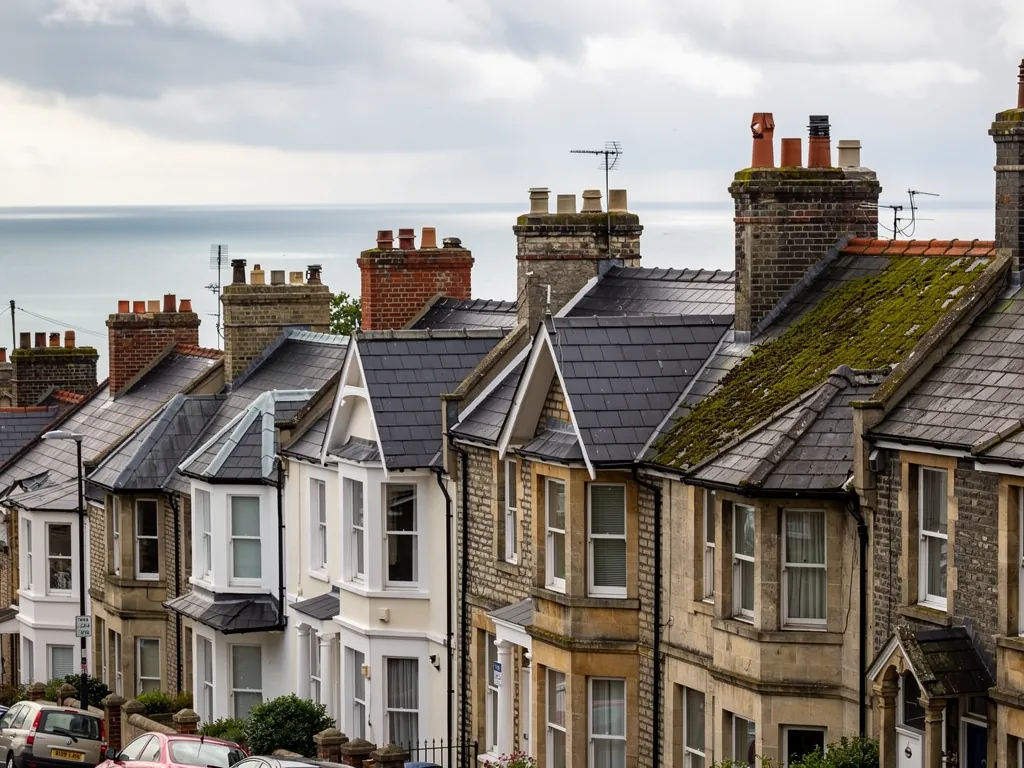
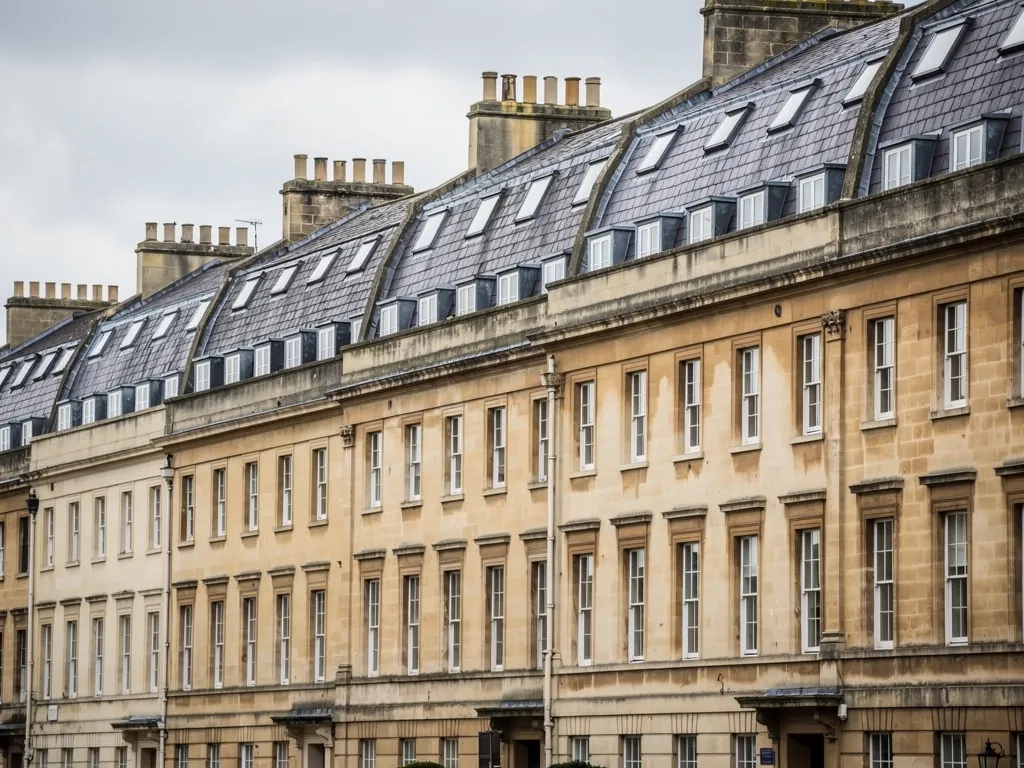
Victorian villas with slate roofs in a North Somerset town near the coast

Roofers in Yatton

Yatton stands on the North Somerset Levels, 24.5 road miles west of central Bath, and most of what has been built there is recent. We deal with the roofs that follow from that: flat extension roofs, ageing post-war coverings and newer estates, as well as the older buildings around St Mary's.

Local roofs

A village on flat ground, built up since the war

Yatton sits on the North Somerset Levels, where the low-lying land is a mixture of peat, estuarine alluvium and low hills of sand and gravel. The ground around it is low and open, with the limestone ridge of Cadbury Hill, 76 metres high, the main high point to the south, so there is little to slow the wind that crosses the flat country. A roof here is seen from a long way off, and it feels the weather in the same way.

After the Second World War the village saw large amounts of new housing, and today the pre-war buildings are far outnumbered by recent residential and commercial construction. That one fact shapes most of our work. Much of our work here is on a house or a commercial unit of the later 20th century or after, with the faults that go with it: tired ridge beds, worn felt, flat-roofed extensions that were added later, and garages that have outlived their first covering.

The older buildings still matter. St Mary's Church, built around 1400 and often called the Cathedral of the Moors, is Grade I listed, and so is the Old Rectory, a Prebendary house of the 15th century. The Victorian railway station, designed by Brunel, is still in use on the line the Bristol & Exeter Railway opened in the 1840s. The former Fairey Hydraulics site in Claverham, closed in 2017, is now a housing estate.

Whichever of these you live or work in, the approach is the same. The survey costs nothing, and the quote that follows is a fixed sum on paper, backed by photographs of your roof.

Council
North Somerset Council
From central Bath
24.5 road miles, west
Church
St Mary's, built around 1400, Grade I listed
Ground
North Somerset Levels: peat, alluvium, sand and gravel
Claverham
Former Fairey Hydraulics works, since built over

What we find

Extension flat roofs and post-war ridges on the Levels

Flat roofs on later extensionsRear kitchens, side extensions and garages often have a flat or shallow roof. We look for ponding, blistered or split membrane, and upstands (the raised edges where the roof meets a wall) that have opened.
Ridge beds and verges on post-war tilingOn roofs of the 1950s onwards, the mortar under the ridge and along the gable edge is the first part to give. We press and sound the tiles, and look for hairline cracks that let rain in.
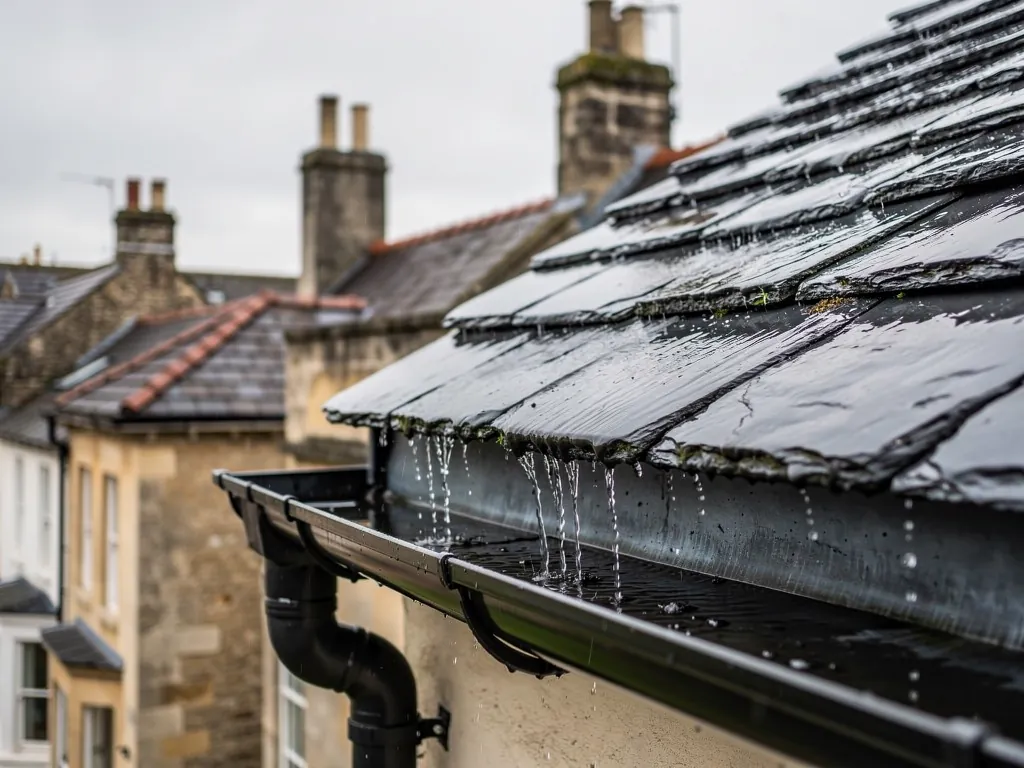
Gutters on low, open sitesOpen ground gives a Yatton house little shelter from a driving shower, so gutters and downpipes work hard. We check joints, outlets and the falls, and trace damp patches on the wall back to their cause.

Open ground and the weather that crosses it

With little high ground to break the wind, Yatton roofs are tested by the weather that crosses the open Levels.

The North Somerset Levels are flat, and a flat landscape gives wind a clear run. A house on the edge of Yatton has open fields in one or more directions, and the roof takes whatever comes. Over the years that means loosened ridge tiles, slipped tiles at the verge, and rain driven sideways into any gap in the covering.

The first check we make on an exposed roof is the fixing. Tiles stay put through their own weight, clips, nails or a mix, which varies with the roof's date and pitch. On older roofs, a tile may be held by gravity and a single nail on every fourth course, and that is a thin margin in a gale. If we find several loose tiles in the same area, we look for the pattern: a line of slips along a course, for example, suggests the battens, the laths the tiles hang from, are failing, not the tiles.

Ridge and hip lines come next. Mortar was the standard bedding for ridge tiles for many years, but it shrinks and cracks. The British Standard BS 5534:2014 says a mortar bed cannot be relied on alone, and calls for mechanical fixings. Dry-fix ridge kits, which are tested under BS 8612:2018, use clips and flexible caps and need no mortar. On a roof that stands in the open, they are often the right long-term choice.

After a storm, glance at the lawn and the gutters as well as the roof. Slipped tiles and bits of ridge often land on the lawn or in the gutter. A visible fragment is a good reason to book a survey, even if no leak has appeared. Our roof inspection service is designed for exactly that: a written look at the whole roof, with pictures.

Mortar or dry-fix

On an exposed Levels roof, a mechanically fixed dry ridge is the safer choice over a mortar-only bed.

Flat roofs, garages and the extensions of a growing village

Much of Yatton's building has been added to, and the additions tend to be flat.

When a village expands and its houses are extended, the extra rooms usually get flat roofs. Yatton is no exception. A flat roof is cheaper to build than a pitched one, it suits a low extension, and it is easy to hide behind a parapet or a fascia. It is also the part of the house most likely to leak. Water does not run off a flat roof as quickly as it does off a slope, so every weakness is tested for longer.

The material makes a difference. Bituminous felt, EPDM (a synthetic rubber membrane), GRP (fibreglass) and lead each have their own strengths and their own faults. Felt can blister and crack at the laps. EPDM resists the weather well but its edges and corners depend on careful detailing. GRP sets rigid and jointless across a roof, but it can crack if the deck beneath it moves. Lead lasts but costs more. We tell you what is on your roof, what has failed and whether a repair will hold.

Ponding, the standing water that stays on a flat roof after rain, is a sign to take seriously. The cause may be a deck that has dipped, falls that were wrong from day one, or an outlet choked with debris. A pond adds weight, speeds up the decay of the membrane and, in winter, freezes. We measure it, find the cause and say whether it is something a repair can fix or a reason to re-cover.

Garages deserve the same attention. A good number carry a thin flat covering that has been patched several times. Our flat roofing and garage roof replacement pages set out what each job involves.

Words you will hear

EPDM
Rubber membrane supplied as a large sheet and glued down over a flat deck.
GRP
Resin laid over glass matting that hardens into a stiff waterproof shell.
Upstand
The vertical lip where a flat roof turns up against a wall.
Falls
The slight slope built into a flat roof so that water moves to an outlet.

St Mary's, the Old Rectory and consent

Two Grade I buildings stand in the old centre, and the rules around them travel outward.

St Mary's Church was built around 1400, and the Old Rectory, a Prebendary house, dates from the 15th century. Both are Grade I listed, the highest grade, so any change to their roofs is a matter for the council, North Somerset Council, and for specialist advice. Most of our work will not be on buildings of that rank, but people who own older houses nearby ask the same question: does my roof need consent?

The answer depends on the building. Work that touches the character of a listed house calls for listed building consent, which can take in the covering, the lead and the chimneys. A house inside a conservation area, or one under an Article 4 direction, may be allowed less than a house with neither. The only safe course is to ask North Somerset Council, and to ask before ordering materials. Listing information is public, and the Historic England list is a good place to check a property.

Large historic roofs are repaired with large historic tools: scaffold, a good deal of lead and a careful eye. Church roofs often combine tiled or slated slopes with lead gutters behind parapets, and those gutters are where leaks start. Rain enters at a split in the lead, tracks down inside the wall, and appears as a stain far below the roof. We lift the debris out, trace the failure and replace the damaged length of lead, set at the correct falls and with drips of sufficient height.

For owners of older houses within reach of the church, a free survey is the first step. We take pictures, write up the defects and say up front whether they are matters for repair, replacement or a conversation with the council. The related lead work is explained on our lead roofing page.

Claverham, the station and the newer roofs

An ex-industrial site turned housing, and a Brunel station beside the line, both bring younger roofs to look after.

The Fairey Hydraulics site in Claverham closed in 2017 and is now a housing estate. Brunel's Victorian station at Yatton is still in service, and the area around it has seen a good deal of building over the years. Newer roofs and their problems form a large part of the village's roofing.

Young roofs fail in small ways, and the small ways add up if nobody looks. A valley may have been laid with too little lap, a cut tile at a verge may be badly fixed, or a roof penetration such as a vent pipe may have a collar that has cracked in the sun. The covering often carries the roof for years in spite of these faults, and then one wet winter reveals them. A survey in the first years after a build is a cheap way to find problems while the builder's responsibilities may still apply, and we would suggest checking the terms of any new-build warranty first.

On newer estates, the roofs tend to be uniform, and that helps us. A row of houses built to one design suffers in similar places, and a repair that works on one will probably suit the next. It also means a neighbour's repair is a good clue to what might come up on your own roof. We look at the whole slope, not only the damaged part.

For the ageing houses between the 1950s and the 1990s, the work is different: tired underlay, worn ridge beds and tiles at the end of their life. Re-covering can bring Building Regulations into play. Planning Portal guidance puts the threshold for needing approval at 25% of the building envelope or 50% of the roof, and adds that swapping to a covering at least 15% heavier brings approval and a structural check. Ask your building control body, and see our roof replacement page for the process.

1840s

Years in which the Bristol & Exeter Railway opened the line through Yatton

2017

Year the Claverham Fairey Hydraulics site closed

c.1400

Date of St Mary's Church, Grade I listed

Figures: Yatton entry, Wikipedia, checked October 2026

Map showing the location of Yatton.

Nearby

Roofers near Yatton

Roofing services in Yatton

Local questions

Yatton and Claverham extension and flat roof queries

My Yatton house stands on open ground with fields behind. Is a dry ridge worth the extra?

On a roof with no shelter, it usually is. A mortar bed shrinks and cracks over time, and a gust can pick up a ridge tile whose bed has failed. A dry-fix system holds each tile with a clip and a cap, and it meets the standard that expects mechanical fixing. We would look at your ridge first, and if the bedding is sound and the tiles are firm, we will say a repair is enough.

Our flat roof extension at the back has water standing on it after rain. Does it need replacing?

Not necessarily. Standing water can come from a blocked outlet, a slight dip in the deck or poor falls. A blocked outlet is a quick fix. A sagging deck or a membrane that has split along its seams is a larger job. We survey, measure where the water stays, and tell you whether to repair the membrane, relay the falls or re-cover the roof.

Does a house near St Mary's need listed building consent to re-tile?

Only if the house itself is listed or is covered by a conservation area or an Article 4 direction. Being close to the church does not by itself change anything. Check the Historic England list and ask North Somerset Council before work begins. If the house is listed, we can write the proposal up in detail for the council to consider.

We bought a house on the old Fairey Hydraulics site in Claverham. Should the roof be checked?

A check of any newer roof is sensible, and a few years after a build is a good time. We look at valleys, ridge and verge details, flashings round vents and chimneys, and the gutters. If the house is still under a new-build warranty, read its terms before arranging any repair, because work by another contractor may affect it. We will give you a written report and photographs either way.

Get your free survey

Get your free roof survey

Tell us what's happening and we'll call you back to arrange a visit. Prefer to talk? Call 01225 285181.

  • Photos of your own roof
  • A fixed price in writing
  • 10-year workmanship guarantee
Call Free survey