
The Levels to the west, and the weather they send
A flat landscape upwind of a town makes for faster, wetter weather at the roof edge.
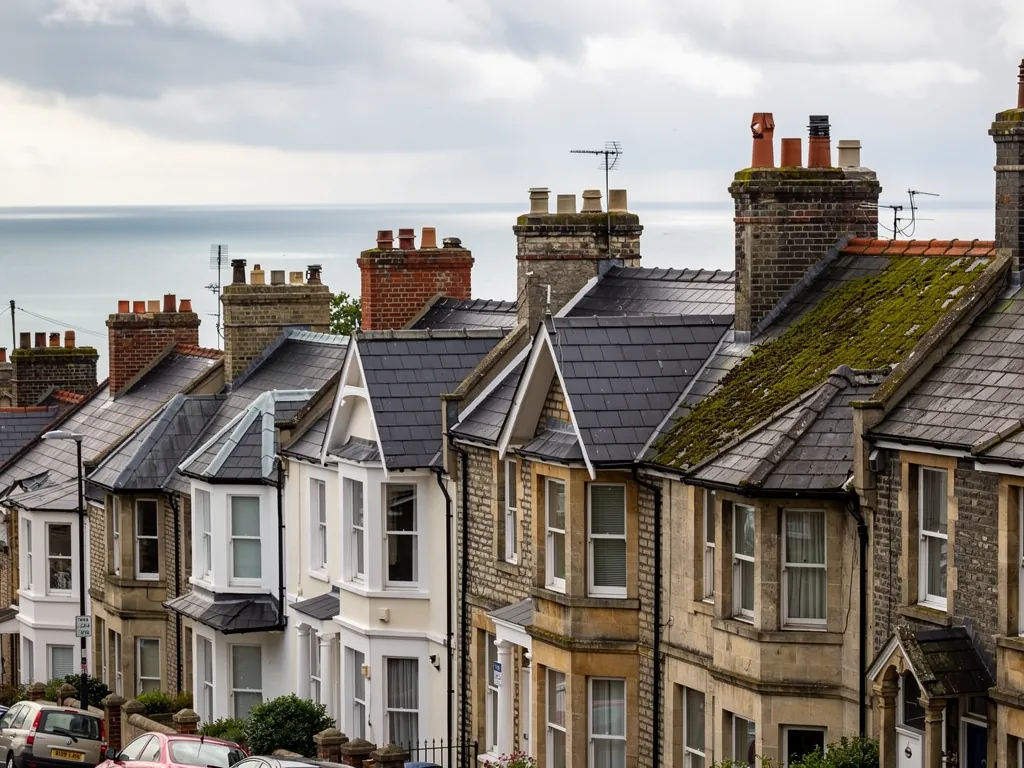
The drained North Somerset Levels lie to the west of Nailsea, and the town faces them. There is little to slow a westerly wind before it reaches the first line of houses, and rain driven by that wind arrives at an angle rather than straight down. Roofs in this position are tested more often than those in a sheltered street, and the faults tend to show on the west side first.
Wind damages a roof by lifting it. A gust passing over the ridge creates suction on the leeward slope, while air forced under an unsealed edge pushes up from below. Any tile with a weak fixing can be raised and dropped back with a clatter, and a repeated movement works the nail loose. The weak points are therefore wherever the fixing is thinnest, meaning the ridge line, the hip lines, the gable edges and the first row above the gutter.
Wind-driven rain is the quieter problem. It passes under laps that stay dry in ordinary rain, and it wets the underlay and the batten ends. A felt that is perfectly sound in a straight fall of rain can still let water through where it has become brittle or torn at the laps. A stain high on a west-facing gable wall indoors is a common sign.
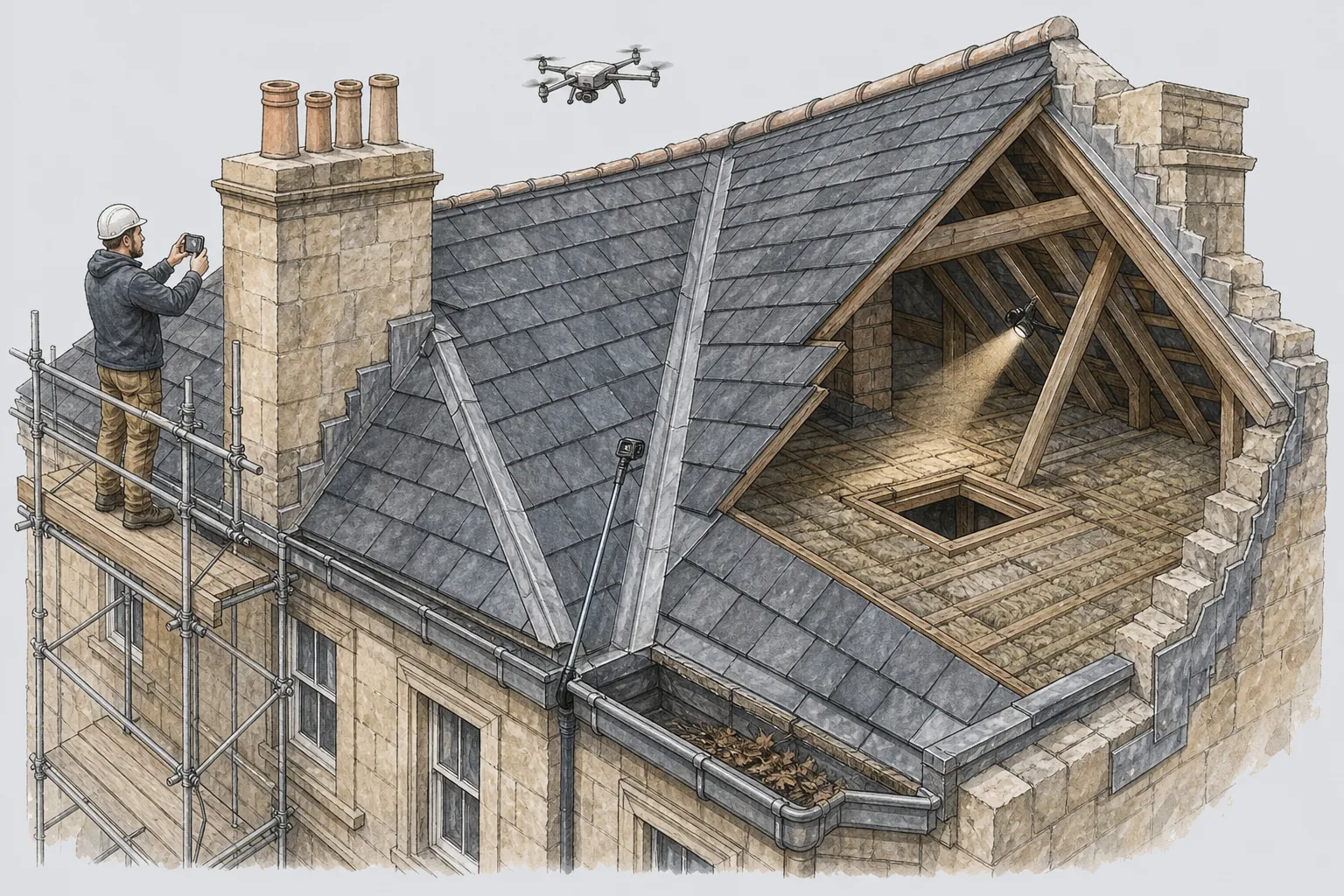
The remedy starts with a close look. We inspect the west-facing slope at close range, test the edge tiles by hand, lift a tile or two to see the felt and the batten, and look in the loft for daylight and for tide marks on timber. If the roof is sound, it may need nothing more than new fixings on the verge and ridge. If not, you get a clear choice and a fixed price. The mechanical fixing of ridge and verge tiles, rather than mortar alone, is standard practice now under BS 5534.
The loft itself deserves a look. Condensation and wind-blown moisture can leave similar marks, and the fix for each is different.