

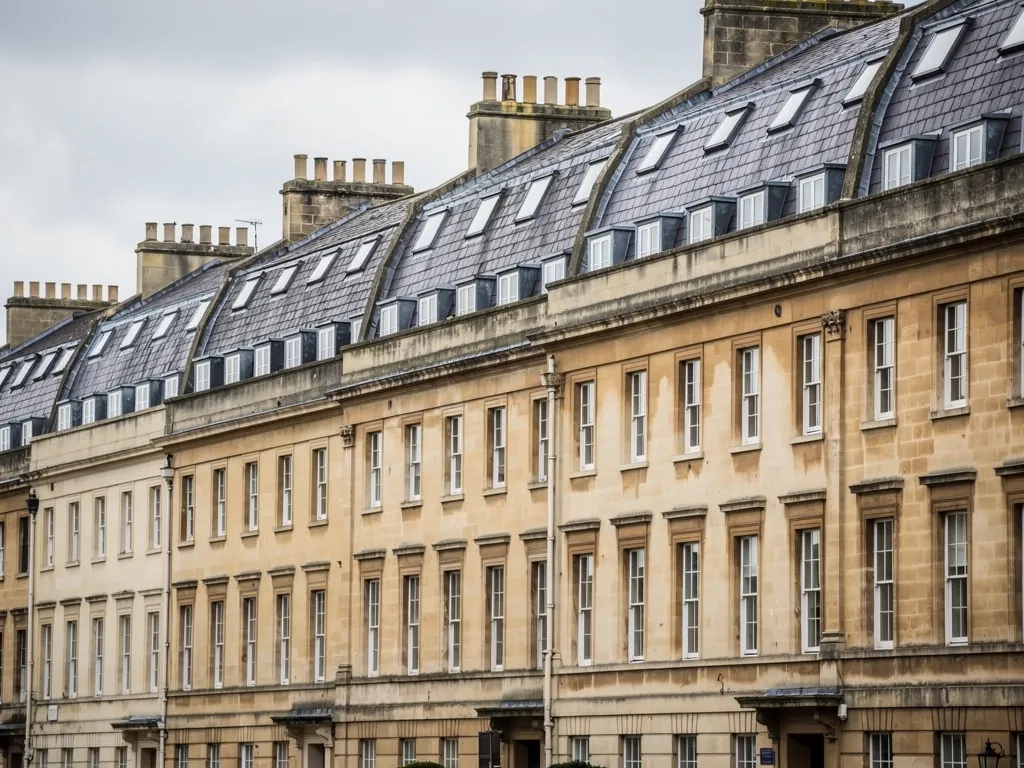


Open ground and the weather that crosses it
With little high ground to break the wind, Yatton roofs are tested by the weather that crosses the open Levels.
The North Somerset Levels are flat, and a flat landscape gives wind a clear run. A house on the edge of Yatton has open fields in one or more directions, and the roof takes whatever comes. Over the years that means loosened ridge tiles, slipped tiles at the verge, and rain driven sideways into any gap in the covering.
The first check we make on an exposed roof is the fixing. Tiles stay put through their own weight, clips, nails or a mix, which varies with the roof's date and pitch. On older roofs, a tile may be held by gravity and a single nail on every fourth course, and that is a thin margin in a gale. If we find several loose tiles in the same area, we look for the pattern: a line of slips along a course, for example, suggests the battens, the laths the tiles hang from, are failing, not the tiles.
Ridge and hip lines come next. Mortar was the standard bedding for ridge tiles for many years, but it shrinks and cracks. The British Standard BS 5534:2014 says a mortar bed cannot be relied on alone, and calls for mechanical fixings. Dry-fix ridge kits, which are tested under BS 8612:2018, use clips and flexible caps and need no mortar. On a roof that stands in the open, they are often the right long-term choice.
After a storm, glance at the lawn and the gutters as well as the roof. Slipped tiles and bits of ridge often land on the lawn or in the gutter. A visible fragment is a good reason to book a survey, even if no leak has appeared. Our roof inspection service is designed for exactly that: a written look at the whole roof, with pictures.
Mortar or dry-fix
On an exposed Levels roof, a mechanically fixed dry ridge is the safer choice over a mortar-only bed.