


Early Victorian terraces and their stacks
The town's dominant style was built to a pattern, and so are its faults.
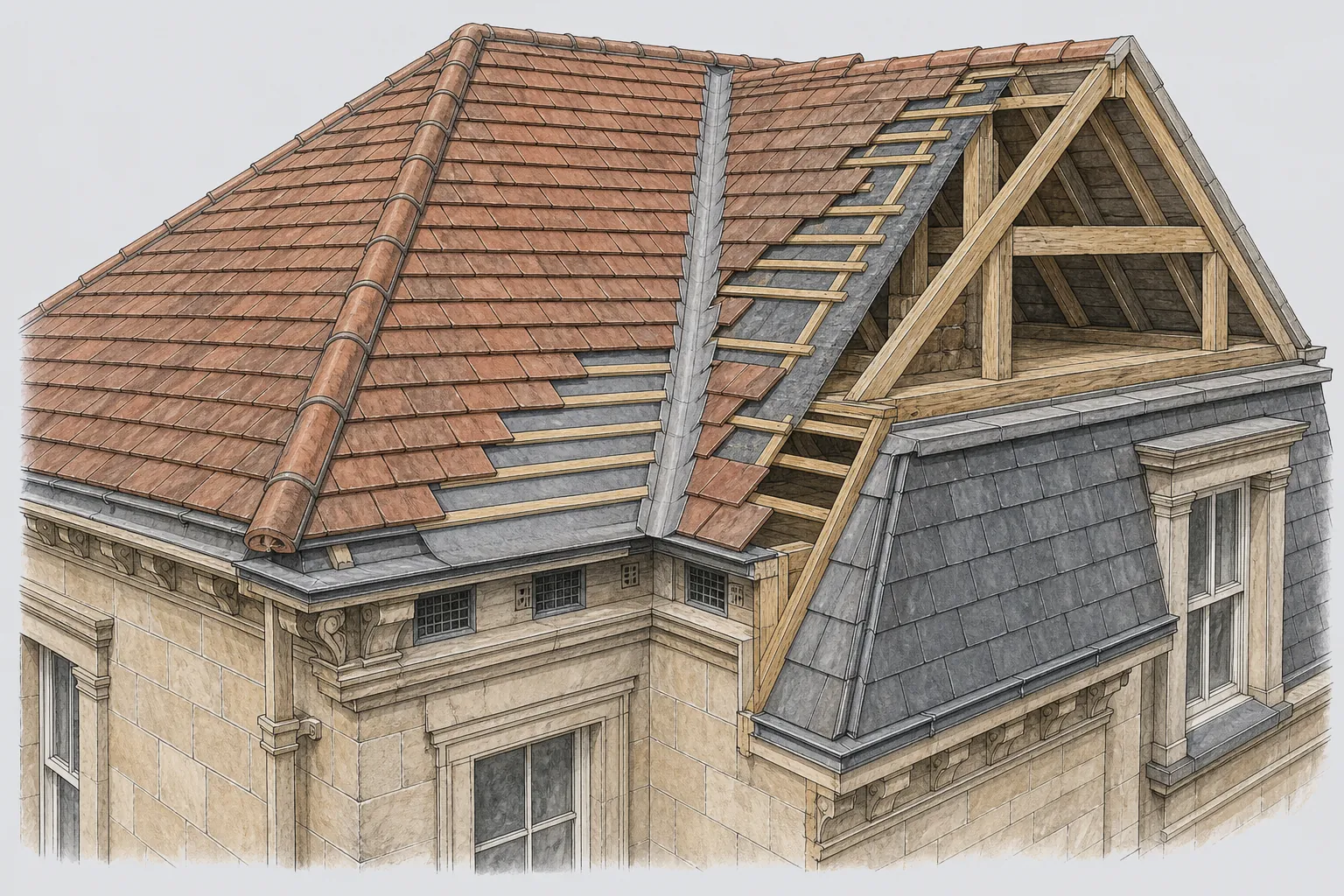
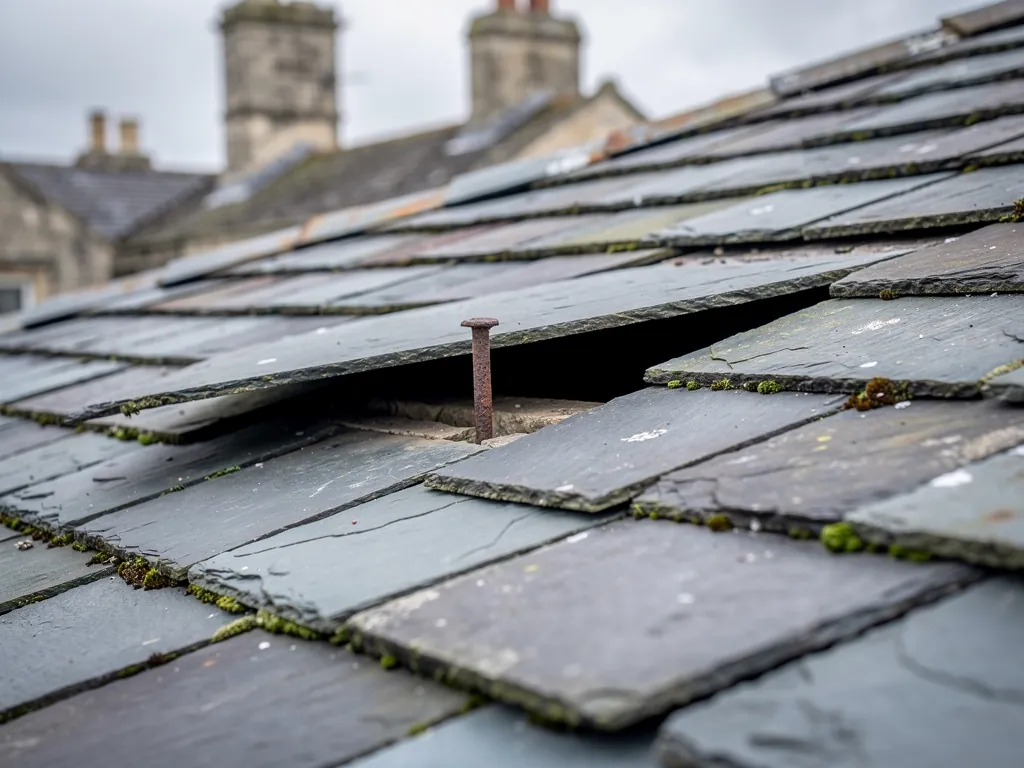
When a town is dominated by one period of building, the houses share their weak points. In Portishead that period is the early Victorian one, and the weak points are the ones a roofer expects to find on a house of that age: chimney stacks, the joints around them, the valleys between roofs and the gutters at the eaves. Some buildings have kept their original features, and where they have, the roof deserves repair in the original manner.
The chimney is the usual starting point. A stack stands above the roof line, takes the weather on every face and is held together by mortar that has had a long time to weather. Flaunching is the mortar slope round the base of the pots, and its job is to throw rain clear. Once it cracks, the stack takes in water. Pointing recedes and the joints open. Lead flashing at the foot of the stack lifts or splits. Each fault is a separate repair, and a survey will show which of them are needed. Typical UK prices reported by MyBuilder (2026) give repointing an average near £750 and flashing repair a band of £250 to £1,200. Only a survey lets us put a fixed figure on your stack.
Where a stack has leaned, cracked through or lost its top courses, a partial rebuild may be the safer course. Before that, we check the cause: a stack that has moved can mean movement in the wall beneath it, not only weather.
Roofs of this age may also have valleys and, behind a parapet, a gutter hidden from the street. A leak starts in such places when nobody has looked for years. The stack itself is covered on the chimney repairs page, and the roof around it under pitched roofing.