


The Court House, Bratton House and the oldest roofs
Buildings that date from the 15th to the 19th centuries carry their history in the timbers, and the roof has to be read from underneath.
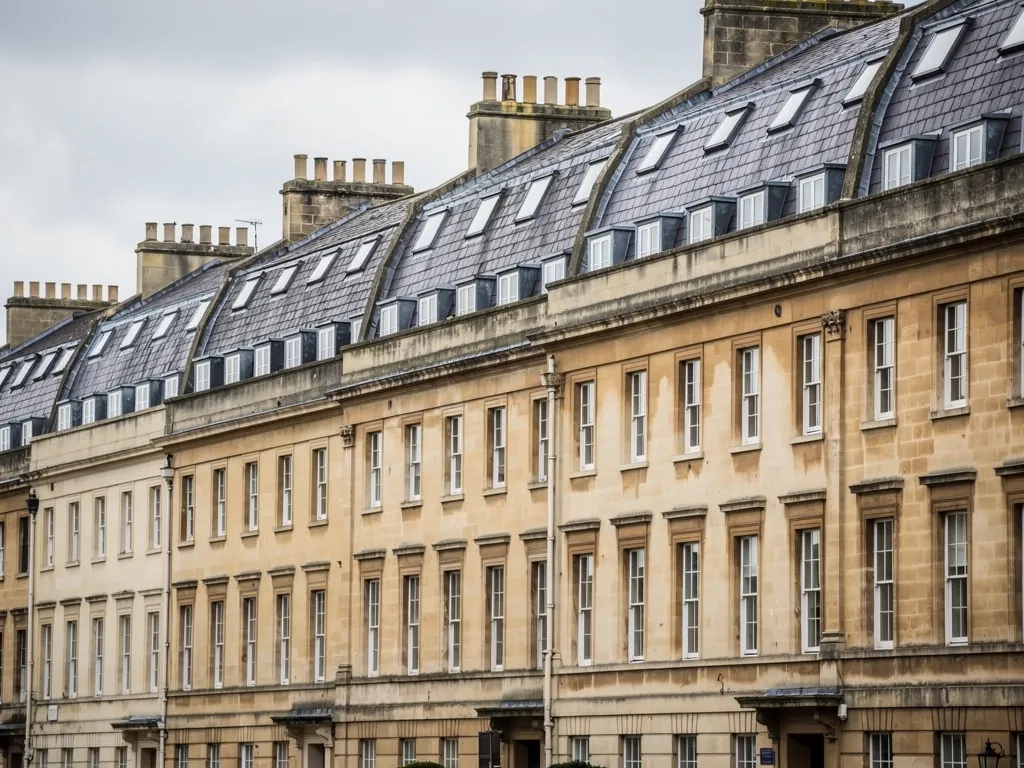
The Court House has parts from the 15th and 17th centuries, and Bratton House combines work of 1715 and 1826. A roof on a building with that kind of history has seldom been built once and left. It is a stack of repairs, each made by a different hand with whatever timber was nearby: a new rafter bolted alongside an old one, a purlin (the long timber that props the rafters halfway up the slope) replaced in a different wood, a patch of boarding where a leak had rotted the original.
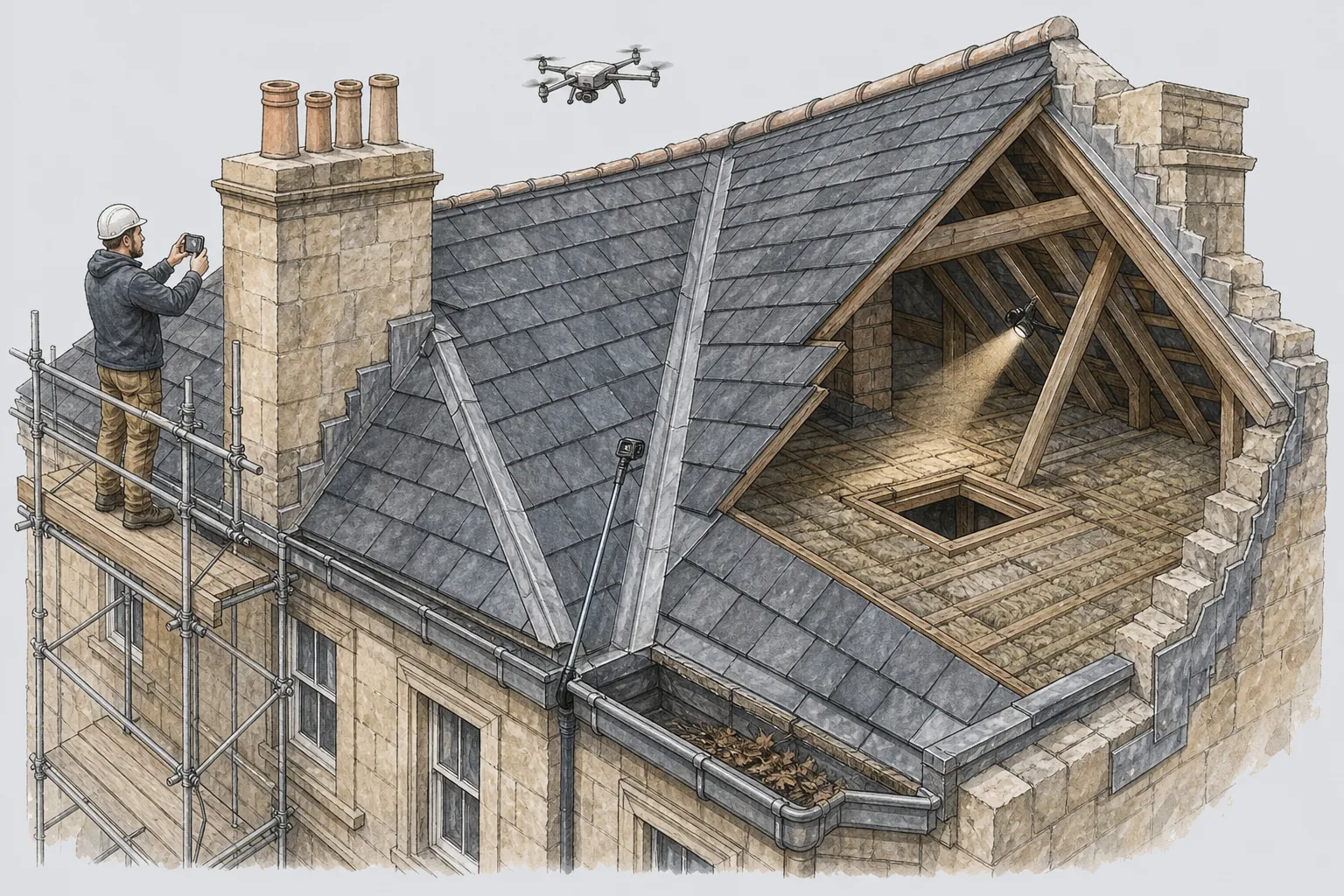
That is why we begin in the loft. Chinks of daylight, tide-marks on the rafters and the dark streaking left by a long slow drip each point to where water is entering. Beetle flight holes, and soft wood where the rafter feet sit on the wall plate (a timber running along the wall top to take their weight), show whether the frame behind the covering still has life in it. If it has, the job can be a repair and the roof keeps its old character. If it has not, you hear what must be replaced before one slate is lifted.
The covering on top is the easier part to match. Where slates or stone tiles are sound, they are lifted, sorted and relaid, with new ones of the same size, colour and thickness filling the gaps. Our pitched roofing page covers pitched roofs of every age and type. Old timber is an asset here, not a nuisance, so we replace only what has failed and leave old rafters where they can still bear their load.
For listed buildings of this rank, Wiltshire Council must give consent before work starts on any change that goes further than matching what is there. The conservation officers will ask what is coming off, what is going on and why, and we can put those answers on paper for you.