



Brick, rubble and the roofs on top
A village shaped by its own brick and tile works has a particular way of ageing.
The brick and tile works in the east of the parish gave Dilton Marsh its colour. Many houses are brick, and others are rubble stone with red brick used at corners, windows and doors. Some have brick on the front walls only. That detail matters to a roofer because walls built in two materials can move differently from one side to another.
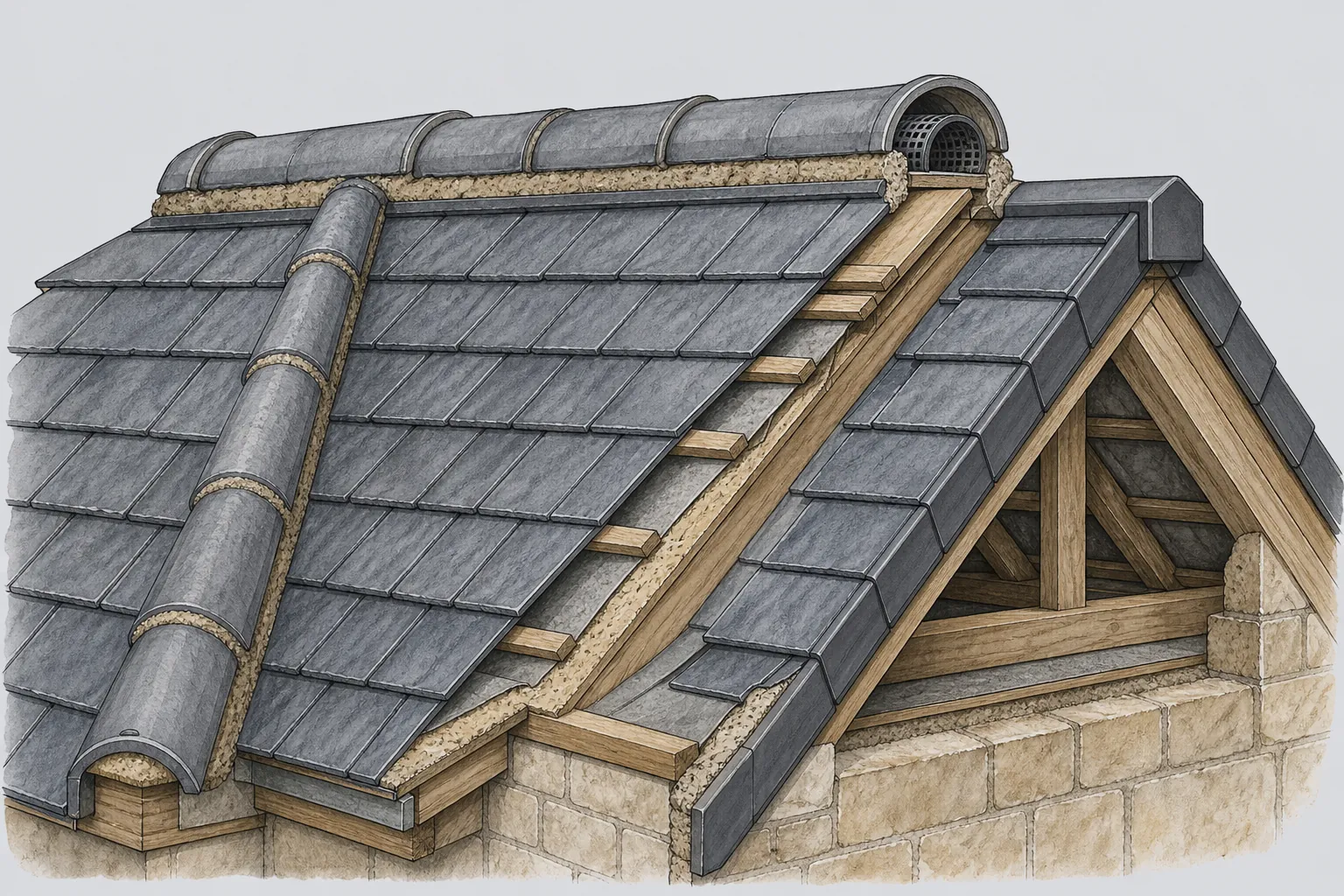
Brick and stone expand and shrink at different rates, and old rubble walls are rarely square. The roof on top has to follow the line of whatever is beneath it. Tiles laid on such a building will not always sit as they would on a modern house, and a repair has to allow for that. A rigid mortar fillet along a verge, for instance, will crack where the wall flexes, while a bed that can give a little will last.
We do not assume the roof was originally tile just because the village had a tile works. An old house may have been re-covered more than once, in clay, concrete or slate, so the opening task is simply identifying what is there. Clay tiles that are soft and flaking at the surface are at the end of their life, while hard-fired ones with a few cracked units can be repaired and kept. A tile that crumbles at the edge when lifted is a warning, because frost lifts moisture out of the face in flakes.
Matching is the second job. Clay tile varies in colour from yard to yard and kiln to kiln, and a new run set beside weathered ones will stand out. Reclaimed tiles often blend best, and a mix across the whole slope hides the join. Clay, concrete and slate are each covered under pitched roofing.
Myth
Roof tiles from a village brickworks always last longer than modern ones.
Fact
Age and firing matter more than origin, and a tile is judged by whether its face is sound and rings when tapped.