

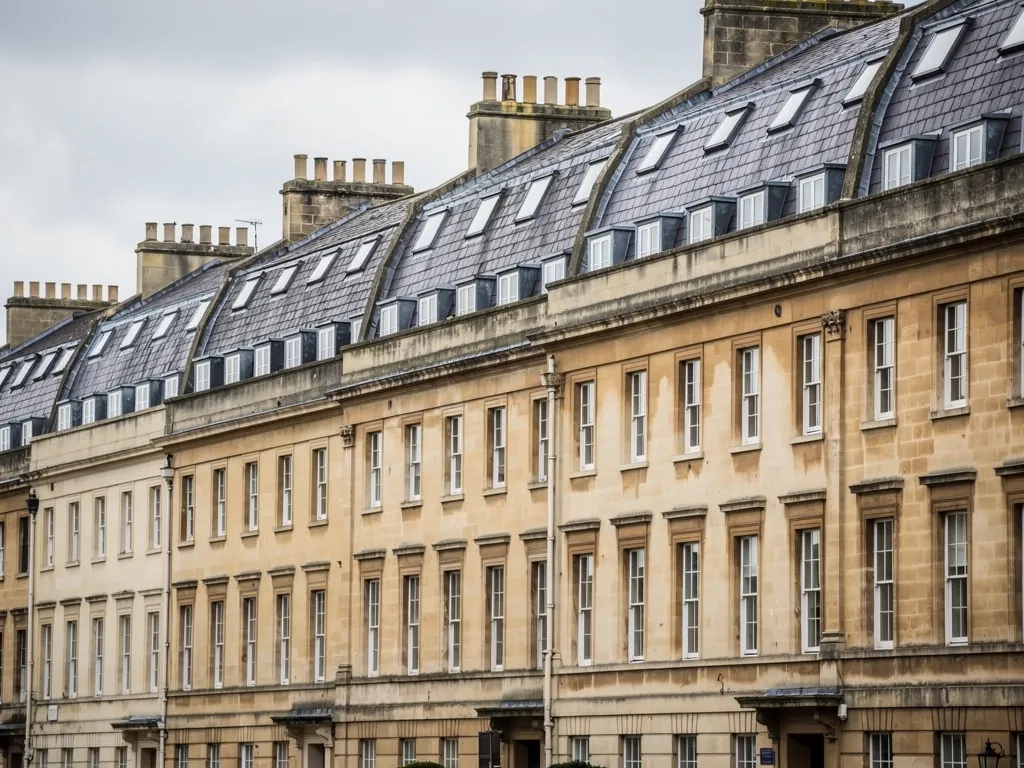
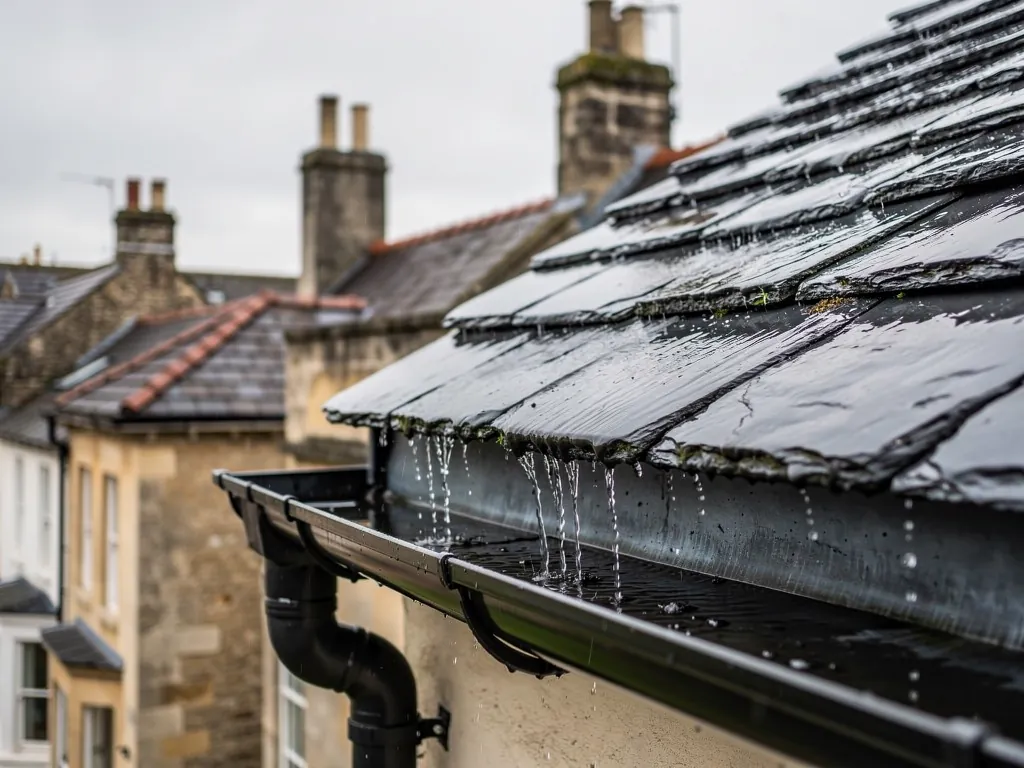
Bristol Victorian terraced houses with slate roofs and bay windows on a hill

Roofers in Hanham

Hanham, in South Gloucestershire, lies 9.2 road miles out from central Bath on a north-west line, and its roofs run from a 1655 hall to the low-energy houses of a modern eco village. We mend and re-cover them to suit each building: a free survey first, pictures of the roof itself, then a fixed written price.

Local roofs

Hanham: old halls, a hilltop beacon and a new village on the hospital grounds

Hanham sits above the Avon valley on the east side of Bristol, in the district run by South Gloucestershire Council, and it became a civil parish in its own right on 1 April 2003. The place carries a lot of layers for its size. Hanham Hall, dating from 1655, stands just over the line in Hanham Abbots parish and is listed Grade II*; the list entry covers Blocks 1 and 2 and the linking arcade at the former Hanham Hall Hospital. The Blue Bowl has been claimed to be one of the oldest public houses in the country. And on Hanham Mount, John Wesley and George Whitefield preached in the open air in the 1730s, long before a beacon was lit there in 1951 and replaced in 2007.

The newest layer is the eco village built on the former hospital site as a model for the government's proposed zero-carbon eco-towns. A roof on a house like that is part of an energy design, and it should be treated that way. A repair that breaks a membrane or lifts a fixing can undo careful detailing, so we look at how the roof was meant to work before we touch it.

Older buildings in and around Hanham ask for the opposite approach. A building from the 17th century has a roof that has been patched, re-covered and re-patched, and the sensible first step is to find out what is under the top layer. We find the timbers, the fixings and the junctions first, then decide whether a repair will hold.

Hanham also stands on rising ground, and a roof near the top of a rise takes wind that a roof in the shelter of a valley does not. That affects how ridges, verges and edge tiles are fixed, and it is why we check every one of them on a survey.

Council
South Gloucestershire Council
From central Bath
9.2 road miles, north-west
Hanham Hall
Grade II* listed, dating from 1655
Civil parish
Created 1 April 2003
Eco village
Built on the former Hanham Hall Hospital site

What we find

Exposed edges, old fabric and eco village junctions

Loose edges on the higher groundRidge, hip and verge tiles (the verge being the sloping edge over a gable end) are the first to feel the wind near Hanham Mount. We check each one for movement and whether it is held by mortar alone or a mechanical fixing.
Old fabric under newer coveringsOn the older buildings we lift a few tiles to see the battens (the laths the tiles are hung on), the underlay below them and the rafters. Soft or darkened timber tells us how far a repair can go.
Junctions on modern low-energy roofsAt a wall abutment, a stack or a pipe penetration, the flashing (the metal strip that seals each junction) is the detail that matters. We inspect those joints without disturbing the layers around them.

The 1655 hall and the listed roofs around it

A Grade II* building asks different questions from a house built last year, and the first of them is who has to agree.

Hanham Hall dates from 1655 and is listed Grade II*, a grade given to a small share of listed buildings that are particularly important. Whatever your own property, the hall is a reminder that Hanham has roofs old enough to be protected, and that the protection covers the roof as well as the walls. If your building is listed, changes to its covering, its chimneys or its roof windows need listed building consent before work begins. The consent authority here is South Gloucestershire Council, and it is the right first call, ahead of any quote.

Listed building consent sits apart from planning permission, and a repair in the same material may draw less scrutiny than a change of one. The practical point for a roofer is the evidence. A conservation officer cannot respond to a vague description, so we record the failing tiles, the replacements we propose and the method for the leadwork and fixings.

On an old roof the timber frame is usually the most valuable part and the most easily overlooked. Rafters and purlins (the long beams that carry the rafters at mid-slope) can hold years of leak damage that the covering hides. In the roof space we probe any soft timber with a bradawl and photograph it, because a re-cover laid over rotten timber will fail wherever the rot is.

When the covering has to be renewed, the aim is the roof as it was built, put right. Natural slate stays natural slate, clay stays clay, and we avoid swapping to a lighter or heavier material without a reason. Choosing a covering that weighs at least 15% more than the old one triggers Building Regulations approval along with a structural check, and a change of that scale on a listed building also alters what the conservation officer will ask.

For slopes like these, see pitched roofing; a full strip and re-cover is covered on the roof replacement page. If you are unsure which applies, a survey settles it before any price is given.

Exposed ground above the Avon valley

Wind, rain and a rise in the land all land on the same few parts of a roof.

Hanham Mount is an elevated viewpoint with a 180-degree panorama over Hanham, Conham and Kingswood, and the streets around it face weather that lower ground avoids. A roof on exposed ground works harder than one in a sheltered cul-de-sac. The wind finds the edges first, so the places we look hardest are the ridge, the hips, the verges and the lines of tiles along the eaves.

Mortar was once the whole fixing on many of these. Bedded mortar cracks as the roof flexes and the weather works at it, and a ridge tile that has lost its bed will lift, slide or fall in a gust. BS 5534:2014 stopped treating mortar as enough on its own for ridge and hip tiles, so each tile needs a mechanical fixing too. When we re-bed or replace a run, we add a fixing to every tile instead of leaning on the bed.

Dry-fix is the mortar-free route to the same end: clips, caps and seals tested to BS 8612:2018. It copes with movement better than a mortar bed and is quicker to fit, so it suits a roof that has had repeated repairs along the ridge. It does change the look of the line slightly, and on an older building the appearance matters, so we show you what it will look like before it goes on.

The other piece of exposed-ground work is the eaves. Wind-driven rain gets under the lowest course of tiles and soaks the felt, which is where an old underlay (the membrane beneath the battens) usually fails first. A damp stain at the top of an external wall can be this, and not a fault higher on the roof. We check the eaves from a ladder or tower before we point to the ridge.

Work on the edges is covered under ridge and verge repairs, while a single leak is handled under roof repairs, where the roof is made safe before anything else and storm damage takes priority.

Myth

A ridge tile that is bedded in thick mortar will hold in any wind.

Fact

Mortar cracks as a roof moves, and the current British Standard expects ridge, hip and verge tiles to be mechanically fixed as well.

The eco village and low-energy roofs

A roof built to a zero-carbon brief has to keep working as part of the design after repair.

The eco village on the former Hanham Hall Hospital site was designed as a blueprint for the proposed zero-carbon eco-towns, and the houses on it were built to a standard the older roofs around them never faced. The point for a roofer is that the covering is only one layer in a system. Underneath may be insulation, a vapour control layer to keep warm moist air out of the build-up, and a breathable membrane. Cut or compress the wrong layer and you can change how the whole roof behaves.

So on a modern low-energy roof, repairs are conservative. A cracked or slipped tile can be swapped without disturbing the layers below, provided the replacement is the same profile. Flashings round roof windows and vent pipes are renewed in the same metal and dressed the same way, and the old sealant is cleared before new material goes on. What we avoid is fixing a fault by adding material over it, which can trap moisture.

New work is held to Part L of the Building Regulations. Where a roof window is replaced, the limit for the whole window is 1.4 W/m²K, or Band B when measured on the Window Energy Rating scale, and a rooflight has its own limit. The planning side for roof windows is covered on the skylights and roof windows page, so we do not repeat the rules here.

Older houses in the parish may have added loft insulation over the years, and on any of them it pays to keep a ventilated gap at the eaves. Insulation that is pushed hard into the eaves cuts off the air that keeps the timbers dry. A roofer often finds this when called out for a damp patch, and it is simple to put right.

One more check applies across Hanham, new and old: flat roofs on dormers, porches and extensions. They fail at edges and outlets more than in the open field of the roof, and a short inspection will show whether patching or replacing makes sense.

Words you will hear

Vapour control layer
A membrane on the warm side of the insulation that stops moist indoor air reaching cold timbers.
Purlin
A long timber laid across the rafters at mid-slope to stop them bowing.
Flashing
Sheet metal, usually lead, worked into the gap where a slope meets a wall, stack or pipe.
Dry-fix
A mortar-free ridge or verge system held on by clips and caps.

What a survey and a written price involve in Hanham

You get to see the roof's condition before anyone asks you to agree to anything.

A survey of a Hanham roof starts from the outside. We look at the covering from the ground, from a ladder or a tower, and then at the ridge, hips, valleys (the trough where two slopes run together), flashings and gutters. Next comes the roof space, if access allows, and the covering seen from beneath for pinpricks of daylight, damp and stained timber. Photographs of your roof go into the written report, so it shows you exactly what we found.

That report is the basis of a fixed price in writing. It names the work, the materials and the order they are done in, so there is no need to guess what an item means. We repair where repair works, and if a re-cover is the better answer we will explain why. For scale, national cost guides report typical UK roof replacement at £5,000 to £12,000 (MyBuilder, 2026), and a small repair at £100 to £300 for a leak or a few tiles. The fixed price waits until we have seen the size, the covering, the access and the scaffold needed.

Access is a practical issue in a place like this. Older streets can be steep or tight, and parked cars can block a drive. We plan scaffold and deliveries to suit the street, and our waste leaves with us.

Agreed work carries our written guarantee of ten years on workmanship. It applies to how the job was done, and no insurer stands behind it. Where the job needs Building Regulations approval, because of the size of the re-cover or a change of weight, we explain which route applies and handle the notification, by way of the council's team or a private approver registered for the purpose.

If you would rather start with a message, ring 01225 285181, contact us through WhatsApp, or complete the form on this site. Tell us the road, the age of the house and what you have noticed, and we will arrange the survey.

Patch or replace

Sound timbers and fixings favour patching the faults, while failed nails, battens and underlay together favour a new covering.

Map showing the location of Hanham.

Nearby

Roofers near Hanham

Roofing services in Hanham

Local questions

From Hanham Hall to the eco village, ask us

The ridge tiles on our road near Hanham Mount keep loosening. Why?

Exposure is the usual cause. Roofs on rising ground take more wind at the ridge and edges, and a mortar bed cracks as the roof flexes. We check whether the tiles are held by mortar alone, then bed them again with proper fixings, or fit a dry-fix system. If the bed has failed along the whole ridge, doing it all at once is usually better than patching one tile at a time.

Do roofs on the Hanham Hall site need listed building consent for repairs?

Where a building is listed, its roof falls within the listing, so changes can need consent from South Gloucestershire Council. A repair in the same material may need less than a change of one, but ask the council before work starts, because unconsented work is an offence. We can set the proposed work down in detail for you to pass on to them.

Can you repair a roof in the Hanham eco village without harming its insulation?

Yes, by keeping repairs to the covering and the junctions, and not cutting into the layers beneath. We replace slipped or cracked tiles like for like, renew flashings in the same metal and avoid anything that compresses the insulation or blocks the ventilation gap. Where a membrane has been damaged, you hear about it before the work is priced.

A damp patch has appeared on a ceiling in my old Hanham cottage. Is the roof to blame?

It may be, but the covering is not always the cause. Water can enter at a chimney flashing, a failed gutter or a gap at the eaves, and condensation in an unventilated loft can produce the same stain. We check the outside first, then the roof space, and report back with photographs before suggesting any work.

Get your free survey

Get your free roof survey

Tell us what's happening and we'll call you back to arrange a visit. Prefer to talk? Call 01225 285181.

  • Photos of your own roof
  • A fixed price in writing
  • 10-year workmanship guarantee
Call Free survey