
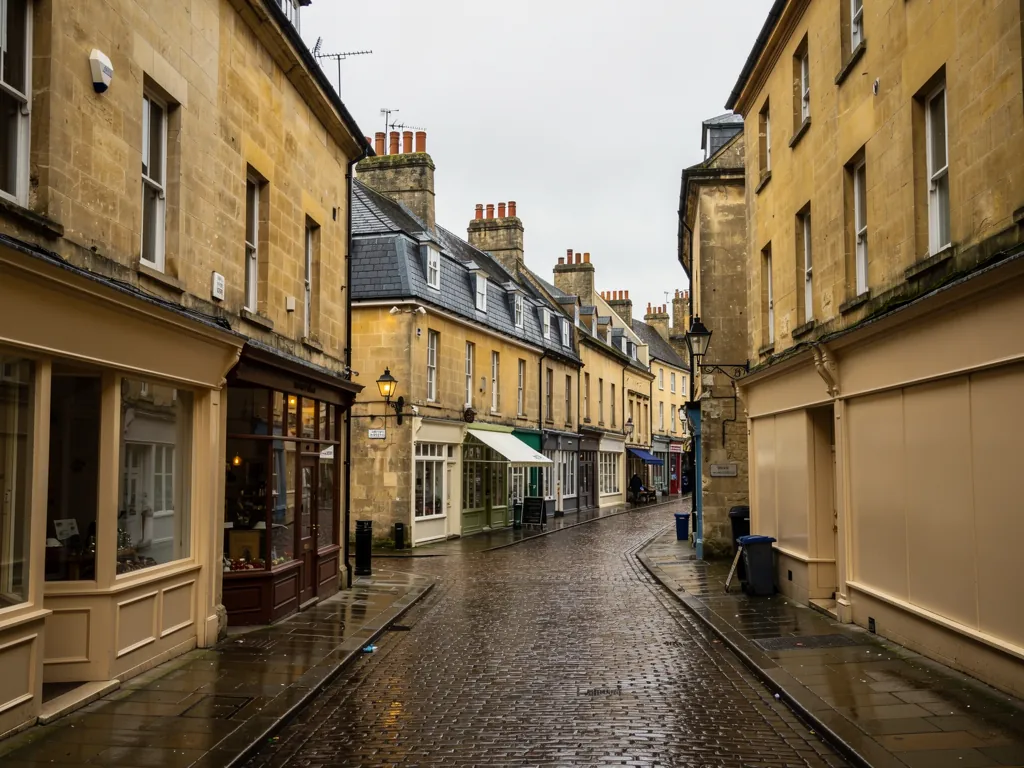
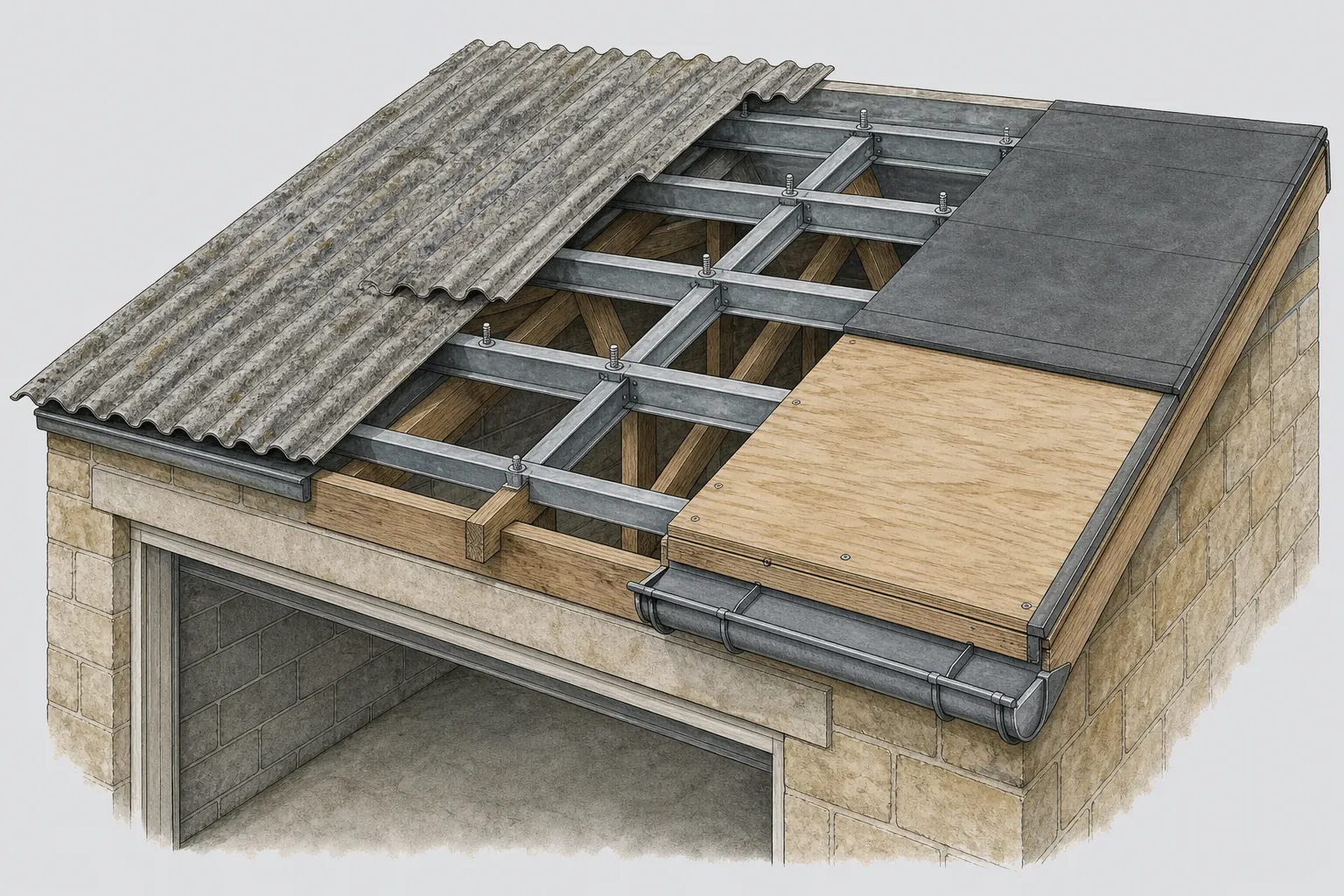
A Mendip village of grey limestone cottages with clay tile roofs

Roofers in Priddy

Priddy sits in a hollow near the top of the Mendips, 20.5 road miles south-west of Bath, and its roofs take the weather at 260 metres above sea level. In Priddy our repairs and re-coverings go back on in the material already there, with particular care for the lead, the fixings and the junctions that a high, open village tests first.

Local roofs

A lead-mining village on the summit

Priddy lies in a small hollow close to the summit of the Mendip range, at an elevation of 260 metres (850 ft). That height shapes everything about a roof here. There is little to break the wind between the hills and the houses, and rain arrives from the open sides of the plateau rather than being filtered through trees and streets, as it is in a valley town.

The village has a working past that still shows on the ground. Land to the east and north-west carries extensive patches of gruffy ground, the grooves left where lead ore was dug from veins near the surface, and the ruins of St Cuthbert's Leadworks, which closed in 1908, can still be seen. Lead was being worked here as far back as 300 to 200 BC, and it is still the metal that keeps water out of a roof at its most difficult points: valleys, abutments, chimney flashings and the gutters behind parapets.

The Church of St Lawrence, dating from the 13th century with rebuilding in the 15th and restoration between 1881 and 1888, is Grade I listed. North-east of the village the Priddy Circles, a henge monument that appears to be contemporary with Stonehenge, add to a sense of a place that has been exposed to the sky for a very long time.

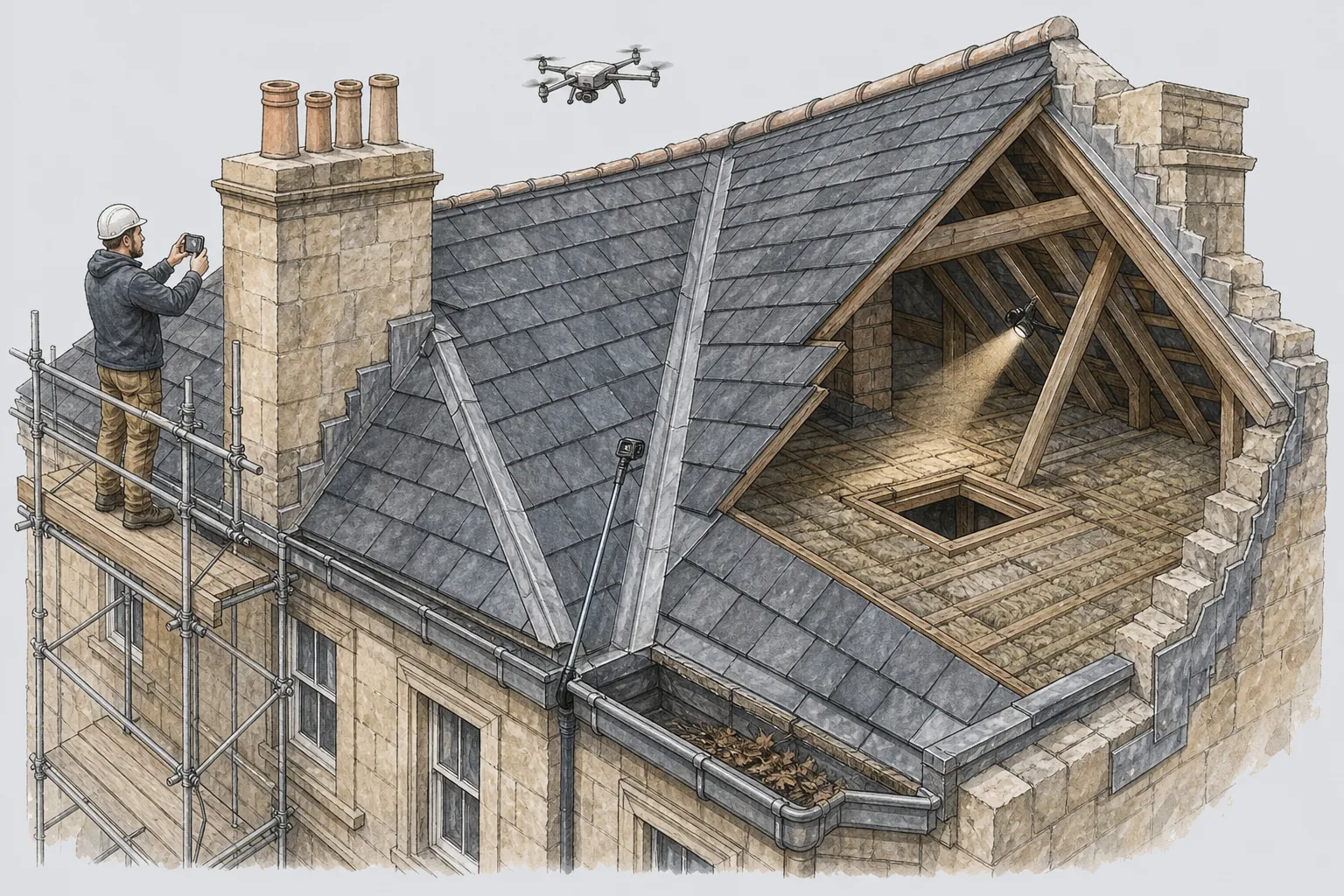
For a homeowner, the practical question is what that exposure does to a covering. We go up and read the roof from the ridge down, noting what the weather has done to fixings and flashings. You receive the result as pictures of your own slopes and a price on paper.

Council
Somerset Council
From central Bath
20.5 road miles, south-west
Elevation
260 metres (850 ft) above sea level
Listed church
St Lawrence, Grade I
Lead heritage
St Cuthbert's Leadworks closed in 1908

What we find

Lifted fixings and tired lead at 260 metres

Lifted ridge and verge fixingsOn a summit village the wind works at the roof's edges first. We test whether the ridge and hip tiles rely on anything beyond ageing mortar, and whether the verge (the sloping edge where tiles meet the gable) has lost its pointing and begun to admit gusts under the end tiles.
Fatigued lead at flashings and guttersLead moves with the weather and splits where it is pinned too tightly. We inspect the flashings (strips of lead dressed over the joint between roof and wall or stack), the soakers under them, and any lead-lined gutter, for cracks at the laps and for creep down the slope.
Slipped or cracked covering after a wet winterFrost lifts and splits tiles and slates that are already holding water. We work along every course, mark what has moved, and tell you whether a handful of repairs will do or the roof has reached the stage where it should be re-covered.

Living at 260 metres: what the exposure does

Height above the surrounding country puts more load on every fixing than the same house would carry in a sheltered street.

A roof in a lowland street is shielded on most sides. A roof near the summit of the Mendips is not. The wind meets the slope square on, rain is driven up the covering rather than falling straight down it, and a wet, cold winter at that height is hard on any covering. None of that is dramatic in a single season. It shows up over time, as small movements that eventually let water through.

The first place to look is the fixing. Slates and tiles are held by nails or clips, and a corroded nail gives way long before the slate beneath it has worn out. On an exposed slope, a slate that has lost its nail will slide and then lift, and the courses around it take extra wind as a result. Our approach is to find out whether the failure is local or general. A few slipped slates on an otherwise sound roof can be refixed with a tingle, a thin lead or copper tab bent up under the tail of the slate. A roof showing the same loose pattern on every slope has reached the end of its fixings.

The next layer matters just as much. Underlay is a sheet draped over the rafters and held down by the battens, the cross-timbers that the slates or tiles hang from. It catches wind-blown rain and leads it to the gutter. On a high roof, rain is pushed past the joints more often, so a torn or brittle underlay shows itself through stained rafters and a damp loft long before any tile looks wrong from the ground.

Ridge and verge details deserve the same scrutiny. The 2014 edition of BS 5534 rules out mortar as the sole fixing for ridge and hip tiles, so repairs and new coverings add a clip or screw. A dry-fix ridge or verge, clipped and capped instead of bedded, is tested to BS 8612:2018, and it suits a gale-prone position well. The pitched roofing service covers the roof as a whole, from the timbers to the ridge line.

Lead: from the veins to the valley gutter

Lead was worked around Priddy from before the Romans until the leadworks closed in 1908. On a roof it is still the metal that does the sealing.

The gruffy ground east and north-west of the village is the surface trace of a lead industry, and the ruined leadworks closed in 1908. It is a fitting local fact for a roofer, because the places where a roof fails are very often the places where lead is used.

Lead goes where a covering alone cannot cope. Valleys are the folds where two slopes join, and both slopes empty into them. A chimney stack pierces the slope and needs a flashing on every face. A box gutter is a channel built into the roof structure, lined with lead or another membrane and tucked between slopes or behind masonry. A parapet gutter does the same job along the base of the short wall that edges a roof. Each of these details relies on sheet lead that has been shaped, lapped and fixed so that it can shift without splitting.

When lead fails, it tends to fail at the same points. A split at a drip, the small step that drops water onto the next level, lets moisture into the structure beneath. Lead dressed too tightly over a chimney will crack at the corners as the metal swells and shrinks. Lead that has crept down a slope leaves a gap at the head of the flashing. We examine all of this from the roof itself and bring you pictures, because lead faults are rarely visible from the ground.

We do not quote a lead thickness from a table, because the right weight depends on the detail and the exposure of the roof. What we do is tell you which part has failed, whether a local patch is likely to last or the whole run needs replacing, and what the work involves. Our lead roofing page describes the details we work on, and the roof repairs page covers smaller jobs where one flashing is the whole problem.

Words you will hear

Valley
The fold where two roof slopes meet and both drain into it.
Flashing
Sheet metal, often lead, dressed across a seam where roof meets masonry.
Box gutter
A concealed channel inside the roof structure, usually lead-lined, that carries water to a downpipe.
Soaker
Lead pieces tucked beneath successive slate or tile courses beside an abutting wall.

A Grade I church and the question of consent

In a village with a Grade I church and a long history, some roofs carry listed status and some do not. Finding out first saves time.

The Church of St Lawrence is the village's best-known listed building, Grade I and dating from the 13th century. Listing is not limited to churches. Farmhouses, cottages and outbuildings in a rural village can be listed too, and the protection extends to the roof. If your house is listed, Somerset Council must grant listed building consent first for anything that changes its character, and going ahead without it is a criminal matter.

Confirming the status of your own house falls to the council rather than to a roofer. What we can do is examine the roof, describe the intended work in specific terms and help you take that description to the planning team. Historic England maintains the National Heritage List for England, the official register, and an entry there tells you at once if a building is listed. That, plus a call to Somerset Council, answers the question for most owners within a day or two.

Work that is not listed still has a Building Regulations side. Building control approval is normally waived for small re-coverings, meaning work on under 25% of the envelope as a whole and on less than 50% of the roof itself. Bigger re-roofs do need it, and may trigger an insulation upgrade. Choosing a covering with 15% extra weight over the old one brings approval and a structural check into play. If an application is required, we submit it to Somerset Council's building control team or a registered building control approver.

Wild animals matter on a roof in open country. Bats are protected, as are nests in use, and a farmhouse or barn loft on the Mendips is a likelier home for either than a terrace in town. If we find signs, work stops and we talk to you before a single slate is lifted. A conversation with the council, if there is one, runs more smoothly when it begins early and the scope is clear. The roof replacement service describes the order of work on a complete re-cover.

Before you start

If a house in Priddy might be listed, check the National Heritage List and ask Somerset Council before any roof work is priced.

Planning a job a long drive from the city

A roof 20.5 road miles from Bath needs its materials, access and weather windows thought through before the first day.

Priddy lies 20.5 road miles out of Bath, in a south-westerly direction, comfortably within our 30-mile radius. That is near enough that the trip is routine. It is far enough that a job here is planned rather than improvised, and the planning begins at the survey.

Weather comes first. A roof on the Mendip plateau is a poor place to leave open overnight under a wet forecast, so we plan the stripping of each slope to be dried in before the light goes. On a repair this is simple. On a full re-cover the usual approach is to work in sections, with underlay and battens renewed on each section before the covering follows it.

Access comes second. A MyBuilder cost guide from 2026 adds roughly £1,125 for scaffolding on a typical UK roof replacement, and the figure moves with eaves height and the number of elevations. Scaffolding on a sloping or soft site costs more to make safe. At the survey we note the ground, the width of the approach and the working room at the eaves, so that the written price already allows for them.

Materials come third. Matching an older covering means finding new or reclaimed slate or tile in the right size and colour, and a village this far from a builders' merchant is a bad place to learn that an order is short. We order against the measured roof, with a margin, and confirm delivery before the scaffold goes up.

On cost, the same guide reports a typical UK spread of £5,000 to £12,000 to replace a roof, driven by size, covering, pitch and access. Your own figure is set after the survey, which is free, and it reaches you in writing. At handover we sweep up and cart the waste off, and the ten years of workmanship cover are written down too.

260 m

Elevation of Priddy above sea level

1908

Year St Cuthbert's Leadworks closed

20.5

Road miles from central Bath, south-west

Figures: Priddy entry, Wikipedia, and Empire Roofing Bath route data

Map showing the location of Priddy.

Nearby

Roofers near Priddy

Roofing services in Priddy

Local questions

Asked near the top of the Mendips

Does the height of Priddy make a difference to which roof covering I should choose?

It changes how the covering is fixed more than which one you choose. At 260 metres, with open ground on several sides, wind pressure on the edges and ridge is higher than in a sheltered street. Natural slate, clay tile and concrete tile can all do well when nailed or clipped properly and finished with mechanically fixed ridges and verges. If the roof is older, matching the existing covering is usually the right call, and the battens and underlay are checked as part of that decision.

Could the old lead mining mean ground movement under my Priddy house?

A roofer is the wrong person to judge the ground. The surface workings known as gruffy ground are a matter for a building surveyor or structural engineer if you are worried about foundations. From the roof we can report evidence of shifting, for instance a sagging ridge, cracked pointing around a stack or a pitch that has gone out of line, so you can decide whether to ask for a structural opinion.

Our cottage is near the church. How can I tell if it is listed?

Search the National Heritage List for England, run by Historic England, then ask Somerset Council's planning team to confirm. A listing covers the entire structure including the roof. We can set out the proposed roof work, covering, lead and fixings, in sufficient detail for the council to respond to, so that you are not putting an open question to them.

Is it worth patching a lead flashing on an old Priddy farmhouse, or should the whole stack be re-leaded?

That depends on how far the damage runs. One split corner or a short lifted section can often be patched and will hold. If the lead has crept, cracked at several corners or been sealed with cement fillets that have failed, re-leading the whole stack costs less over time than repeated patching. We lift the slates beside the stack, check the soakers beneath, and tell you which case you have before pricing it.

Get your free survey

Get your free roof survey

Tell us what's happening and we'll call you back to arrange a visit. Prefer to talk? Call 01225 285181.

  • Photos of your own roof
  • A fixed price in writing
  • 10-year workmanship guarantee
Call Free survey