


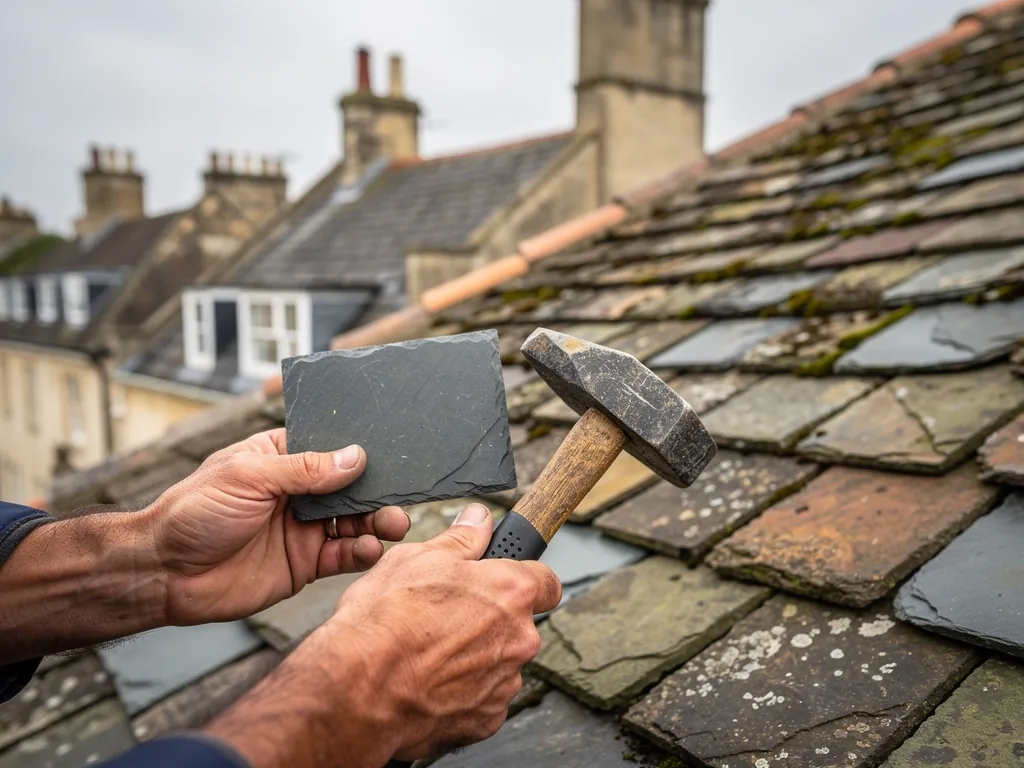

The High Street houses and the roofs that came after the fire
After the 17th century rebuilding, a roof here may have been patched and altered many times since.
A walk along Sherston High Street shows how a village is put back together in stages. Houses of different dates sit shoulder to shoulder, each with its own pitch, its own ridge height and its own idea of where a chimney should go. For a roofer, that variety means no two roofs can be priced from a description. We go up and look.
The first question on a house of this age is what the roof was built from and what it carries now. Some will still have a stone or clay covering that has been lifted and relaid in the past. Others will have been stripped and re-covered in something heavier or lighter, and a change of that kind has consequences for the timbers beneath. Planning Portal guidance puts the line at 15 per cent extra weight over the existing covering, or more: beyond that, Building Regulations approval is required, and in practice that brings a structural check of the rafters.
That check is not a formality on a house with 17th century framing. Before we talk about the covering we look at the roof from the loft side with a torch: the condition of the rafters at the eaves, whether any purlin has dropped, and whether earlier repairs have used timber that is the wrong size for its job. Daylight showing between the battens (the narrow timber laths that carry the covering) tells its own story.
Where the roof is sound and the covering is what has failed, we repair. A re-lay, with good existing material kept, sorted and put back, is usually kinder to an old house than a complete strip. Where the timbers need work, we tell you and show you the photographs, so that the decision on the order of work rests on what is actually up there. The pitched roofing service covers full re-covering, though a repair that solves the fault is always the first thing we put to you.