The short answer
Electric roof windows are worth it where the sash is out of reach, in a high ceiling, over stairs or above a bath, or where you want it to close itself when it rains. Within easy reach a manual window does the same job for less. One cost guide puts the electric premium at roughly £200 to £500, and the motor's guarantee is shorter than the window's.
What an electric roof window actually does
An electric roof window opens and closes with a motor instead of a pole or a handle. A wall switch or a handheld remote moves the sash, and many models add a rain sensor that shuts the window when water lands on the glass. The window is otherwise the same as a manual one, with the same frame, the same glazing options and the same flashing to the roof.
Solar-powered versions work differently. A small photovoltaic panel on the frame charges a battery, so no cable is needed to the mains. That matters in a loft conversion that is already plastered, where chasing a new cable would mean opening up a finished ceiling. Mains versions are usually cheaper to run and have no battery to age, but they need a feed to the window position.
Either way, the question is whether the motor solves a real problem in your room. If it does not, you are paying for convenience that you will use rarely.
Where an electric window earns its place
The strongest cases are about reach and about forgetting.
- High or awkward positions. A window over a stairwell, above a freestanding bath or at the top of a tall sloping ceiling is hard to open safely. A motor removes the stretch.
- Ventilation you want to happen automatically. In a bathroom or utility room that steams up, a window that opens on a switch is far more likely to be used.
- Windows left open by habit. A rain sensor closes the sash if you leave for work with it ajar. That protects the room, and it also protects the lining and the insulation around the frame from repeated soaking.
- Accessibility. For someone with limited grip or reach, a remote makes a loft room usable.
In a bedroom where the window is within easy reach, the extra cost is harder to justify. A well-fitted manual sash costs less and has nothing to wear out.
The cost and the guarantee
Prices below are typical UK ranges reported by MyBuilder (2026), not Empire prices. For a standard fit, labour and fitting are typically £350 to £600 with the window extra, and the same guide puts the premium for an electric model at around £200 to £500 over a manual one. Scaffold, where it is needed, adds about £500 on top. Your fixed quote follows the survey.
The guarantee is the part people overlook. The manufacturer's published guarantee gives 10 years on the roof window itself, while the electrical components of an electric or solar model carry a shorter period of 5 years, which can be extended by a further 5 years when the product is registered. That does not mean the motor will fail at five years, and we cannot say how long one will last, because no independent lifespan is published. It does mean that the part most likely to be replaced is the part with the shortest cover.
If you choose an electric model, register it when it is fitted. The extension depends on registration, and it is easy to forget once the scaffold has gone.
Fitting differences to plan for
An electric window does not change the flashing, but it does change the preparation. Mains models need a cable run from a supply, a spur or a junction, and that is electrical work which should be certified. In an existing house with a finished loft, the route for the cable decides how much plaster has to be opened up. In a loft being converted from scratch, the cable goes in before the boards go on, which is much simpler.
Solar models avoid the cable. They do need a roof slope that sees daylight, though, since the panel charges from light rather than direct sun. A north slope shaded by a taller neighbour or a chimney stack will charge more slowly than a south one, so think about orientation when you choose the position.
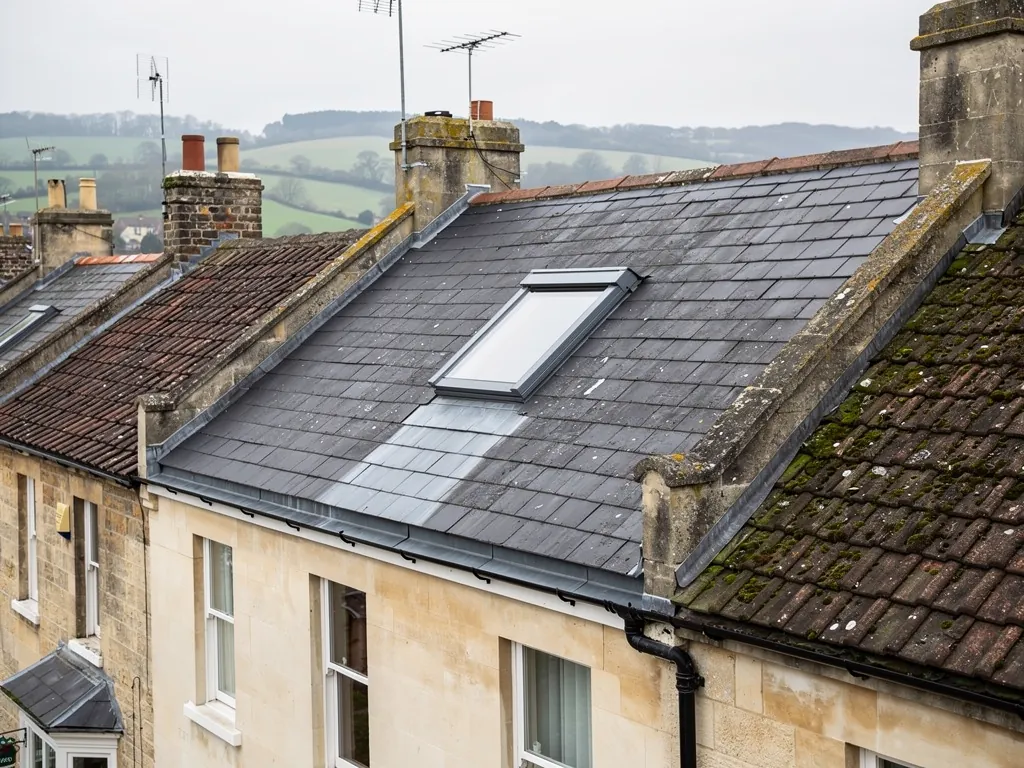
Where the existing opening is already fitted with a manual unit, swapping like for like is often straightforward, because the frame size can stay the same. Our page on a roof window in a slate roof explains how the flashing is dressed when the covering is slate, which applies equally to an electric model.
A fair way to decide
Ask four questions about each window.
Can you reach the handle or pole comfortably? If yes, manual is probably enough. Does the room suffer from damp air, such as a bathroom, kitchen or utility? If yes, the case for a switch or a sensor is stronger. Will anyone in the house struggle with a high sash? If yes, a motor is a sensible expense. And is there a cable route, or is solar the only practical option? That answer settles the type.
Where only some windows justify the motor, it is common to mix them, with a manual one in a bedroom and an electric one over the stairs. The window sizes do not need to match the type, though matching the look from outside usually looks tidier. Our note on roof window minimum pitch covers the slope limits that apply whichever type you choose, and the roof window flashing page covers the weatherproofing around the frame.
We give a plain view at the survey, including when the cheaper option is the better one. The hub page on roof windows and skylights lists the other questions people ask before ordering.