
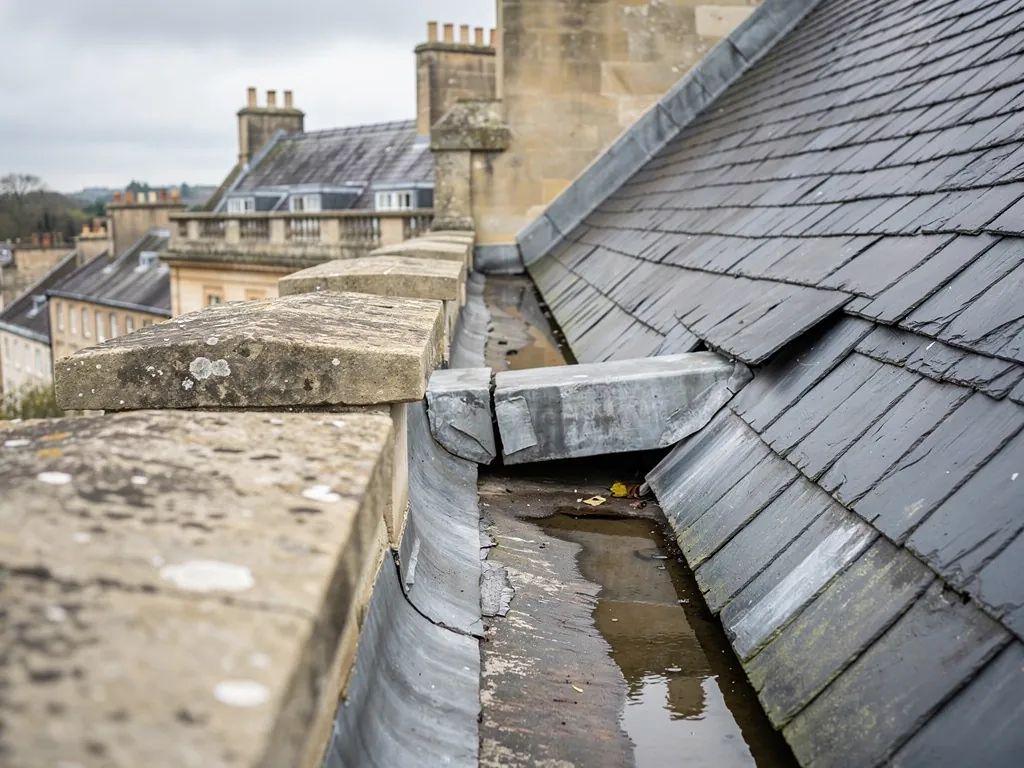
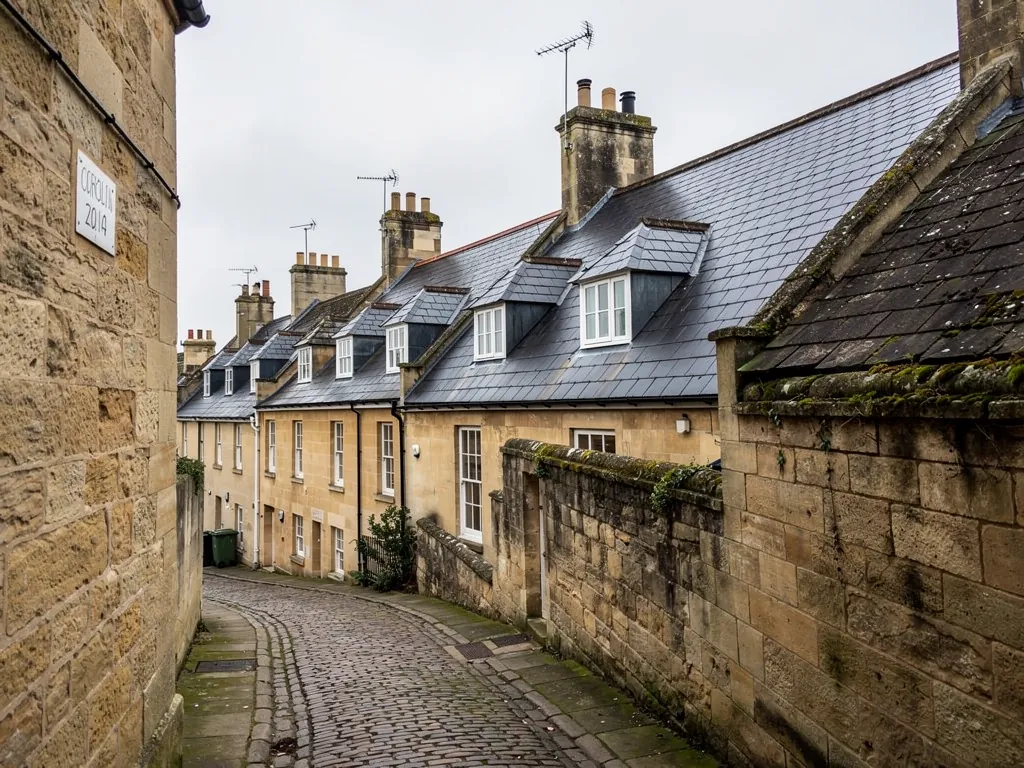
Georgian terrace of honey Bath stone with natural slate roofs and chimney stacks

Roofers in Southgate

Southgate is the shopping quarter at the heart of the city, in the very centre of the city, rebuilt after 2007 and opened in phases from 2009. Behind its Bath stone fronts are flat roofs, parapets, terraces and rooftop gardens, and we survey them for the faults that newer buildings have.

Local roofs

A new quarter dressed as Georgian Bath

SouthGate is a different job from the rest of our work in the city. The precinct was designed by Chapman Taylor to echo Georgian architecture, with a Bath stone facade, and in 2010 it won the Georgian Group's Giles Worsley Award for a new building in a Georgian context. From the street it reads as stone and sash. Above the street line, the roofs are built on modern lines and need to be looked after in modern ways.

The site has a long past beneath it. It replaced a shopping centre designed by Owen Luder, which was demolished in 2007, and before the new construction began, the Museum of London Archaeology Service uncovered stretches of the original city wall, the 17th century Bum Ditch and some 18th century cellars. None of that touches the roof, but it explains why this corner of Bath has so many layers, and why nothing built here is ever a clean slate.

What matters for us is the residential and commercial mix on one site. SouthGate opened in three phases, between 4 November 2009 and August 2010, and includes 99 apartments across four buildings, with private rooftop gardens. A garden on a roof is a flat roof with a visitor on top of it. The waterproof layer sits under paving, planters and furniture, and any fault in that layer is hidden from the person who would notice it first.

We write the survey for the people who manage and live in these buildings, not for a single owner. The report gives you photographs of the roof itself, the cause in ordinary language, and one fixed written price.

Council
Bath and North East Somerset Council
From central Bath
0.2 road miles, central
Opened
In three phases, 4 November 2009 to August 2010
Apartments
99 across four buildings, with private rooftop gardens
Award
Georgian Group Giles Worsley Award, 2010

What we find

Upstands, outlets and copings behind Southgate stone

Failed upstands and edge detailsOn a flat roof the membrane turns up at every wall, rooflight and door threshold. We check those turned-up edges and their sealed tops, since a split there lets water behind the covering where nobody can see it.
Blocked outlets and slow drainageA roof garden collects leaves, soil and plant litter, which creep toward the outlets. We clear and test them, then look for ponding (standing water that stays after rain), which is usually a sign the deck has moved or the outlet is too high.
Parapet copings and gutters behind the stoneA stone front often has a low wall above the roof edge. We look at the coping stones on top, the joints beneath and the gutter that runs behind, since a leak in any of them shows up as a stain inside the building, well away from the cause.

Rooftop gardens: a waterproof roof under a living surface

Ninety-nine apartments with private roof terraces means a lot of flat roof carrying people and plants.

A rooftop garden is built in layers. At the bottom is the structural deck, then insulation, then the waterproof covering, and on top of that comes whatever the occupier has chosen: paving slabs, decking, planters or soil. We do not know the exact build-up on any particular SouthGate terrace until we see it, and it is a fair question to ask any roofer before they price a repair, because the answer decides what is possible.

The covering is the part that matters. Flat roofs are waterproofed with a few common systems. EPDM is a synthetic rubber sheet, and a single piece can cover a whole terrace. GRP, short for glass-reinforced plastic, is resin and glass-fibre matting that cures hard. Lead and asphalt are older options and still found on stone-fronted buildings. Each wants slightly different care, but they share the same weakness: a hole in the layer admits water that travels sideways under the covering before it finds a way inside.

This is why a leak under a roof garden is rarely where it seems. A stain on a bedroom ceiling can come from a split at a planter, an upstand or an outlet several metres off. We trace it by lifting the surface where the evidence points, testing the covering and looking at the joints, not by guessing and sealing. A repair done to the wrong spot will hold until the next rain and then fail again.

Pedestals and paving make access harder but not impossible. We lift and relay slabs, protect plants where we can and put everything back as we found it. Because many roofs are private, we arrange access with the occupier first. Our flat roofing page explains the systems, the typical costs and how we decide between repair and a new covering.

Modern roofs behind stone fronts

A Georgian-looking elevation can hide a roof built to a very different set of rules.

Chapman Taylor's design copies the proportions and the stone of Georgian Bath. What stands behind the facade is a modern building with modern roof build-ups, and that changes what we look for. A true Georgian terrace has a timber roof with slates and a lead-lined gutter behind its parapet. A building of the 2000s is more likely to have a flat or low-pitched roof on a concrete or metal deck, with an insulated build-up and a membrane on top.

The detail that keeps them watertight is at the edges. The parapet is the short upstanding wall at the roof perimeter, and a parapet gutter is the channel behind it that carries rainwater to the outlets. A box gutter does a similar job lower down, as a lined trough tucked between roof planes or against a wall. Where the stone facing meets the roof, a flashing (sheet metal dressed over the joint) and a coping (the capping stone on top of the wall) protect the top. Those parts hold the facade and the roof together, and if they fail the water reaches the stone.

New buildings also settle. In the first years the structure moves a little, sealants age and the first minor leaks appear around penetrations such as vents, flues and plant. Most are small and quick to find. A building that has been signed off and handed over has not necessarily been checked at roof level since, and a walk-over survey is the sensible start.

If you manage one of the blocks, we can survey the whole roof, photograph each junction and give you a written list in order of priority. The roof inspections and surveys page describes what the survey covers and what it does not.

99

Apartments across four buildings, each with a private rooftop garden

2007

Year the previous shopping centre was demolished

2010

Year the development won the Georgian Group's Giles Worsley Award

Figures: SouthGate entry, Wikipedia, checked October 2026

Managed buildings, shared roofs and access in a busy precinct

Many people share responsibility for one roof, and a repair has to be planned around all of them.

A block of apartments has a single roof that no one owns alone. A management company or landlord normally holds the freehold of the structure, and the flat owners pay toward its upkeep. When a roof needs work, the managing agent will usually want a clear scope, a fixed price and a written record of what was found, so that the decision can be taken by the right people and explained to the rest.

We write our surveys with that reader in mind. The report names each fault and where it is, shows it in a photograph and says whether it is a repair, a replacement of one section or the sign of a wider problem. It does not push you toward the larger job. A roof with one failed upstand needs that upstand fixed, nothing more. A roof with failed seams across the whole membrane needs a different conversation, and the photographs make the case better than we can in words.

The shop units are a separate matter. A retail or office unit in a precinct often has its own roof section, a plant area or a canopy, and the landlord's repairing obligations and the tenant's are written into the lease. We keep to the roof and do not advise on leases, but we can give both sides the same facts. Commercial roof work is priced on survey, and our commercial roofing page sets out the systems and the questions that decide the price.

Working at height in the middle of a shopping area needs planning. Deliveries, pedestrian routes and the hours of nearby tenants all affect when and how the scaffold, hoist and skip go up. We agree the arrangements with the managing agent first and clear the site when the work is complete, taking the waste away with us.

Managed blocks

A written survey with photographs gives the managing agent and the flat owners the same facts to decide from.

Consent, heritage and the paperwork in the city centre

In the middle of a World Heritage Site, the first question is who has to agree before the work starts.

The whole city of Bath is a UNESCO World Heritage Site, so Southgate sits inside it. The Bath conservation area covers about half of that site, and as a central location this part of town is a likely candidate for it, though you should confirm your own address on the B&NES policy map rather than rely on us. The council's planning team also tells you whether a building is listed. A newly built precinct is unlikely to be, but a few older buildings around it may be.

For work on a roof that no one will see from the street, like-for-like repairs to a membrane usually raise few planning questions. A visible change is different: a new parapet height, a changed railing, a new rooflight or a different facing. Those can affect the way a building reads from the street. Because the design here was praised for fitting its Georgian setting, it makes sense to keep alterations modest and to ask B&NES before you commit.

Building Regulations apply to larger re-roofs. Once a re-roof reaches past the exemption limits in the national guidance, approval applies, and the new roof may have to meet current insulation standards. A flat roof renewed in full on a block of flats is likely to cross that line. At survey, before any price is fixed, we say whether approval looks necessary and who would submit it: the council's own team or a private firm on the register.

Roof terraces bring their own questions about guarding and edge protection. We can describe what we find at the edge, but a decision about barrier heights belongs with the building owner and their advisers. Our roof repairs page deals with a roof that is leaking now, where making it safe has to come before anything else.

Myth

A new building has no roof maintenance to worry about for years.

Fact

Seals, upstands and outlets on a flat roof start to age as soon as the building is finished, and a regular check finds small faults before they become internal damp.

Map showing the location of Southgate.

Nearby

Roofers near Southgate

Roofing services in Southgate

Local questions

Your rooftop garden and shared roof queries

How do you find the source of a leak under a rooftop garden?

We start from the stain and work outwards, lifting paving or planters along the likely path and examining the covering beneath. Water often travels sideways under the membrane, so the damp ceiling is a clue to the area, not the exact spot. Once we find the failure, we show it to you in a photograph, repair it and test the area before the surface goes back.

Is a stone-fronted building from the 2000s repaired in the same way as a Georgian one?

No, because the structure behind the stone is different. A Georgian roof is timber and slate, with lead gutters behind the parapet. A building from the 2000s more often has a flat deck, an insulated build-up and a membrane. The stone coping and the flashing at the wall head still need the same care, but the roof beneath is repaired with membrane methods, not slating.

Who instructs the roofer when the roof belongs to a block of apartments?

Usually the managing agent or the company that holds the freehold, acting for the flat owners. We send the survey, photographs and fixed price to whoever is instructing and can break the work into stages where that helps with funding. If an individual owner is responsible for a private terrace, we deal with them directly and agree access first.

Do rooftop terraces need to be cleared before you start work?

Yes. Planters, furniture and loose paving have to come off the area we are working on, and we agree with the occupier what they will move and what we will. We protect plants and surfaces where we can, lift slabs in order and lay them back to the same pattern when the covering has been repaired and tested.

Get your free survey

Get your free roof survey

Tell us what's happening and we'll call you back to arrange a visit. Prefer to talk? Call 01225 285181.

  • Photos of your own roof
  • A fixed price in writing
  • 10-year workmanship guarantee
Call Free survey