
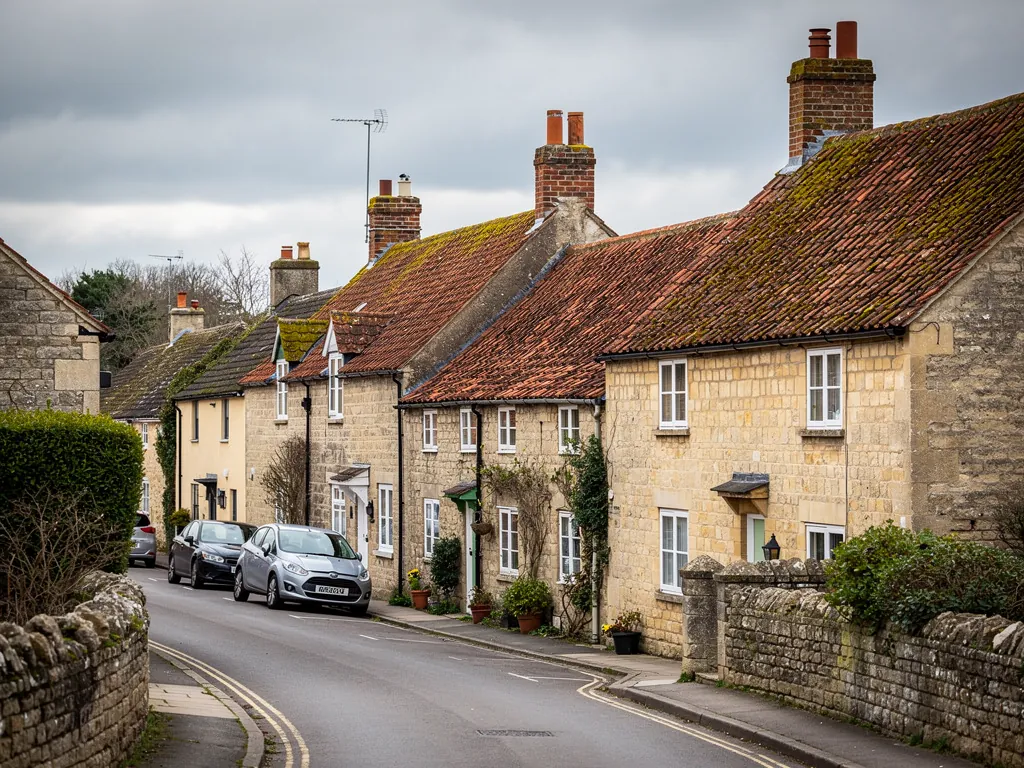
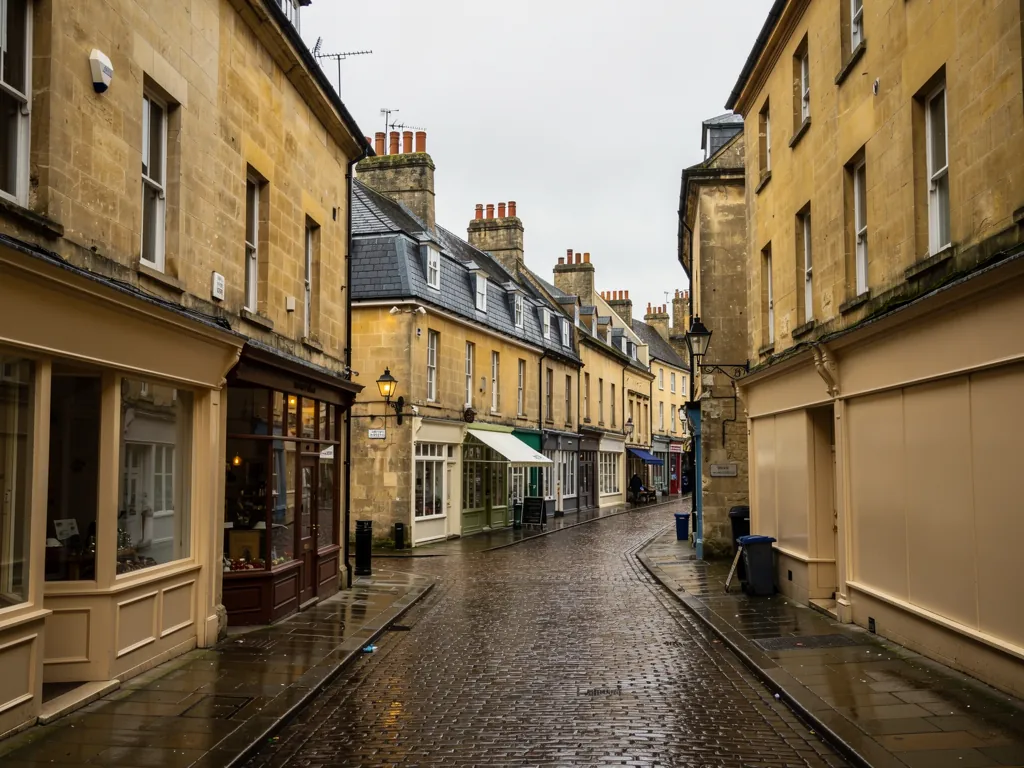
A Somerset village street of stone cottages with clay pantile roofs

Roofers in Wellow

Wellow sits in the valley of the Wellow Brook, 5.4 road miles south of the centre of Bath. Red clay tiles on steep pitches and the rare Cotswold stone tiles still in place help define the conservation area, and our repairs keep both of them as they are.

Local roofs

A conservation village on the Wellow Brook

Wellow lies along the Wellow Brook, where a medieval packhorse bridge, listed at Grade II, stands beside a low water crossing known as the Irish Bridge. It was designated a Conservation Area in 1983 for its architectural and historic value. The parish Church of St Julian has origins before the twelfth century, although the present building dates from 1372, and it is Grade I listed. A little to the west lies Stoney Littleton Long Barrow, a Neolithic chambered tomb about 30 metres long.

For roofing, the most useful description comes from Bath and North East Somerset Council's conservation area appraisal. It describes roofs of steep pitch covered in red clay tiles, and it notes that some of the original Cotswold stone tiles remain. It calls those stone tiles rare and says they should be preserved. That is a brief for the work: keep what survives, and match it when a repair is needed.

The village has other stories. Wellow Station, on the Somerset and Dorset Joint Railway from 1874 to 1966, was converted into a house in the mid-1970s by the artist Peter Blake and Jann Haworth. Fuller's earth in the ground around the village has caused several collapses of local roads. Neither is a roofing matter in itself, but together they show a place where buildings have been adapted, and where the ground has a mind of its own.

Because of all this, a Wellow roof is rarely a routine job. We look first at what the roof is made of, then at what the village expects of it, and we write both into the survey.

Council
Bath and North East Somerset Council
From central Bath
5.4 road miles, south
Conservation area
Designated 1983
Parish church
St Julian, present building 1372, Grade I
Local ground
Fuller's earth has caused several road collapses

What we find

Steep clay pitches and rare stone tiles at Wellow

Slipped or cracked clay tiles on steep slopesOn a steep pitch, a clay tile hangs from a small nib (the lip on its upper edge) and a nail. When the nail fails or the tile cracks, the tile slides or drops. We look along each course for gaps and for tiles that have shifted out of line.
Surviving stone tiles that need careful handlingWhere original stone tiles remain, we check the pegs or nails that hold them and the battens beneath. The tiles themselves are often sound, and the weak point is usually the fixing, so we aim to lift, sort and relay rather than discard.
Tired ridges and hips on steep roofsSteep clay roofs have long ridge lines that catch the wind. We check the bedding, the fixings and the ridge tiles themselves for cracks, then compare the colour and profile of any replacements with those already in place.

Red clay tiles on steep pitches: matching what is there

A roof the appraisal describes as steep and red-tiled is repaired best by someone who looks closely at each tile.

Clay tiles are made from fired clay, and no two firings come out alike. Colour varies from orange to deep red and often shows purple or brown flecks, and age adds moss, lichen and a softened surface. A new tile laid beside a hundred-year-old one stands out for years. That is why matching is more than a catalogue choice, and why we sort and select rather than order by the pallet.

Where a steep Wellow roof is covered in plain tiles, the small flat clay tiles are laid in overlapping courses. Each hangs from the batten by two nibs and is nailed at intervals up the slope. The steep pitch helps: water runs off quickly and the tiles lie close to the slope. But the same pitch loads each fixing, and a corroded nail lets a tile creep. When we find one slipped tile, we look for the cause before we replace it. A single gap on a sound roof is a simple repair. A pattern of slipped tiles across the slope tells us the fixings are spent.

For repairs, we reuse sound tiles taken from less visible slopes or from the same roof, and use reclaimed clay where more is needed. Where new tiles are required, we choose a hand-made or well-weathered type that sits close to the existing colour and size. We keep the courses straight and the overhang at the eaves as it was, and we keep the ridge line unchanged so the roof reads the same from the lane.

Underneath the tiles, the battens and the underlay get the same scrutiny. On older roofs the underlay may be missing or brittle, and the battens may have been weakened by years of damp. If the frame is sound, we can refix the covering on new battens with a new membrane beneath. For the wider approach to tiled and slated roofs, see pitched roofing.

Cotswold stone tiles: the rare survivors

The Wellow appraisal calls its original stone tiles rare and worth preserving, and a repair should start from that.

Stone tiles are a different material from clay and need a different approach. They are cut or split from stone, laid in courses that shrink in size towards the ridge, and fixed with pegs or nails through a hole near the head. They are heavy, thick and uneven, and they weather to a soft grey and gold that no modern tile quite copies. The Wellow appraisal records that original examples remain here and there, calls them rare, and says they should be preserved.

Preserving them starts with understanding why they fail. The stone itself can last a very long time. What usually fails is the fixing: the peg rots, the nail corrodes, or the batten beneath softens. The tile then slips, and a gap opens. If we find that, the answer is to lift the tiles carefully, sort them by size and condition, renew the battens and fixings and lay the sound tiles back in their courses. Cracked or laminated tiles are replaced from reclaimed stock matched for length and thickness.

The roof structure matters because stone is heavy. The timbers carrying it were built for that weight, and a lighter covering is not automatically better; nor is a heavier one. Changing the covering by a large margin is a structural question, and the Planning Portal lists a new covering weighing 15% or more above the old as a case for approval. We raise it with you at the survey and, if it applies, pass it to the council's building control or a registered approver.

If you suspect your roof is one of the survivors, tell us before any work starts. We photograph the tiles in place, mark each course, and keep a record of where each tile came from, so the roof goes back as it was. Where a re-roof is unavoidable and a matching stone cannot be found, we explain what alternatives there are and what each would change. The overall process for a full re-cover is described under roof replacement.

Myth

A stone-tiled roof that leaks is finished and has to be stripped.

Fact

The stone is often sound and the pegs, nails or battens are what have failed, so lifting, sorting and relaying the tiles on renewed fixings is frequently the better answer.

Conservation status from 1983, and a Grade I church

Designation does not stop repairs, but it makes the question of consent one to settle early.

Wellow's conservation area was designated in 1983, and the village's best-known building goes back far beyond that. St Julian's Church has origins before the twelfth century, the present building dates from 1372, and it is Grade I listed. The packhorse bridge over the brook is medieval and part of the same story of a village that has kept its history in view.

Inside a conservation area, the council expects changes to a building's appearance to respect the area's character. A repair that restores a roof as it was is rarely controversial. A change that alters the covering, the pitch or the line of the eaves can raise questions, and those go to B&NES. We cannot say what the council will decide on any individual roof, but we can describe the job precisely, which is what it needs to respond.

Listed buildings come with a stricter rule. A listed building needs its own consent, quite separate from planning permission, and altering one without it breaks the law. A Grade I building such as the church sits at the top of the listing system, and any roof work to it is a matter for the conservation team and the people responsible for the building. A listed house in the village follows the same logic at its own grade.

A few streets around the district carry Article 4 directions, which withdraw some permitted development rights. B&NES publishes a policy map, and that is where to look up your own address.

None of this stops sensible maintenance. Clearing gutters, refixing slipped tiles and renewing flashings in kind carry on as normal. Our approach is to write the scope in terms the council can read, and to hold the order until any consent that is needed has been given.

1983

Year Wellow was designated a Conservation Area

1372

Date of the present Church of St Julian

1966

Year Wellow Station closed

Figures: Wellow entry, Wikipedia, checked October 2026

Ridges, hips and verges on long steep roofs

On a steep clay roof the ridge is the part the wind works hardest, and the detail should match the covering.

A steep roof exposes a lot of surface to the weather, and the ridge at its top is the most exposed line of all. On a clay roof the ridge is usually formed of half-round or angled clay tiles, bedded in mortar, and the hips at the corners follow the same pattern. Over time the mortar cracks, the bedding dries and the tiles lose their grip.

The repair has to take account of two things. One is the standard: BS 5534:2014 expects bedded ridge, hip and verge tiles to have mechanical fixings as well, since mortar cannot be the only restraint. The other is how the roof looks. A clay ridge in a different colour or profile from the main roof is obvious from the road. We choose ridge tiles that match the existing ones, then fix them in a way that satisfies the standard, either with mortar and a mechanical fixing or with a dry-fix system finished to look like the original.

At a gable, the roof finishes in the verge. On a steep roof it takes the full force of a gust, because the wind gets under the end tiles. Cracked or missing pointing is the first sign. We repoint to suit the tiles, secure the end tiles with clips and, where the verge is beyond repair, rebuild it. Hips need the same care: each hip tile is cut to follow the angle, and a loose one allows rain into the join.

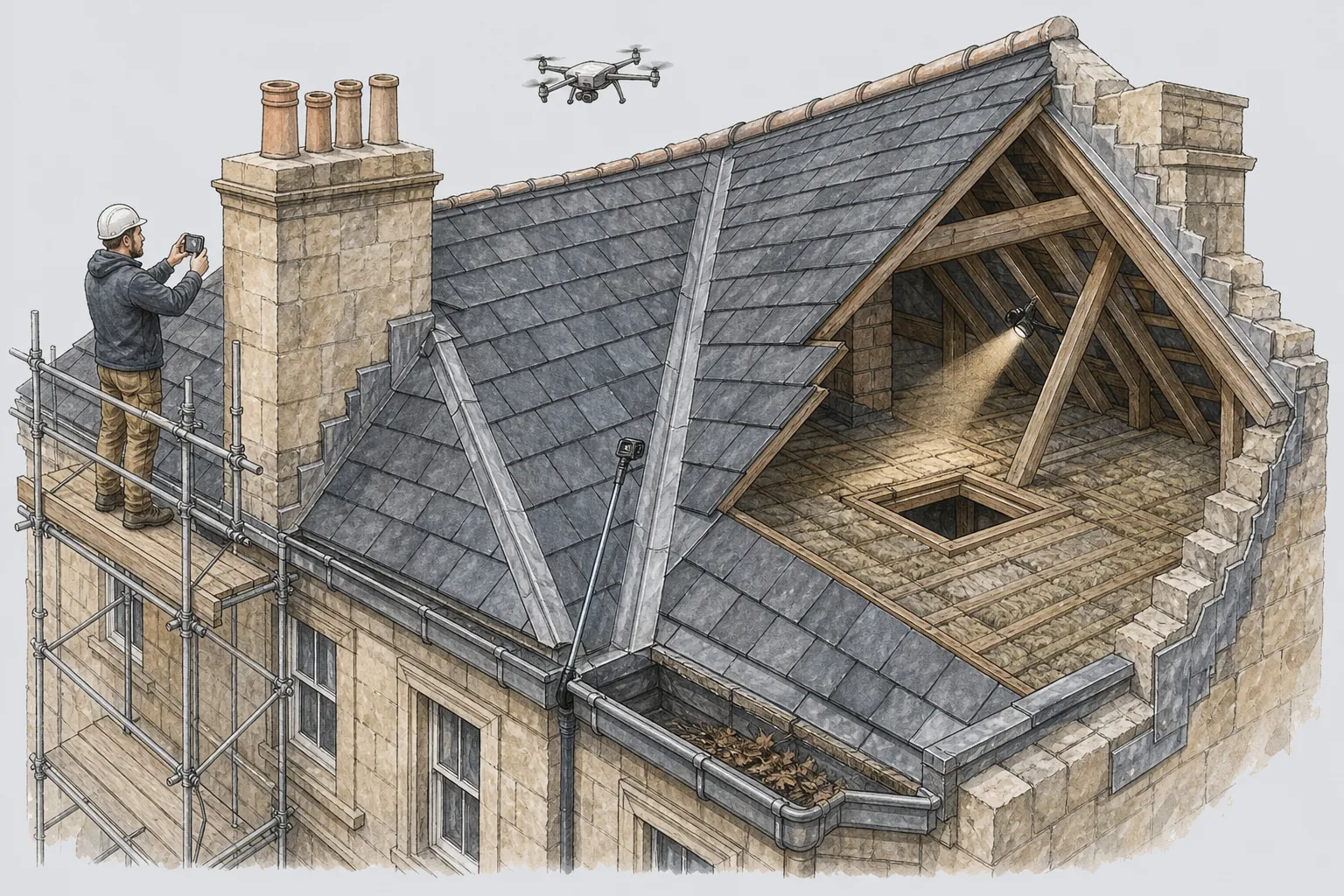
Beneath the ridge, we check the timbers. A ridge board or ridge beam that has sagged or rotted shows as a sag along the roofline, and the fix for that is structural, not a matter of new tiles. When we see a dip, we look from the loft before we price anything.

Ridge and verge repairs goes through each option, including when dry-fix is the better choice.

Words you will hear

Nib
A small projecting lip on a clay tile that hooks over a batten.
Hip
The sloping outer angle where two roof slopes meet.
Verge
Roof finish along a gable wall.
Dry-fix
A fixing system for ridge, hip and verge tiles that works without mortar.

Map showing the location of Wellow.

Nearby

Roofers near Wellow

Roofing services in Wellow

Local questions

Asked in the conservation village on the Wellow Brook

The Wellow appraisal calls original stone tiles rare. Can the ones on my roof be reused after a repair?

Very often, yes. The stone is usually sound and the pegs, nails or battens have failed. We lift the tiles carefully, sort them by size and condition, renew the fixings and lay the good ones back in their courses. Broken or flaking tiles are replaced from reclaimed stock matched for length and thickness. You receive photographs of the roof before and after.

Does the 1983 conservation area mean I must use clay tiles when I re-roof in Wellow?

There is no rule we can quote to you. The B&NES appraisal describes the village's roofs as steep with red clay tiles, and B&NES decides whether a given change is acceptable. We recommend matching what is there, which keeps most repairs uncontroversial, and we describe any larger change in a form you can take to the council.

Fuller's earth has caused road collapses near Wellow. If my walls have moved, is the roof to blame?

Not necessarily. A dip in the ridge or a crack in a gable can come from the roof frame, from the walls or from the ground. We check the roof timbers and the covering and tell you what we find. If the signs point to the ground, a structural engineer is the right next call, and we can pass on our photographs.

My Wellow house began as a railway building, like the old station. Does that change how its roof is surveyed?

It can, because converted buildings often have several phases of roof stuck together, with extensions, valleys and changes of covering. We survey each part separately, record the joins and check where an old roof meets a newer one. The report treats each section on its own terms, so you can see what each part needs.

Get your free survey

Get your free roof survey

Tell us what's happening and we'll call you back to arrange a visit. Prefer to talk? Call 01225 285181.

  • Photos of your own roof
  • A fixed price in writing
  • 10-year workmanship guarantee
Call Free survey