


Mill-owners' houses and their big roofs
Houses built on the proceeds of wool needed roofs of matching scale, and they fail in a matching number of places.
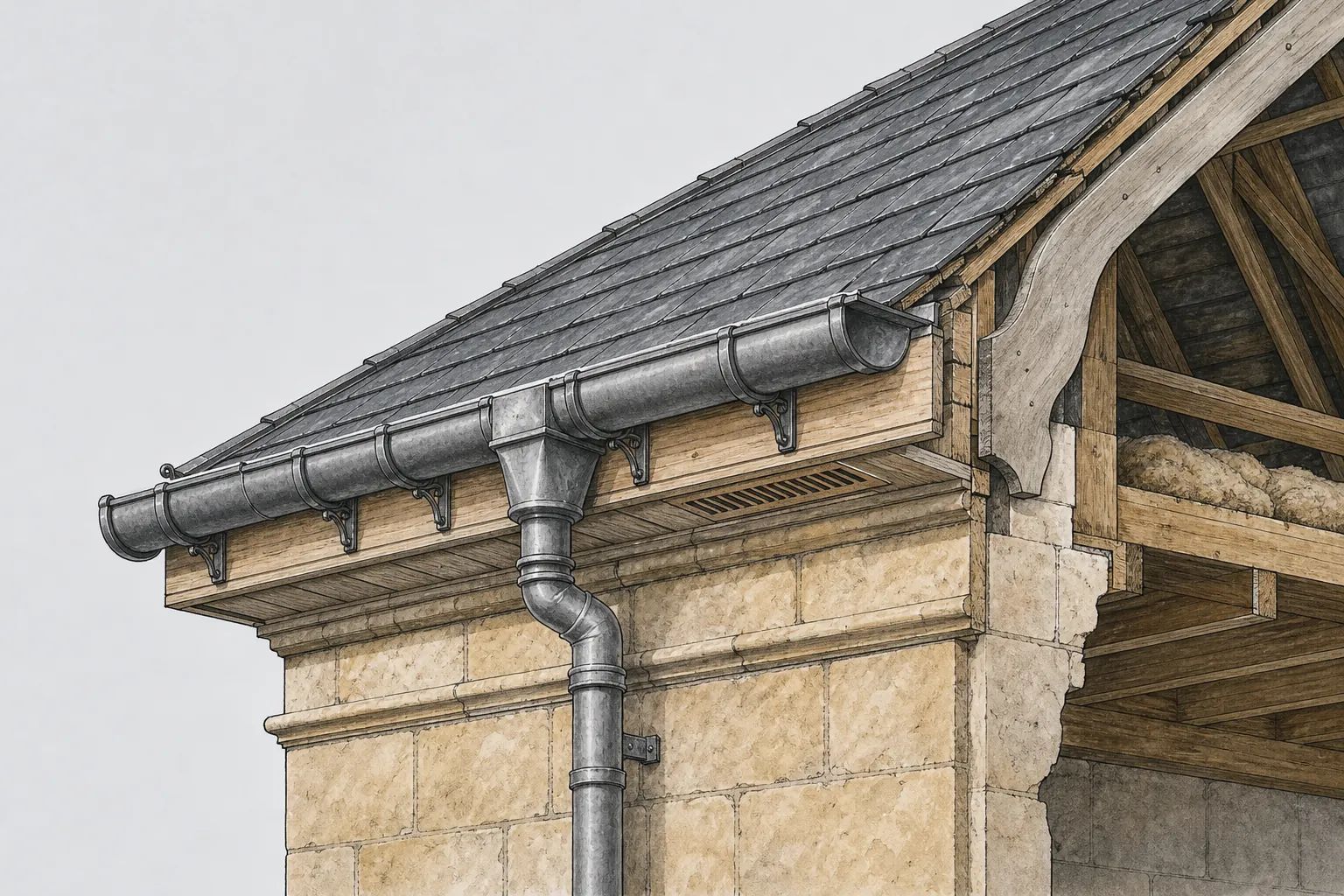
Houses put up on the proceeds of the wool trade were not small, and a roof on that scale behaves differently from a semi's. Rode Manor, Langham House, Merfield House and Southfield House are the names the village's history gives us, and houses of their kind usually come with several roof planes, a number of stacks and long runs of gutter. More planes means more places where one slope meets another, and every meeting is a hip, a ridge or a valley.
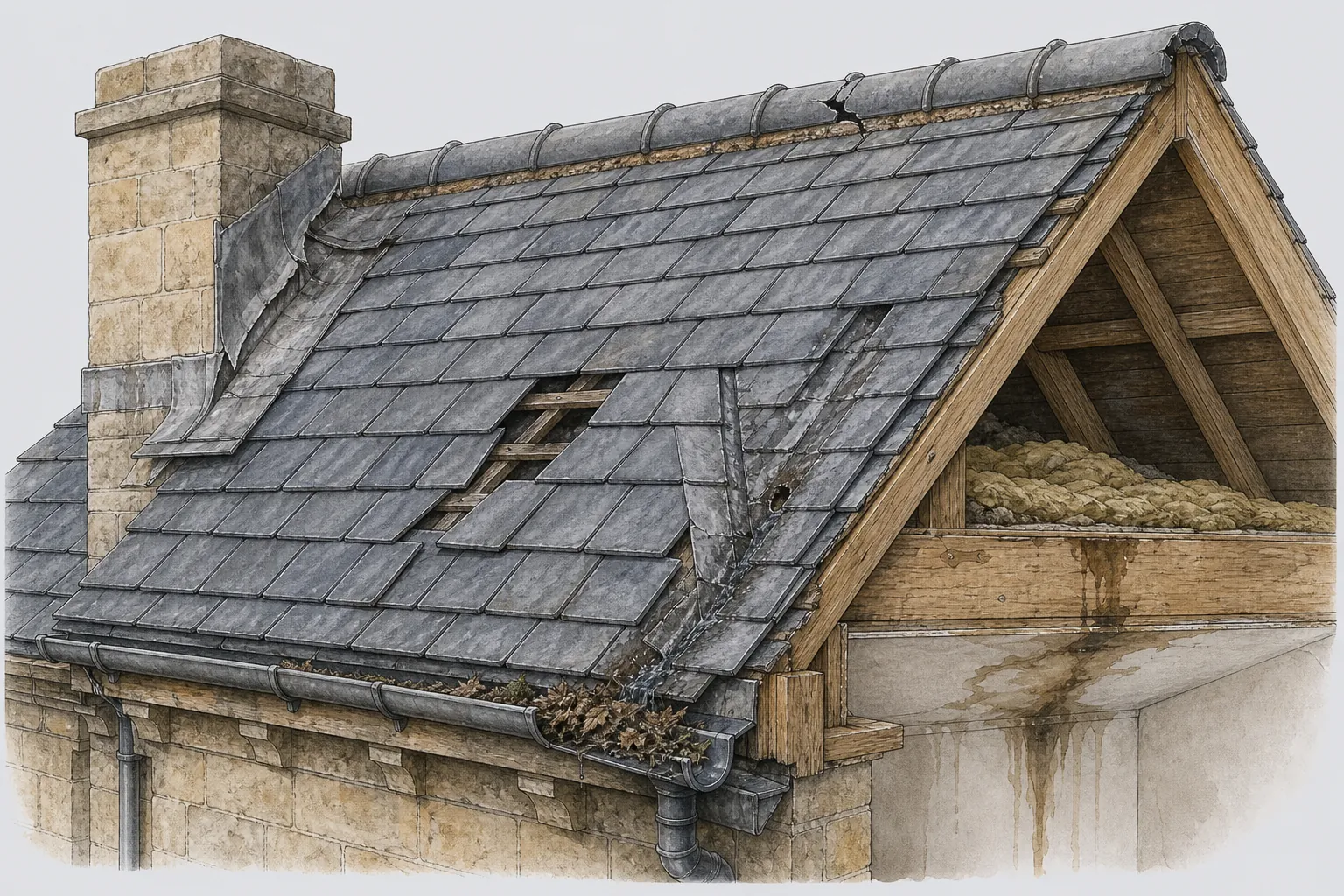
Where two slopes run down into each other, the angle between them is a valley, lined with lead or similar sheet beneath the edge of the covering. It drains two slopes at once, and when it fails the leak often shows far from the cause, as a stain on a ceiling two rooms away. A hip is the reverse, an outward corner that sheds rain to either side and is capped along its length. Hips and ridges explain much of the price gap between a plain roof and a complicated one, and a surveyor counts them first.
That count feeds the figures. MyBuilder's 2026 guide puts a gable-ended roof replacement typically at £5,000 to £8,000 and a hipped roof at £8,000 to £12,000, because hips mean more cutting, more fittings and more hours on the scaffold. On a tall house, scaffold is a cost in itself, and it pays to share it between a repair and the other jobs that need access, such as the stacks and the gutters. These are national ranges, not an Empire price list; the fixed quote follows the survey.
Where the covering is sound and one valley has failed, the valley is repaired and the rest left alone. A roof that is spent moves the conversation to roof replacement, and the survey says which of the two applies. If the existing roof is natural slate or stone tile, the new one is the same, because the house was designed around it.