

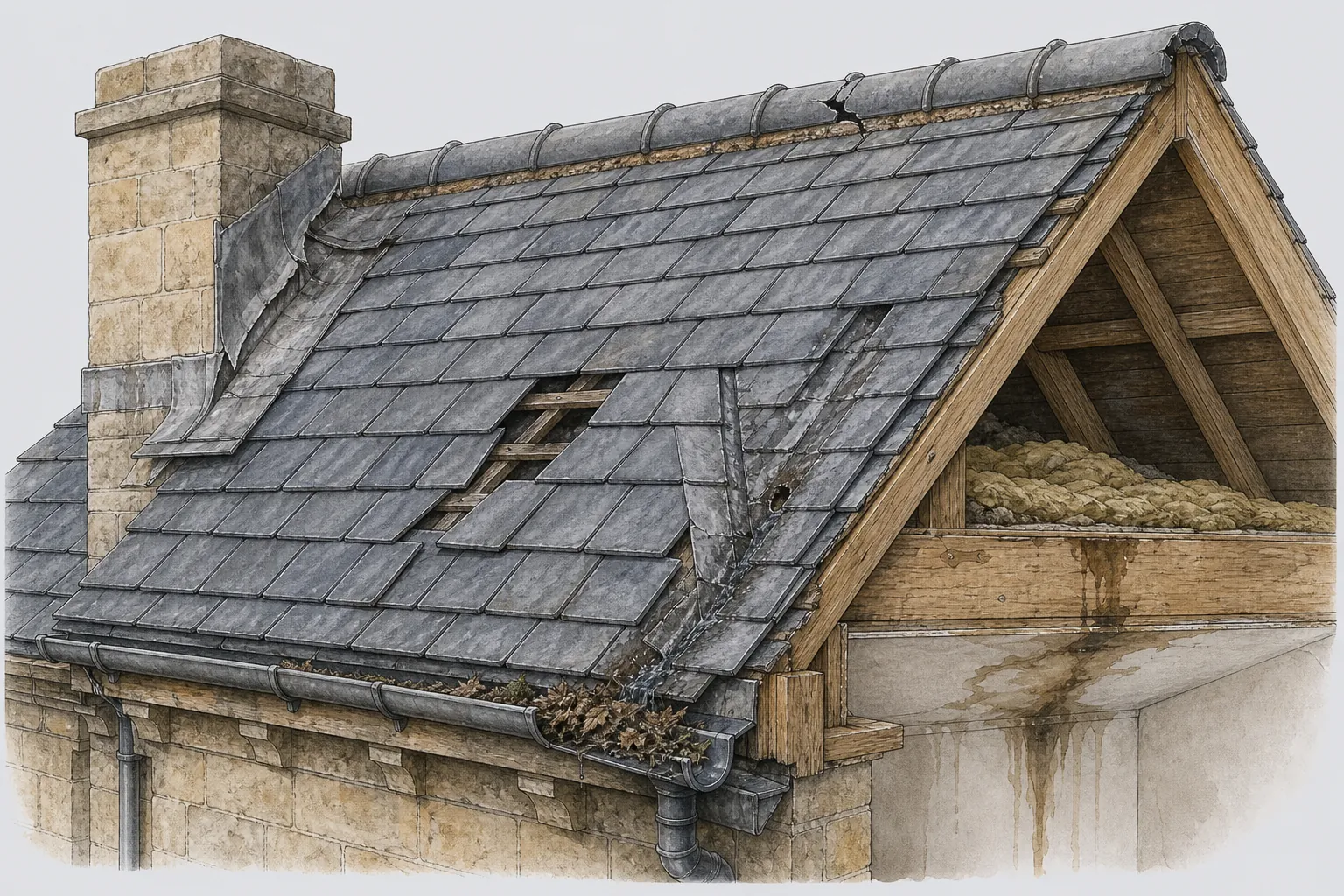


Roofs in the shadow of the churches and the Dovecote
Standing near a Grade I building means the first job is finding out what the paperwork says about yours.
With two Grade I churches and a Grade II* Dovecote in or above the town, a good number of Bruton houses have a protected building for a neighbour, and some are on the list themselves. Which are and which are not is a matter of record. The Historic England entry names the building, and Somerset Council's planning team can say what the listing means for the roof. We would rather you asked them before we start than discovered the answer afterwards.
The line that matters falls between repair and alteration. Swapping a few failed tiles for matching ones, or refixing a ridge that has worked loose, keeps a roof as it was built. Putting on a different covering, cutting a new opening or taking down and rebuilding a stack changes the building, and for a listed house that calls for listed building consent, an application of its own and no substitute for planning permission. Skipping it is a criminal matter, and the small print is a poor place to find that out.
Our part is supplying detail. After the survey you get a written description of the covering we propose, the size and tone of any replacement, the lead for the flashings and the method of fixing. A conservation officer can answer a description like that in a sentence. A vague enquiry takes longer and draws a vaguer reply.
Matching decides how a repaired roof looks from the lane. Clay stays clay, natural slate stays slate, and a patch in a different colour shows for years. The pitched-roof side of our work, including re-covering older roofs in kind, is set out under pitched roofing.