The short answer
Roof tiles crack in frost because porous tiles soak up water, the water freezes inside them and the ice pushes the surface off. The damage is called spalling. It builds across several winters, so a flaked or split tile is a sign the material is saturated. Repair can rarely wait long once tiles are cracked through, because each break lets water reach the battens and underlay below.
What happens inside a tile when it freezes
A roof tile looks solid, but clay, stone and concrete are all porous to some degree. Rain does not just run off the surface. Some of it is drawn into the body of the tile, held in the tiny gaps between particles. In a mild spell the tile dries out. In a cold snap that follows a wet week, the water inside freezes.
Ice takes up more space than the water it came from, and it has nowhere to go. The pressure acts on the weakest layer, which is usually the face of the tile, and a flake breaks away. Roofers call that flaking spalling. The first winter it might be a small scab. After several freeze and thaw cycles, whole layers lift, edges crumble and the tile may split through its width. Natural slate is a different case. It is dense and sheds water, so it resists frost far better than most tiles, and when slate fails the cause is more often the fixings.
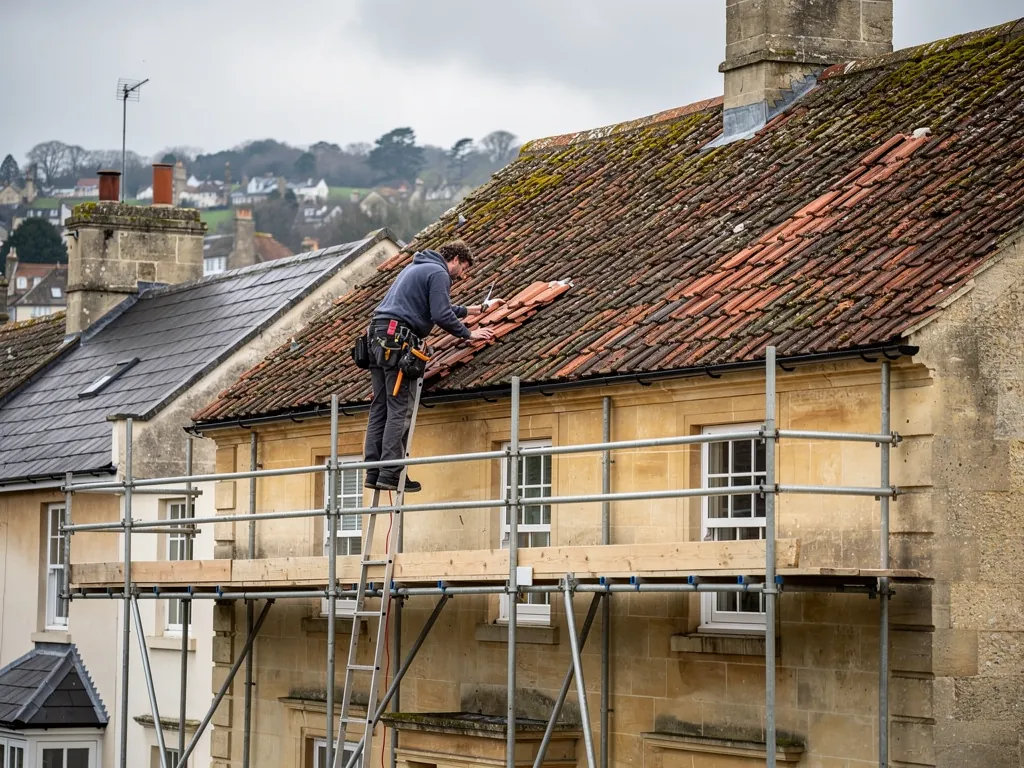
Moisture can sit in a tile for longer than you expect. Moss and lichen hold water against the surface, and a tile in a shaded valley, under a tree or on a north slope stays damp for longer than one in full sun. Those are the tiles that spall first.
Which roofs are most at risk
Not every tile suffers alike. How porous it is depends on the clay, the firing and the quality of manufacture. Good clay, properly fired, is another matter: the Building Conservation Directory records peg-tiled roofs standing for several hundred years. Softer, underfired tiles flake sooner. Poor reclaimed tiles are a common source of trouble, because a tile that has already spalled on its first roof will spall again on its second. Checking a batch before it goes up is covered under reclaimed roof tiles.
Layered stone slates can lose sheets along their bedding if water freezes between the layers. Concrete tiles lose their surface colour with age, and HomeBuilding says they typically fade and may need replacing in 20 to 30 years, though Marley puts them nearer 60. Sources disagree because exposure and workmanship vary so much.
Exposure matters as well. A ridge that gets driving rain from the weather side, or an eaves course where water collects, takes more punishment than a sheltered slope. We do not state the age or condition of any roof without seeing it. The pattern on your own tiles tells us more than any rule of thumb.
Frost damage or something else
Cracked tiles are not always a frost problem, and the cause shapes the repair. It helps to know the difference.
- Frost spalling. The surface flakes off in thin layers, the edges look rough and powdery, and the flaking is spread across many tiles on the exposed slopes.
- Impact damage. A clean break, often one tile only, caused by a branch, a ladder or somebody walking on the roof. Walking on tiles cracks them, which is why we stay off where we can.
- Age cracking. Hairlines along the width of the tile, often in concrete.
- Movement. Cracks that follow a line across several tiles can mean the batten or rafter beneath has shifted.
Sorting these out needs a close look. We use photographs of your own roof to show the tile faces and the underside, so you see what we see. Loft condensation can also mimic roof damage, because damp timber and staining below might not be a leak at all. We cover that in loft condensation.
Can the repair wait?
Much turns on how deep the damage runs. A tile whose face has flaked but which is still whole and seated can often wait a season, since the body of the tile still works. Mark it, photograph it and have it looked at before the next winter.
A tile that is cracked through cannot wait for long. Water runs through the break, soaks the batten under it and drips on to the underlay. If the underlay is old, it lets water into the loft. The longer that goes on, the more timber is affected, and the repair grows from one tile to a section of battens. Tiles that have slipped are different again, since an open gap lets rain in at once.
Our rule is simple. Whole but weathered, plan the work. Cracked through or missing, deal with it soon. When water is already coming in, a roof already letting water in gets covered over first, and the lasting repair follows once it is dry. If the tiles are on a listed or conservation-area roof, match them: a modern lookalike can stand out in a way that matters to the council.
Repair, replace or reduce the risk
A handful of failed tiles is a repair job. Damaged ones come off, the batten under each is inspected, sound matching tiles go on and anything disturbed is re-bedded. That costs far less than a re-roof and suits a roof whose remaining tiles are healthy.
Widespread flaking changes the picture and patching becomes a stop-gap. When tile after tile on the exposed slopes is spalling, each is taking in too much water and the covering is close to retirement. That is the point where relaying in matched or new tiles comes up. A re-covering can bring Building Regulations into play, and a heavier tile needs a structural check. Because a pitch has to suit the tile, our page on minimum roof pitch shows the figures to check, and the leaks that follow open joints are covered in why mansard roofs leak.
To reduce risk on any tiled roof, keep gutters clear so water is not backing up the eaves. Remove heavy moss carefully, but avoid pressure washing: MyBuilder's roof cleaning guide says it may damage delicate tiles. If tiles are damaged and you are thinking of an insurance claim, see slipped tiles and insurance before work starts. The pitched roofing page describes our work on tiled roofs.