


Exposure on the escarpment
A roof facing the Severn plain meets the weather with little shelter.
A hillside roof turned toward open ground has a harder job than one in a sheltered street. Wind arriving from the plain is pushed upward by the slope and meets the roof edge at speed, and rain comes with it at an angle that the roof's design may not have allowed for. In Almondsbury, those conditions apply to many of the houses on the upper slope and along the A38.
Failure on an exposed roof is usually progressive. First a nail loosens, then a tile or slate shifts a fraction. Wind then gets under the loose unit and lifts it higher, and the next one follows. By the time a tile lands on the lawn, the fixings along that whole course may be tired. This is why we check the surrounding courses and not only the missing piece.
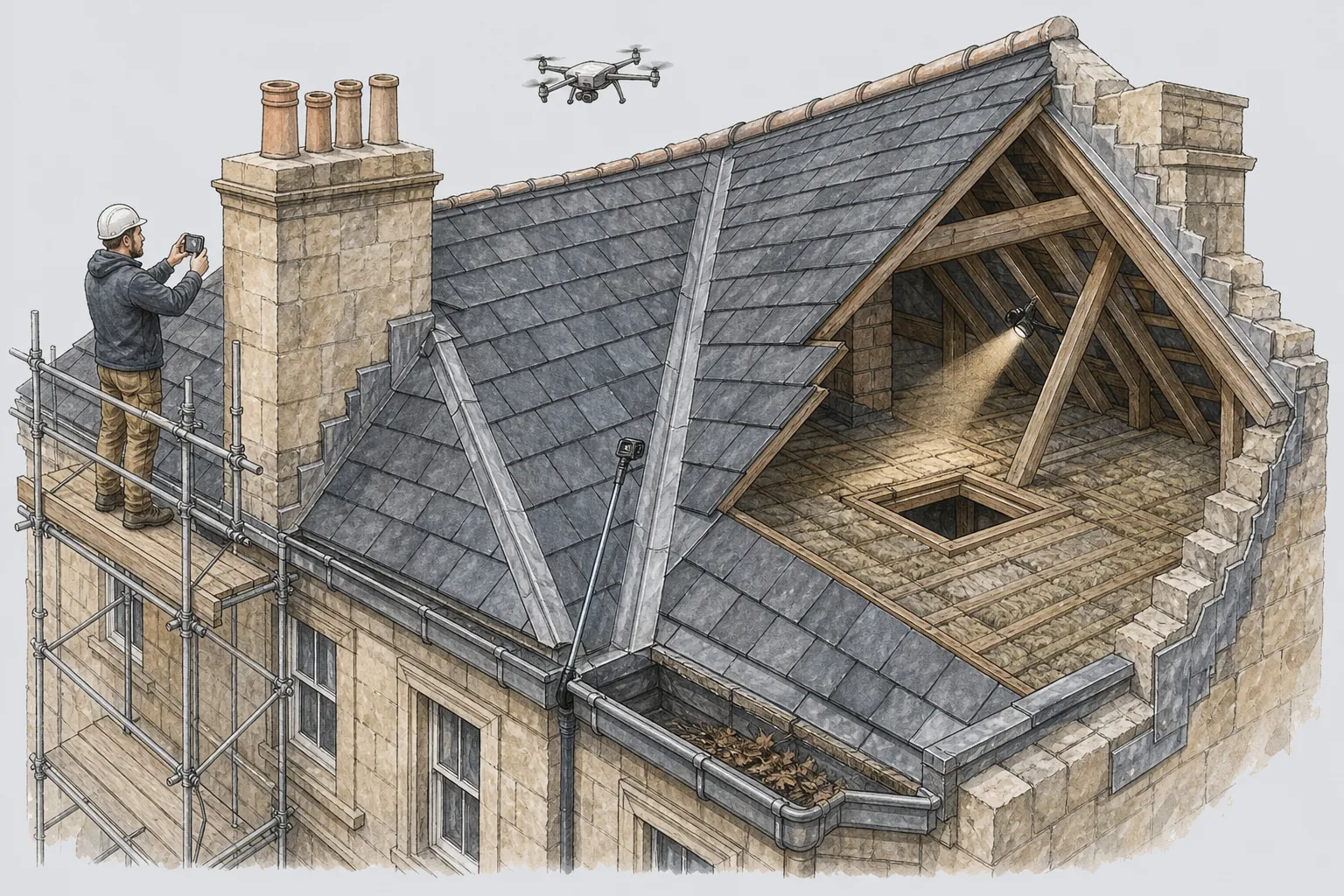
The edges matter most. At the verge, the covering stops against the gable wall, and unless it is firmly fixed, wind lifts the end tiles first. At the ridge, the capping tiles are the highest and most exposed part. On a roof of any age, mortar alone no longer meets current practice, and BS 5534:2014 expects mechanical fixings for ridge, hip and verge. A dry-fix system, tested under BS 8612:2018, holds those parts without a mortar bed and copes better with the movement of an exposed roof.
Underlay deserves a mention as well. Driven rain can pass between tiles in strong wind, and an intact underlay (the membrane under the battens, the timber strips that carry the covering) catches it and drains it to the gutter. A roof on an exposed slope with perished underlay will leak in storms that a sheltered neighbour would shrug off.
If a gale has taken tiles off, we prioritise the temporary make-safe first, covering the opening so water stays out, and then plan a lasting repair. How we assess damage before pricing is covered under roof repairs.