
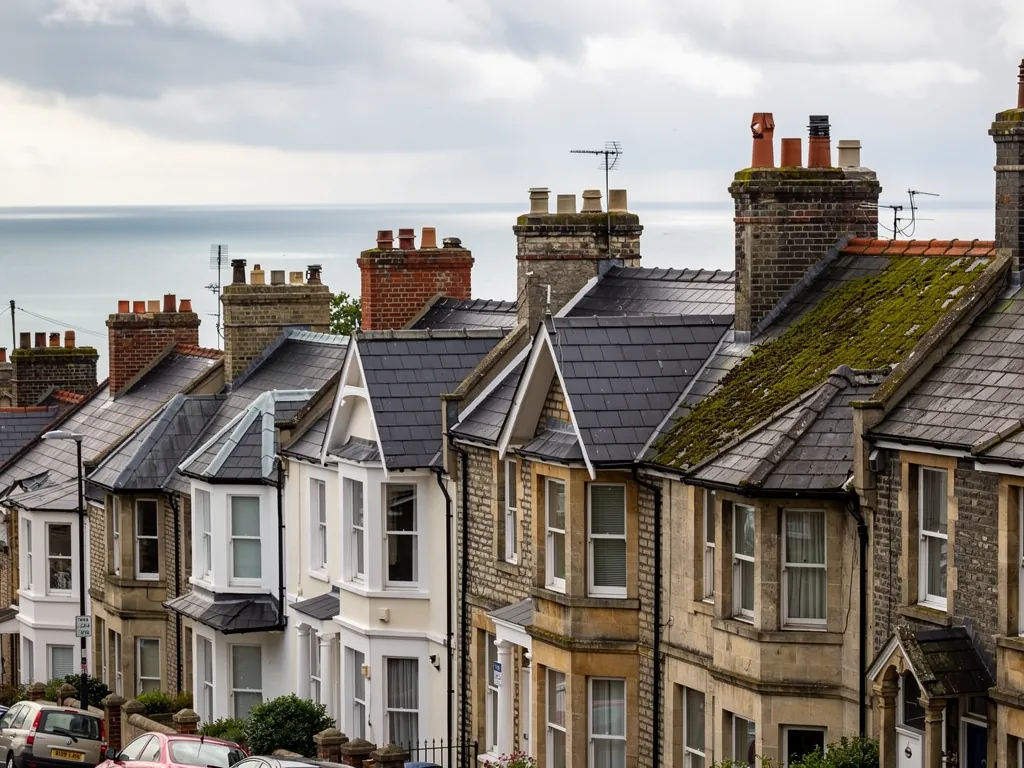
Victorian villas with slate roofs in a North Somerset town near the coast

Roofers in Banwell

Banwell is 28.4 road miles from central Bath, lying west of the city at the end of the northern Mendip slope. A Victorian castle, a bishop's abbey and a church with a tower 100 feet high all sit in Banwell, and its narrow main streets decide how scaffold and materials get to any of them.

Local roofs

Gothic towers, a bishop's house and a river

Banwell stands at the west end of the northern side of the Mendip Hills, on the River Banwell. The village has some of the grandest buildings in this part of North Somerset. Banwell Abbey was built as a bishop's residence in the 14th and 15th centuries, renovated in 1870 by Hans Price, and is now Grade II* listed. Banwell Castle, a Victorian castle built in 1847 by John Dyer Sympson, is a hotel and restaurant and also Grade II* listed. The parish church, St Andrew's, is a 15th-century building with Grade I status, topped by a tower 100 feet (30 metres) high.

Those three buildings give the village a roofline that is more dramatic than most. They also tell you what kind of work Banwell asks for. There are the large and complicated roofs of the castle, whose listing describes turrets and embattled parapets, and of the abbey, where parapets and long gutters carry the water, and where the work is often commercial in scale. There is the tall church tower, which is a question of height and access. And there are the ordinary streets of houses, shops and cottages that grew around them.

Banwell is on the A371 and is where the western end of the A368 begins. Traffic often jams its narrow streets, with a bypass under construction that North Somerset Council expects to open in 2027, and that matters to a roofer as much as to a driver. Scaffold, skips and deliveries all have to fit into the road as it is.

Surveys are free here as everywhere. Once we have been up and taken pictures of the slopes, the written quote does not change.

Council
North Somerset Council
From central Bath
28.4 road miles, west
Abbey
14th and 15th century, renovated 1870, Grade II* listed
Castle
Built 1847, now a hotel, Grade II* listed
Church tower
St Andrew's, 100 ft (30 m), Grade I listed

What we find

Hidden gutters behind battlements and tight access

Hidden gutters behind battlements and parapetsGothic and castellated buildings hide their gutters behind stonework. We follow the water from the roof to the outlet, looking for split laps in the lead and blocked outlets.
Awkward access and stressed fixingsA narrow street can mean a ladder at a steep angle or a platform that has to be set tight against the wall. We plan where materials land before we price, so the programme is realistic.
Weathered chimneys on older cottagesStacks on the older houses take the wind coming off the hill. We check the pots, the mortar cap, the stone or brick below it and the lead where it meets the roof.

Narrow streets, heavy traffic and the practical side of roofing

On the A371 and the A368, a scaffold is a traffic decision as well as a roofing one.

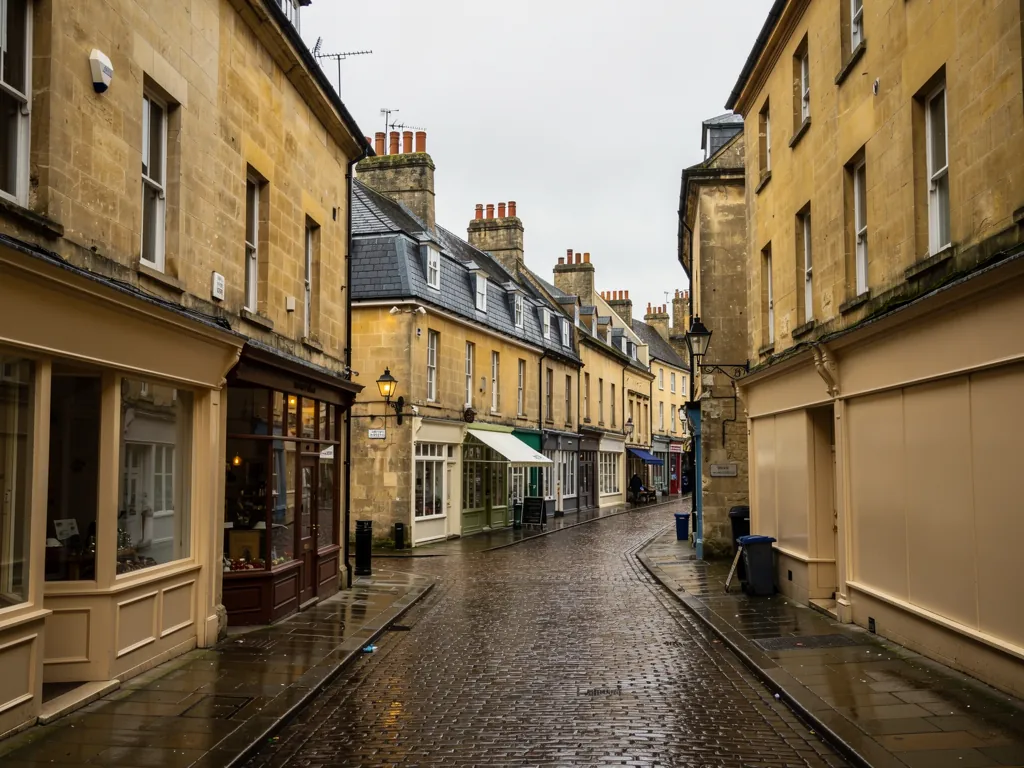
Banwell has a very particular problem for a trade that depends on vehicles. The village is on the A371, the western end of the A368 begins here, and traffic often jams the narrow streets. A lorry with a delivery of slates or a skip that needs lifting takes up road, and the road is already busy.

We plan around it. Before a price is given, we look at the street: where a scaffold can stand without blocking more than it must, whether a pavement or part of the road has to be used, and whether the council's permission for it is needed. Deliveries can be arranged outside the busiest hours and in smaller loads. A skip may have to be replaced with bagged waste carried to a vehicle parked elsewhere. These details cost time and money, and we show them in the quote, so you can see the roofing and the logistics separately.

Neighbours matter on a narrow street. A scaffold over a shared passage, a ladder across a drive or a few days of noise next door deserve a word beforehand. We tell the neighbours what is happening and for how long. It is a courtesy, and it also avoids the delays that come with a dispute.

Inside the village, some houses stand directly on the pavement. A roof that slopes towards the road has a gutter above a footway, and a blocked gutter or a loose tile is a hazard to people walking past. A hazard like that is dealt with straight away, and the full repair is planned afterwards. Our roof repairs page shows how we deal with leaks and storm damage in sequence.

Quote the access

In a village of narrow streets, a quote that leaves out scaffold and deliveries is not a quote you can rely on.

Banwell Castle and the roofs of a Victorian castle

A castle built in 1847 shows how decorative a roof can be and how difficult to keep dry.

Banwell Castle was built in 1847 by John Dyer Sympson and is now a hotel and restaurant. The building is Grade II* listed. Like many Victorian castles, it imitates medieval defensive buildings with towers, battlements and turrets. A real castle's battlements were for defence. A Victorian one is for show, and it has the roof problems of a show building: the water has to go somewhere, and somewhere is behind the stone.

A battlement is a parapet with gaps in it. Behind it runs a gutter, lined with lead, that gathers rainwater off the roof and delivers it to a downpipe. A parapet gutter like this works well only if its falls are right, its outlets are clear and the lead is whole. Where it fails, the water goes into the masonry, and a leak inside a thick wall can take weeks to show on the surface. Behind the stonework are flat or low-pitched roofs, often covered with lead or asphalt, and they need the same attention to falls, drips and upstands.

For a hotel, there is a second difficulty. The building has to stay open. Guests cannot be moved out of a room because the roof above it is being repaired, and a restaurant cannot lose its dining room. We plan around the building's use: the order of work, the scaffold position and the hours on site. Wet weather protection matters, because a roof that is opened up must be closed again at the end of every day.

The commercial roofing we do covers hotels, pubs, shops and other trading premises. A planned survey is more useful than an emergency call, since it lets the owner budget. The page on commercial roofing explains the process. Our quote is fixed after the survey and shows the access separately.

Words you will hear

Battlement
A parapet with regular gaps, decorative on a Victorian building.
Falls
The gentle slope of a gutter or flat roof that carries water to its outlet.
Upstand
Where flat roof covering turns upward to meet a wall.
Outlet
The hole at the low point of a gutter that feeds the downpipe.

The abbey, St Andrew's tower and listed-building work

Two Grade II* buildings and a Grade I church mean consent is part of the conversation in Banwell.

Banwell Abbey was built as a bishop's residence in the 14th and 15th centuries and renovated in 1870 by Hans Price. The abbey is Grade II* listed. St Andrew's church has stood since the 15th century, has Grade I status and carries a tower rising 100 feet (30 metres). The roof forms part of any listing, which means repairs to the covering, the lead or the chimneys of a listed house, or of the abbey, may need consent from North Somerset Council. St Andrew's is the exception: worship still goes on there, so the ecclesiastical exemption applies and any roof work there is approved by faculty from the Anglican diocese.

Consent is separate from planning permission, and the council is the right place to ask. We leave legal rulings to others and do not predict what a council officer decides. Our part is a precise description: today's covering, the fault, the proposed fix and the material for it. The officer can then reply with a yes, a no or a list of conditions. Replacing like with like tends to be easier to agree than altering material or method.

A tower of 30 metres is not reached by an ordinary ladder. Scaffold or specialist access is needed, and the cost of reaching the top is a large share of the job. The roof of a tower is also exposed: wind, rain and temperature range are greatest at the top. Lead flashings and the stonework around them take a lot of punishment, and the first sign of failure may be damp on the inside of the tower walls.

Old roofs are also homes. Bats roost in church and abbey roofs, and birds nest in them. The law protects both. Where droppings, nests or roosts turn up, work halts until Natural England has been consulted, so that the programme can fit around the animals. For gutters and flashings on buildings of this age, see our lead roofing page.

100 ft

Height of the tower of St Andrew's church, about 30 metres

1847

Year Banwell Castle was built by John Dyer Sympson

1870

Year Hans Price renovated Banwell Abbey

Figures: Banwell entry, Wikipedia, checked October 2026

Cottages, chimneys and the foot of the hill

Ordinary Banwell houses sit below the Mendip slope, and their weak points are the same few.

Much of Banwell is neither castle nor abbey. It is streets of houses, cottages, shops and pubs, and the work on them is repair and renewal. The village stands at the west end of the northern Mendip slope, and its roofs take the weather that comes across from the hill and up from the river.

Chimney stacks come first. They are the tallest part of an older house and the most exposed. The cap of mortar round the pots, the joints between brick or stone, and the lead flashing at the base each age at their own pace, and any of them can admit damp. Damp from a stack often appears on a chimney breast inside, far from the roof. We check the three, and we say whether pointing, a new cap or a rebuild is needed. Lime mortar suits old stone and soft brick, since it lets moisture escape. See chimney repairs for each option.

Gutters and downpipes follow. Houses at the foot of a hill receive water from above as well as from the sky, and a downpipe that discharges beside a wall can soak the base. We confirm that downpipes reach a drain or soakaway, that their joints are sound and that the run tilts toward the outlet. Water lying at the far end, or spilling at a joint, means the gutter has sagged.

Finally, there are the roofs themselves: old tiles that have lost their face to frost, slates that have slipped, ridges that have lost their mortar. The survey separates what can be repaired from what has to be replaced. If it is a re-roof, Building Regulations may apply, and we explain how. The Planning Portal sets the thresholds, and building control can say how they apply to your own roof.

Map showing the location of Banwell.

Nearby

Roofers near Banwell

Roofing services in Banwell

Local questions

Asked on the narrow streets below the castle

Our Banwell cottage opens straight onto the street. Is there room for a scaffold?

Usually yes, but it needs planning. We look at the pavement, the road width and any neighbours' access before pricing, and we talk through whether the council's permission is needed for a scaffold on the footway. Deliveries can be timed and split into smaller loads, and waste can be bagged. All of this appears as separate lines on the written quote.

How are battlement and parapet gutters repaired on a castellated building?

First we find the failure: a split lead lap, a blocked outlet or falls that hold water. A short length of damaged lead can be cut out and renewed, with drips and upstands set correctly. If the gutter has moved or the lining is worn throughout, relining is the answer. On a listed building we describe the method in writing for North Somerset Council before work begins.

Does a roof near the abbey or St Andrew's need consent to repair?

Only if your own building is listed or stands in a restricted area. A listed neighbour does not pass its status to you. North Somerset Council can confirm, and the Historic England list is searchable by address. If your house is listed, we can write up the proposed repair so the council can judge it. Like-for-like repairs are usually the simplest to agree.

We run a pub in the village. Can roof work be done while we stay open?

In most cases, with planning. The order of work, the scaffold position and the working hours are agreed with you beforehand, entrances stay clear, and the opened roof is covered each evening. Booking a survey ahead of trouble lets you pick the quiet weeks. A roof that is leaking today is made safe before anything else, with the full repair after.

Get your free survey

Get your free roof survey

Tell us what's happening and we'll call you back to arrange a visit. Prefer to talk? Call 01225 285181.

  • Photos of your own roof
  • A fixed price in writing
  • 10-year workmanship guarantee
Call Free survey