


Cottages around St Peter's
A village with a church recorded in 1086 has roofs that have been patched over generations.
Around the older lanes of Frampton Cotterell, the cottages and farm buildings are the kind of property where nobody can say for certain what the roof is. Parts have been replaced, a slope has been renewed, and the extension on the back has its own covering. The first task is therefore to read the roof as a document of its own repairs.
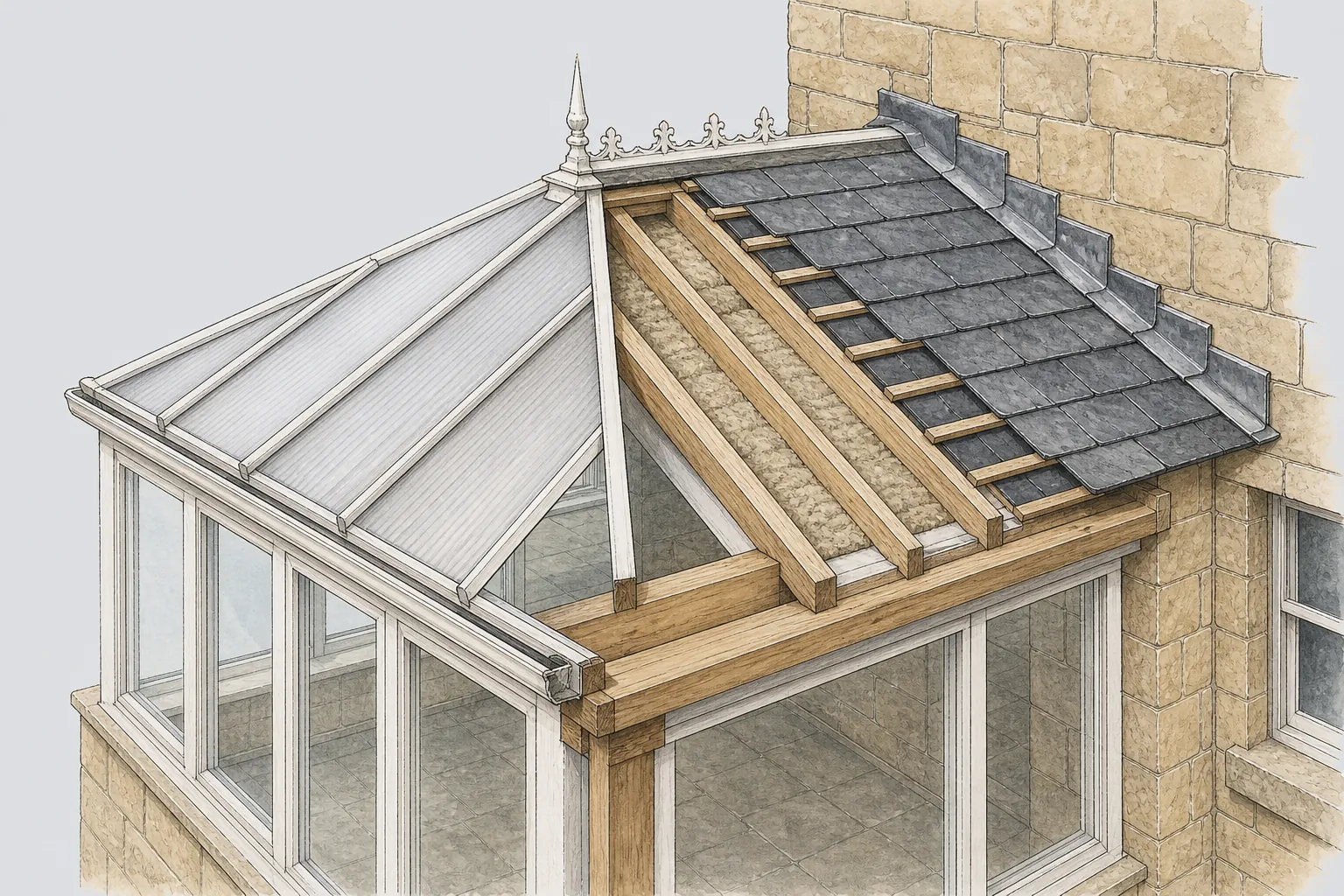
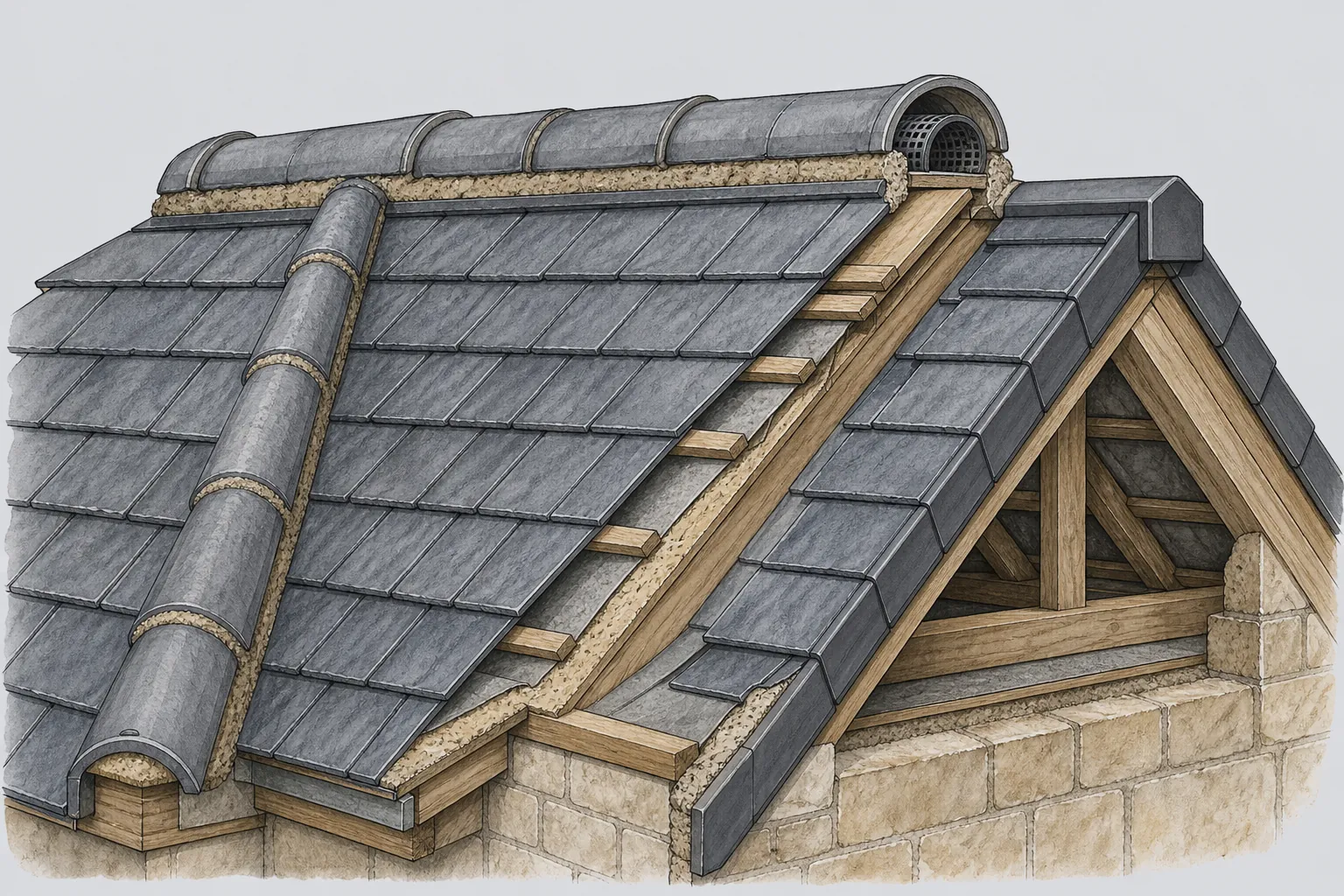
On the roof we read how the covering is laid, how it is fixed and what lies beneath. An old pitched roof may have no underlay at all, with the covering resting on bare battens or even on boards. Without an underlay, wind-blown rain and snow can enter the loft, and the cure is not always a full strip. In some cases a vapour-open underlay can be fitted from inside the loft, in others it is a matter for a strip and relay.
Timbers are the next item. Rafters, purlins and wall plates are sound for as long as they stay dry, and the roof can look tidy while the rafter feet, where they sit on the wall, have been rotting for years. We probe suspect timber with a bradawl and note the extent. If the condition is poor, the report says so up front, and we show the photographs.
Matching is the principle on a house like this. If the roof is clay tile, we find a matching tile; if it is slate, we match the slate. Replacing a patch with the wrong material shows from the lane and can trap moisture. Where old tiles are sound, we sort them, keep the best and use reclaimed ones to make up shortfalls.
Chimneys and flashings need the same care as on any older house. The detail on a stack, the lead at an abutment and the valleys of an extension all matter, and pitched roofing describes how we handle them. The decision between repair and replacement is yours, and we put both options and their costs in writing.