


Roofs on a valley hillside: where the water goes
In a town built up the sides of two valleys, a roof is only the start of the drainage path.
Rain landing on a Midsomer Norton roof has a long way to go. It runs down the slope, into the gutter, along to a downpipe, and from there into a drain that may already be carrying the run-off from the street. On a hillside town the whole chain matters, because houses sit at different heights and a fault high on the slope delivers its water to the property beneath.
The first thing to check is the gutter. Plastic gutters sag between brackets and cast iron gutters rust at the joints, and either will overflow if the fall has shifted. If water lies in the gutter at one end, the brackets have dropped or the run has lost its fall. Re-hanging on new brackets is often a smaller job than replacing the whole length, and we say which route fits.
Next, the downpipes and the hoppers (the open heads that gather water from gutter or parapet and pass it into the pipe). Leaves, moss and roof grit collect there first. When the head is blocked, the water has nowhere to go and finds a way out through the wall instead. We clear what we find and check that the pipe discharges to a gully or soakaway that works.
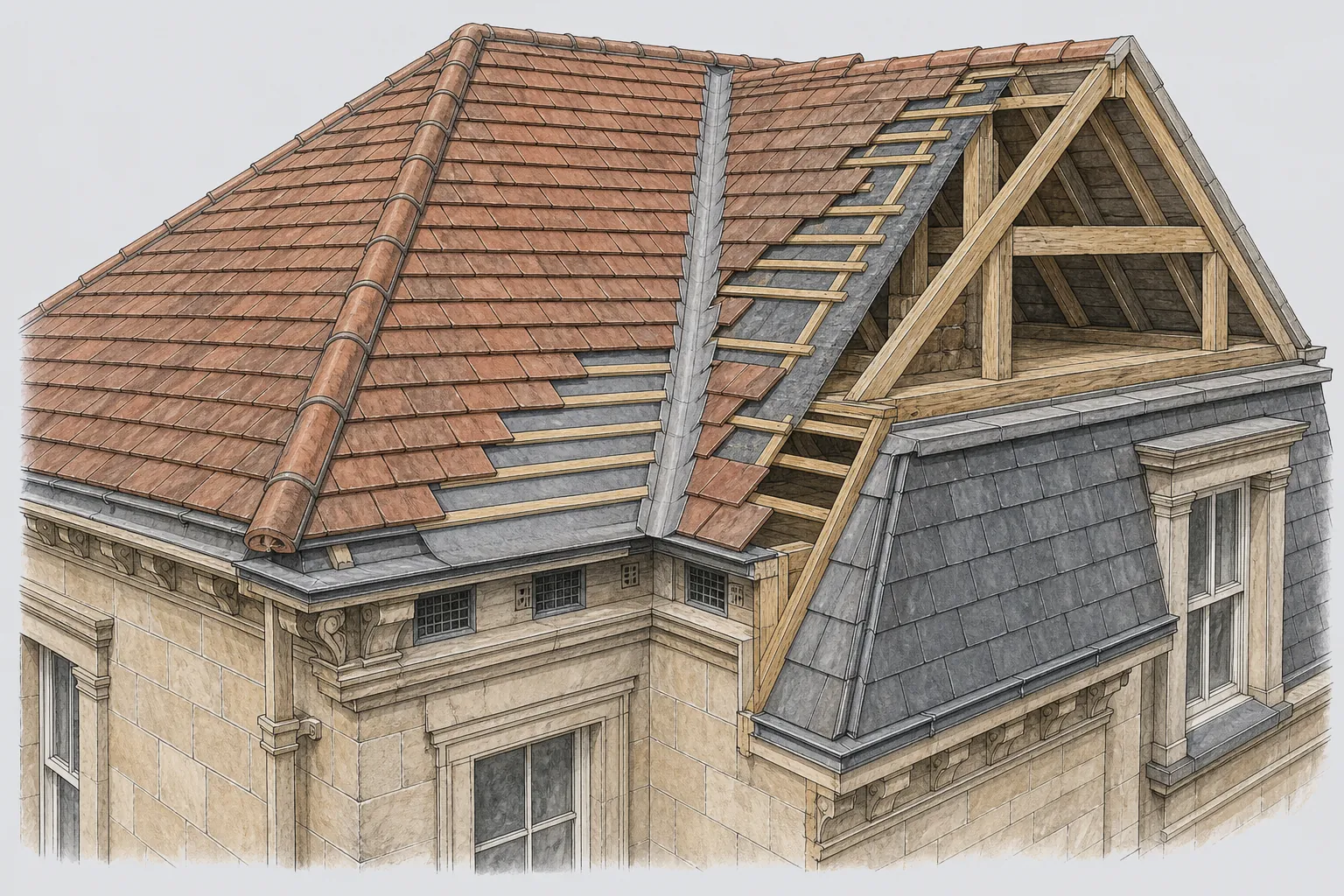
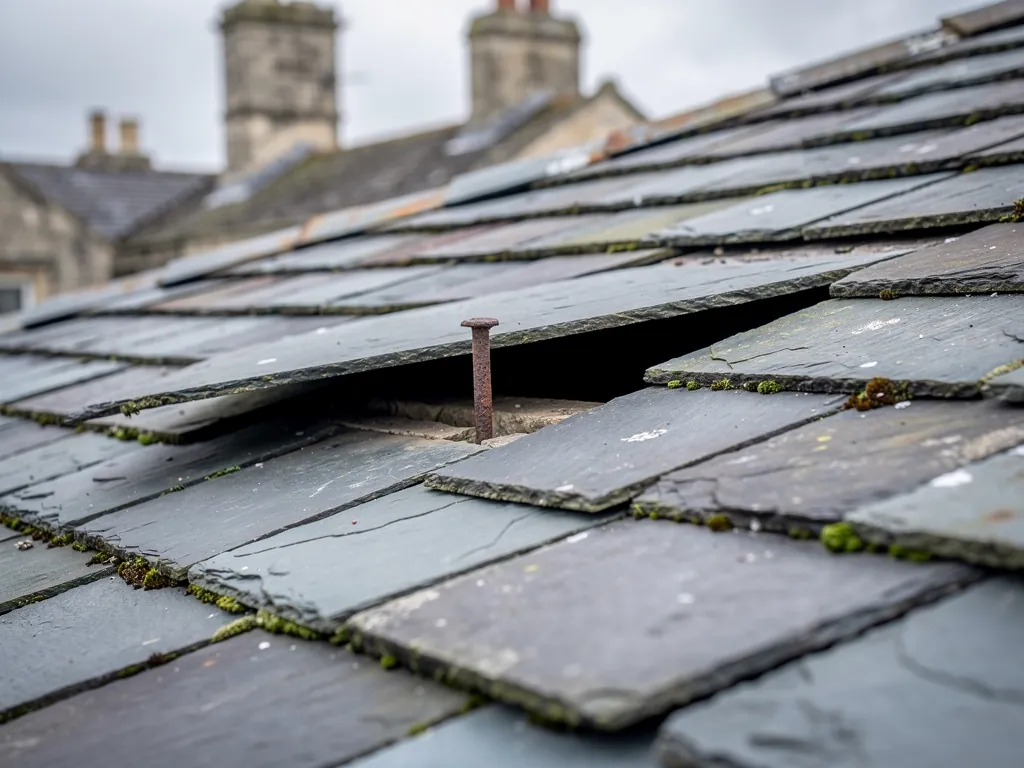
Then the roof edge. Slipped tiles or a failed first course at the eaves send water behind the gutter, onto the fascia and down the wall, and fixing the gutter will not cure that. We look at both together. On a terrace, where one gutter serves several slopes, we also look at the shared junctions, because these decide whether the repair holds.
The town's flood tunnel is a reminder that water has caused trouble here before. It is also a reminder of a limit: the tunnel handles the river, and a roof is drained by its own gutters and drains. If your property sees standing water at the foot of a wall after rain, the first thing to rule out is the roof edge above it. Our roof repairs service covers the work, from re-fixing tiles at the eaves to renewing a failed gutter.