
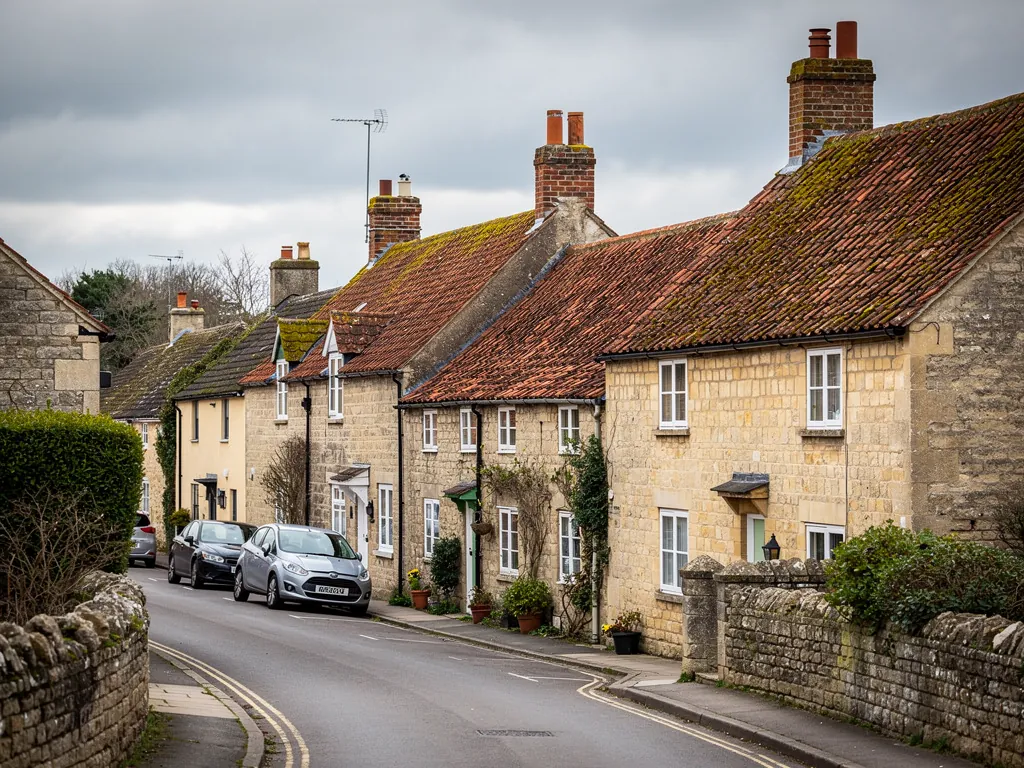
A Somerset village street of stone cottages with clay pantile roofs

Roofers in Paulton

Paulton is 10.7 road miles south-west of Bath, a former coal village with a designated historic core. We look after roofs of every age here, from the eighteenth-century houses and the parish church to the hundreds of homes built on the old Purnells printing site.

Local roofs

A coal-canal village with a designated historic centre

Paulton's past is industrial. Its basin was the terminus of the northern branch of the Somerset Coal Canal and a central point for at least fifteen collieries around Paulton, Timsbury and High Littleton. Evidence of the mining still shows in and around the village, including a spoil tip known as The Batch. The Purnells printing factory was part of the village too.

Alongside that working history is a protected one. Paulton has been designated as an area of special architectural or historic interest under section 69 of the Planning (Listed Buildings and Conservation Areas) Act 1990, which is the designation that makes a conservation area. Hill House was built in about 1760 by John Hill and is Grade II listed. The Church of the Holy Trinity, dated 1757 and 1839, the later work by John Pinch the younger, is Grade II* listed.

The newest part of the village sits on the old factory land. Between 2009 and 2015 the former Purnells site was replaced with 420 houses, so Paulton has a large block of roofs that are now old enough to need their first checks but too new to have shown their faults.

That spread, from the 1750s to the 2010s, means the right approach changes from street to street. In the old centre it is matched repair and a check on consent. On the newer streets it is maintenance: ridges, flashings and gutters. We tell you which applies, and we put the findings in front of you with photographs of your own roof before any price is agreed.

Council
Bath and North East Somerset Council
From central Bath
10.7 road miles, south-west
Designation
Area of special architectural or historic interest (s69, 1990 Act)
Listed buildings
Hill House (Grade II) and Holy Trinity church (Grade II*)
Purnells site
420 houses built between 2009 and 2015

What we find

Phase joins, Purnells homes and old garages

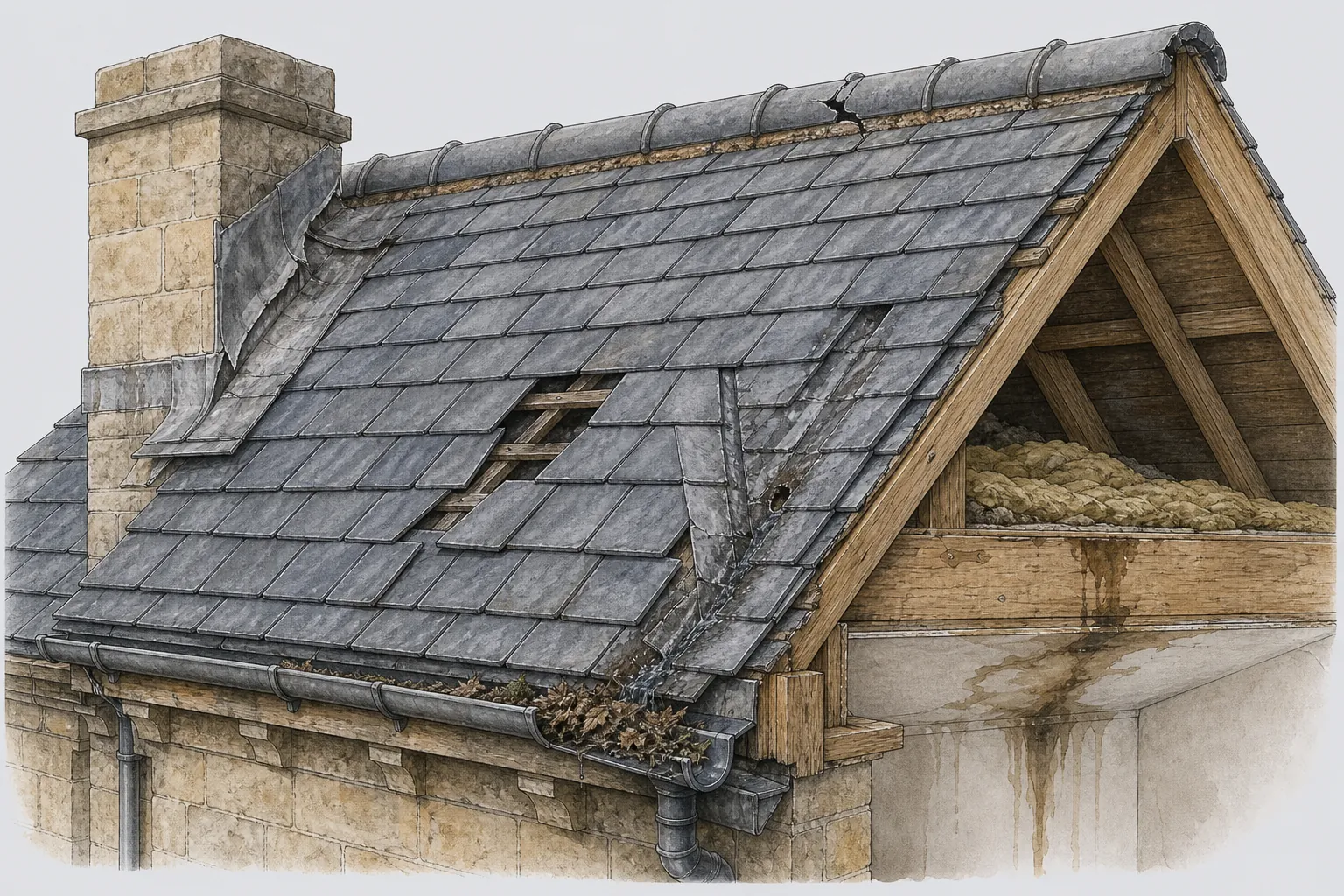
Joins between building phasesHoly Trinity is dated 1757 and 1839, and many old buildings have a line where one era meets another. At that line the roof changes pitch or height, and the flashing or valley there is where water gets in first.
Early faults on the 2009 to 2015 homesOn a roof of this age we look for a cracked ridge bed, a lifted verge, a tile that slid in a gale and gaps round roof windows or vent pipes. They are small, quick to mend and cheaper to catch before water reaches the ceiling.
Old garage and outbuilding roofsA village with an industrial past has plenty of workshops, sheds and garages. We check the sheets, the fixings and the flashings against the main house wall, and we find out what a corrugated roof is made of before anyone disturbs it.

What a conservation area means when a roof needs work

Paulton's designation does not freeze its roofs, but it does make some changes a conversation with B&NES.

When a place is designated as an area of special architectural or historic interest, the council is expected to look after its character. In practice that means some changes to a building's appearance from the street are best raised with B&NES before they are made. A repair that puts back what was there rarely raises much concern. A change that alters the look of a roof can raise a good deal.

We think about the covering first. Natural slate that is replaced with a synthetic slate, or clay tiles replaced with concrete, alters the roof's colour, its texture and the way it weathers. Inside the protected area, a change like that should go to the council early. We prefer to match what exists, using reclaimed material where it is available, and to keep the roof's pitch, eaves and verge as they were.

Details matter too. A chimney that is rebuilt a course taller, a ridge in a different colour, a fascia replaced with a different profile: each is small, and together they change a street. We photograph the details of your roof before we start and describe what we will put back, so you can check the plan against the original.

Roof windows and rooflights are the common point of contact with planning. The rules depend on where the window goes, what sort of house it is and whether a direction applies to the street, so we do not try to summarise them here. Our skylights and roof windows page sets out where the questions arise, and B&NES can say what applies to your address. Some streets in the district also fall under Article 4 directions, so check the council's policy map.

For listed buildings the rules are stricter. Hill House is listed, and work to its roof needs listed building consent, which is separate from planning permission. Holy Trinity is listed as well, yet a Church of England parish church still in use comes under the ecclesiastical exemption, so a diocesan faculty, not listed building consent, covers its roof work. A legal ruling on a particular house is not ours to give, though we can lay out the job and the questions to put.

Myth

A conservation area means any work to the roof needs permission first.

Fact

Maintenance and like-for-like repair carry on as normal; it is changes to the look of the roof, and any work on a listed building, that need a conversation with B&NES first.

Hill House, Holy Trinity and the roofs of the 1750s

Eighteenth-century buildings have eighteenth-century timbers, and a church built in two stages has a seam in its roof.

Paulton's oldest listed buildings sit on either side of the eighteenth century. The Church of the Holy Trinity is dated 1757 and 1839, with the later work by John Pinch the younger. John Hill's Hill House, of about 1760, adds a listed house to that pair. Both roofs were put up by hand, to the standards of their day, and both have had a long time to settle.

The first thing we look for in a roof of that age is movement. Over two and a half centuries, timbers creep, joints loosen and the walls beneath shift a little. A ridge that dips, a hip that bows or a slope that bellies is usually the frame rather than the covering, and replacing tiles over a distorted frame only hides the problem. We read the line of the roof from the ground and from the loft, and we check the bearing of the rafters on the wall plate (the timber along the wall head on which the rafter feet bear).

Then the joints between structures. A church dated to 1757 and 1839 may carry a seam where the two phases meet, with a valley or a lead-lined gutter along it. That is where leaves gather and where a split in the lead does the most damage, because the water it lets through runs straight into the wall below. We raise the nearest courses and inspect the lead for splits, usually at a lap or a drip, which is the small step where one sheet overlaps the next.

Lead is the likeliest material at these junctions and at chimneys. When it fails, we replace it with new lead, dressed to the same detail, and we choose fixings that suit the stone. Patching with mastic is not a lasting answer.

Where the roof is sound but the ridge and verges are tired, the work falls under ridge and verge repairs, and on a listed building it begins with the same call to B&NES.

1757

Date on Holy Trinity church

1760

Approximate year Hill House was built

1839

Date of the later work to Holy Trinity

Figures: Paulton entry, Wikipedia, checked October 2026

The 420 Purnells homes: roofs ten years on

A roof from the 2009 to 2015 build is young, and the checks it needs are small and specific.

The replacement of the Purnells printing factory with 420 houses between 2009 and 2015 created a whole district of recent roofs. Those roofs have now taken ten winters or more. They are far from the end of their lives, but they are at the point where small faults begin to show.

We do not assume what covering sits on a house of that age, because the roofs on a large development can vary from street to street. We look at the roof itself. The usual early faults are at the edges and at the penetrations. Mortar-bedded ridge and verge tiles crack as the roof moves with the temperature. Flashings round vent pipes and roof windows open up if the sealant has been relied on over the metal. Gutters sag where a bracket has been set too far apart.

There is one fault that is specific to young roofs: a tile that was never properly fixed. In a high wind a loose tile slides, and the gap lets rain reach the batten. Where we find loose tiles in a row, we refix them with the right clips and check that the courses either side are held.

The main point is that a new roof's problems are cheap to mend and expensive to ignore. A slipped tile mended now is a short job. A slipped tile left for three winters becomes a rotted batten and a damp stain on the landing ceiling.

If you have just bought one of these homes, a survey of the roof is a sensible first purchase. Our photographs and written findings show the condition as it stands, and where something looks like a defect that your builder or warranty provider may answer for, we note it and leave that conversation to you. Repairs to ridges and verges are described on the ridge and verge repairs page.

Check or wait

Have a recent roof looked at after any storm or stain, because a small fix now costs far less than the rot that follows a slipped tile.

Garages, workshops and the sheds of a mining village

Outbuildings carry roofs of their own, and some of them need handling with care.

A village that grew around coal and canal has a lot of outbuildings: garages, stores, workshops and sheds behind older houses. They are often the roofs that get least attention, because nobody looks up at them, and they are often the first to leak. A garage roof is a small project, but the materials and the checks are specific to it.

Flat garage roofs are usually felt, EPDM or GRP. A felt roof lasts as long as the felt holds its surface; once it blisters or cracks at the edges, water gets to the deck. Pitched garage roofs are tiled or sheeted. Where the sheets are corrugated and old, the first question is what they are made of. Some older corrugated sheets are asbestos cement.

HSE guidance on asbestos cement is clear in outline. Removing sheeting is non-licensed work provided it is carefully handled and removed without being broken up. Where the sheets would be smashed into pieces and throw up real quantities of dust, the job becomes notifiable, though still non-licensed. We do not break up or disturb a roof we suspect without testing it first, and we tell you what the result means before you choose between removal and cover. The HSE page on non-licensed work sets out the position.

Edges matter on any outbuilding. A garage roof that butts against the house wall needs a flashing that is dressed up the brickwork and into the mortar joint, and a felt roof needs a drip at its lower edge so that the water clears the wall. Many garage leaks are at the house wall, and the fix is a flashing, not a new roof.

When the garage roof does need replacing, the choice of covering depends on the span, the deck and the budget. The garage roof replacement page explains the choices, and the typical UK costs below show how the type of roof affects the range.

Typical UK garage roof costs (MyBuilder, 2026)

Garage roofTypical range
Single garage, flat roof£700 to £1,000
Double garage, flat roof£900 to £1,400
Pitched roof, tiled or sheeted£2,500 to £4,500

Map showing the location of Paulton.

Nearby

Roofers near Paulton

Roofing services in Paulton

Local questions

Inside and outside the historic core of Paulton

Paulton is a designated historic area. Can I replace my old tiles with a different type?

That depends on your address, and B&NES is the body to ask. A change of covering alters how a roof looks from the street, so it is the kind of work to raise with the council before you book anything. We usually recommend matching what is there, using reclaimed material where possible, which avoids the question for most repairs.

My house is on the former Purnells site. Should I check the roof before the builder's cover ends?

It is sensible. A survey tells you the roof's condition as it stands, with photographs, and if something looks like a build defect, the report notes it and you raise it with whoever is responsible. We do not take that conversation on for you, and we never promise a warranty claim will succeed.

Does a lead valley between the two phases of an old building need replacing, or can it be patched?

Small splits at a lap can sometimes be repaired, but a long gutter with several splits is usually better re-laid. Patching with mastic does not last, and on a listed building it is better to agree the repair with B&NES first. We open the area, record the lead and describe the options, with the cost of each in writing.

I think my Paulton garage roof is asbestos cement. What happens before anyone touches it?

Nothing is disturbed until the material is identified. If it is asbestos cement, HSE guidance treats careful removal without breakage as non-licensed work, while heavy breakage makes the job notifiable. We explain which route applies to your roof, and you can then choose between removal and covering it, with the price for each.

Get your free survey

Get your free roof survey

Tell us what's happening and we'll call you back to arrange a visit. Prefer to talk? Call 01225 285181.

  • Photos of your own roof
  • A fixed price in writing
  • 10-year workmanship guarantee
Call Free survey