


A ridge above Bristol: wind, rain and what insurers ask
On open high ground, a storm test of your roof comes sooner and the evidence matters more.
The village sits where the land climbs before the escarpment, and what that does to a roof is easy to describe. Air that has crossed open country hits the slope with nothing in its way. Pressure builds under the lower courses, pulls at the verges and tries to lift whatever is loose. A tile fixed by a single corroded nail is the likeliest to go, and once one has gone the next row is exposed.
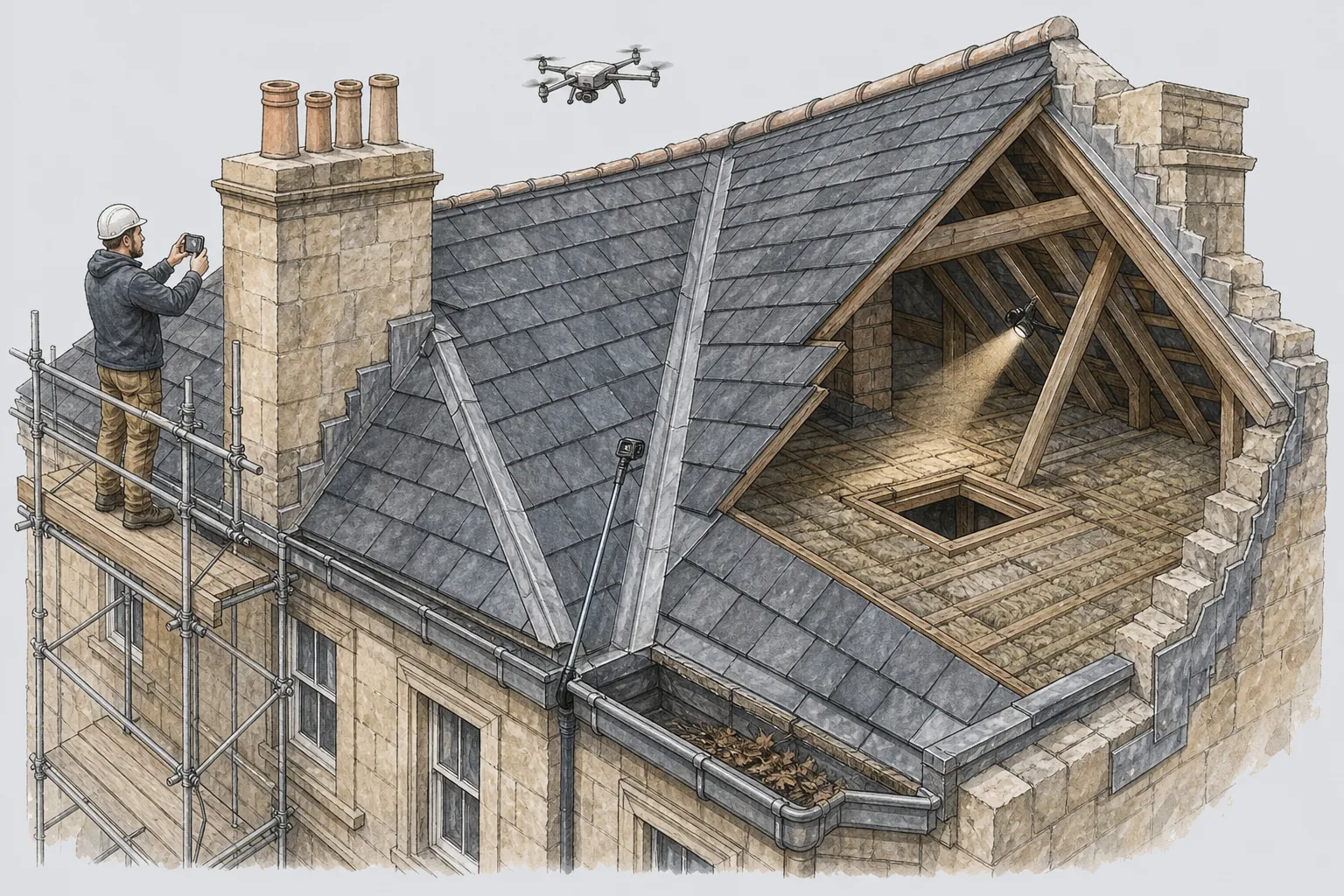
Older roofs often show the pattern. Slipped tiles sit in a line from the eaves, a patch of the underlay is visible through the gap and a damp stain appears on the ceiling below it. The fix on a sound roof is to refix or replace the loose tiles and renew the nails. The fix on a worn roof is a larger job, and we will say so, with the evidence beside it.
Storm damage raises a second question, which is insurance. Insurers often measure a storm by gust speed, with 55 mph a common threshold, and standard policies tend to leave out general wear and tear, so a claim can turn on whether damage was sudden or gradual. In one Ombudsman case, local weather reports settled the cause. Nothing here promises a payout, and the claim is yours to make. Our part is the evidence: pictures of the damage, a simple account of the cause and a written report you can attach.
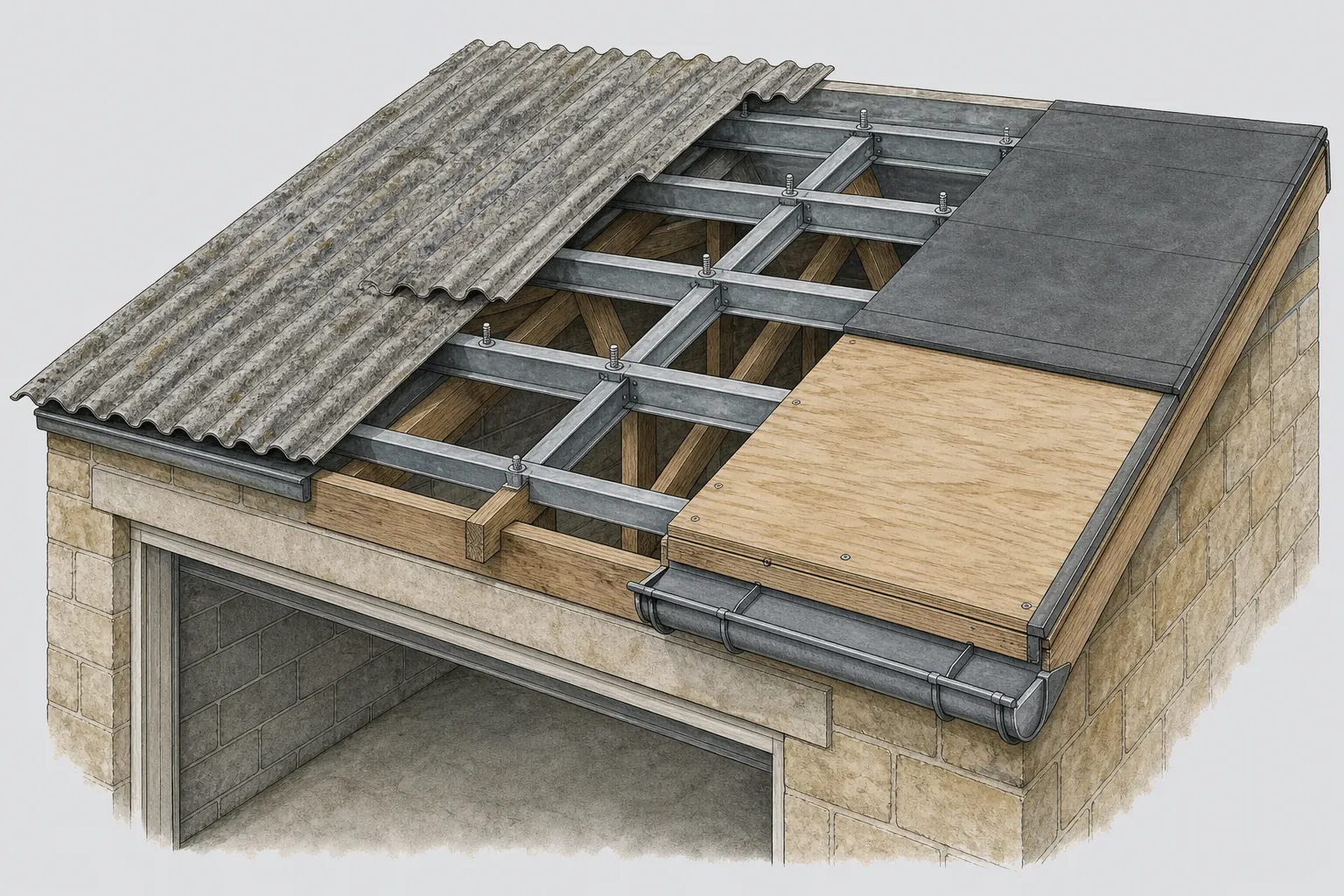
The first thing we do after a storm is make the roof safe. A leaking roof gets priority: a temporary cover over the opening, loose tiles secured and the water stopped. Then comes the proper repair, which may be a few tiles or a section of the slope. Short repairs are covered under roof repairs, and where a whole slope is spent, pitched roofing explains the alternative.
Myth
If a storm took tiles off, the insurer will pay for the whole roof.
Fact
Insurers weigh cause and condition, and general wear is often excluded, so evidence of sudden wind damage helps and nothing guarantees cover.