
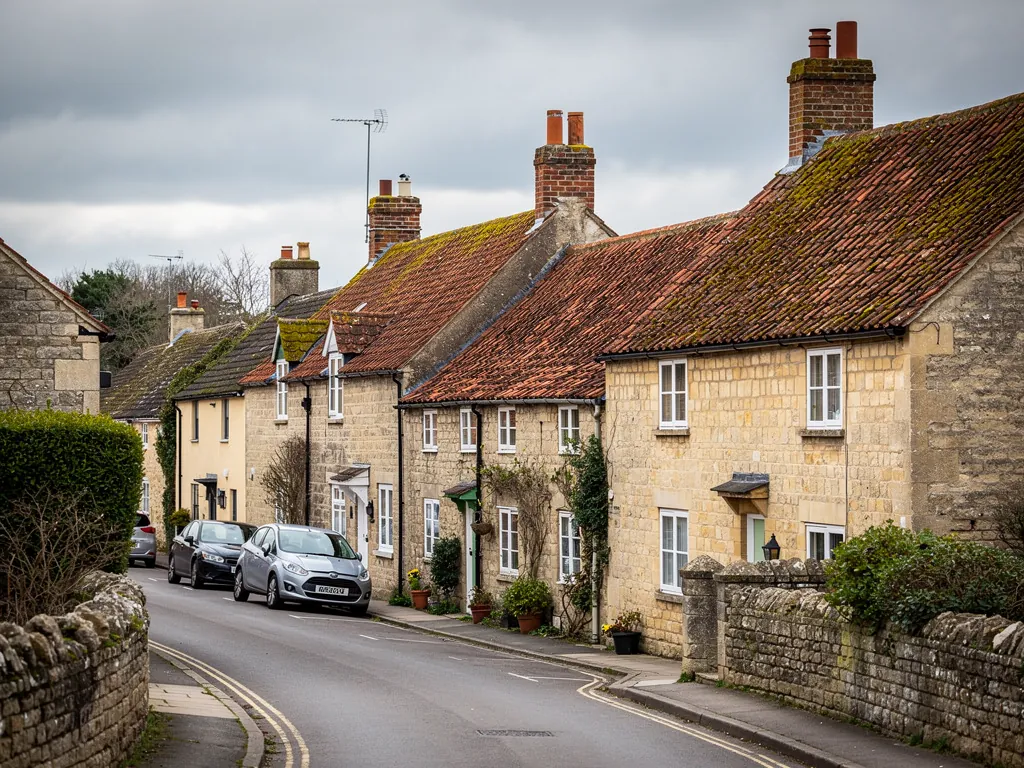
A Somerset village street of stone cottages with clay pantile roofs

Roofers in Whitchurch

Whitchurch, the Somerset one of the two, is 12.3 road miles west of Bath. Its parish was cut in two by Bristol's growth last century. Old cottages and later houses on both sides of that line get their pitched roofs repaired or renewed, and part of the job is helping you work out which council deals with your address.

Local roofs

A village divided between Somerset and Bristol

There are two Whitchurches in this corner of the map, and the confusion is old. The village in its present place dates from about the 12th century, when people from an older settlement to the west moved to the site. The parish church of St Nicholas stands there, built on the site of a chapel dedicated to St White. Then, in the 1930s and again in 1951, the northern parts of the civil parish were transferred to Bristol. The result is a village in Somerset and a suburb in Bristol that share a name and a history.

Our Whitchurch is the Somerset one. It sits in the Publow and Whitchurch ward of Bath and North East Somerset Council. From the middle of Bath the road distance is 12.3 miles, heading west. The A37, which links Bristol with Dorchester, passes through the village, and from 1925 to 1959 the village had its own station, Whitchurch Halt, served by the Bristol and North Somerset Railway.

For a roofer, the first practical question is the boundary. Whichever council covers the address deals with planning, with listed building consent and with building control, and the line between them is not always obvious on the ground. We cover both within our 30 road miles, and we will tell you which authority applies to yours before anything is booked.

The second question is age. A village that has been on its present site since about the 12th century includes older buildings, and a parish that grew in the 20th century includes later ones. The two want different handling, and that is what the rest of this page covers.

Council
Bath and North East Somerset Council
From central Bath
12.3 road miles, west
Present village site
About the 12th century
Parish church
St Nicholas, on the site of a chapel to St White
Parish boundary
Northern parts moved to Bristol in the 1930s and 1951

What we find

Boundary puzzles, later houses and cottage timbers

Which council covers the addressOn a village divided by a boundary, this is the first fact to pin down. It decides who handles consent and building control, and it saves a wrong turn if the work turns out to need either.
Fixings and bedding on later housesInterwar and post-war houses often have concrete or clay tiles over bitumen felt, and the ridge and hips may sit on a mortar bed. We look at what has cracked, what has dropped and what the felt has done at the eaves.
Old timbers in the older cottagesA building on the original village site may hold timber that is centuries old. We look at wall plates, rafter ends and anywhere that rainwater has run for a long time, because repair there is cheaper than rebuilding later.

One village, two councils: working out who decides

The parish was divided in the 1930s and in 1951, and the line matters when a roof job needs consent.

When parts of the civil parish passed to Bristol in the 1930s and in 1951, they took their council with them. Today a house on the northern side of the line comes under Bristol City Council, and a house on the Somerset side comes under B&NES. That has no bearing on the quality of a roof repair, but it matters if the work needs permission or an inspection.

Most people know which council tax bill they pay, and that is the simplest guide. If you are unsure, the address search on either council's website will tell you. For Bristol you can start from its planning and building regulations pages. On the Somerset side one body, B&NES, handles planning, listed building consent and the building control service.

What might need either? A repair that replaces like with like seldom does. A re-roof can, once it passes the thresholds on the Planning Portal, and so can a covering that is substantially heavier than the old one. A listed building needs consent for changes that affect its character. A new roof window, a loft conversion or a change to the shape of the roof can raise planning questions. We describe the work in writing, with materials and measurements, so that the council has everything it needs and you are not paying for guesswork.

The table below sets out the two routes side by side. Neither is more demanding than the other, and neither is a reason to delay a repair that is needed now. Any leak is made safe straight away, and the paperwork follows at the pace it needs. Our roof repairs service explains how we handle an urgent fault.

Whitchurch: which council deals with what

Address onCouncilDeals with
Somerset sideBath and North East Somerset CouncilPlanning, listed building consent, building control
Bristol sideBristol City CouncilPlanning and building regulations
Private routeA registered building control approverBuilding control on notifiable work, either side

Cottages on a site that moved in the 12th century

The village has stood on its present ground since about the 12th century, and its oldest buildings carry that long habit of repair.

The people of an older settlement to the west moved to the present Whitchurch in about the 12th century, and the church of St Nicholas went up on the site of the chapel to St White. We cannot tell you which cottage near it is old and which is later. What we can say is that the heart of a village with that history is the most likely place to find buildings whose roofs have been repaired many times, in many styles, by people using whatever they had.

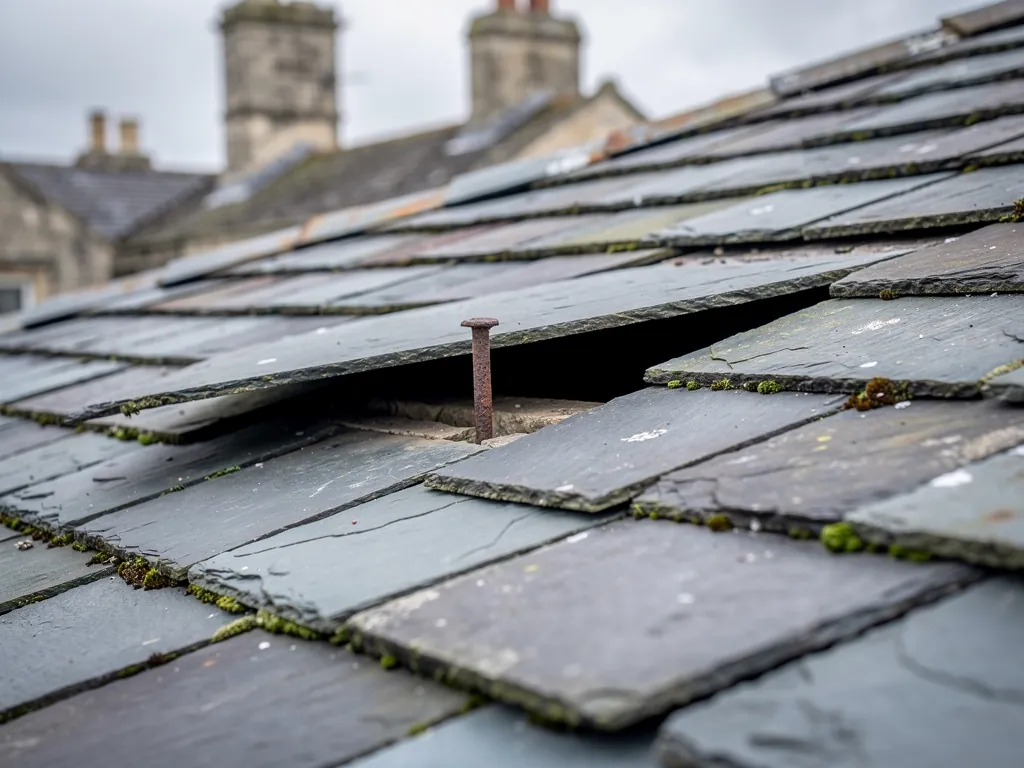
On a roof like that we take things in a particular order. We look at the outside for the signs of earlier work: patches of newer slate or tile, a ridge line that dips, a chimney that leans a little. Then we go into the loft and look at what holds the roof up. Rafter ends that sit on a wall plate are exposed to damp from the wall as well as water from above, and a rotted end can sink a whole slope. A decayed wall plate is a bigger job than a slipped tile, and it is better to know about it before the covering is lifted.

The repair philosophy is simple. Keep what is sound, replace what is not, and match what you add. A sound old timber with a patch of decay should be repaired in place whenever possible, not removed. A slate that is whole can go back on the roof. A slate that is split is replaced with one of the same size, thickness and colour. Often the work is smaller than the owner fears, and our survey says so in photographs and plain language.

If the property is listed, we set out the work for B&NES before it starts and wait for the answer. If it is not, we still keep the roof as it was built. The principles are the same on any older house, and our pitched roofing service describes them in more detail.

Twentieth-century houses and what the boundary years left behind

As the parish divided in the 1930s and 1951, housing grew around it, and a different set of roof faults came with it.

We have no record of when any particular street in Whitchurch was built, and we do not guess. But a parish that was reshaped in the 1930s and again in 1951 is one where twentieth-century housing is part of the picture, and a roofer needs to be ready for it. If your house dates from the interwar or post-war years, the roof has most likely been through a few repairs already, and the usual faults are easy to describe.

The covering on such a house is often an interlocking tile, concrete or clay, laid on battens over a bitumen felt underlay. Felt of that sort sags between rafters, tears at the nails and rots where it hangs into the gutter. A roof that has survived many winters of rain with a broken felt at the eaves will often show it as damp rafter feet and, in time, a stain on the ceiling below the eaves.

Along the top, the ridge and hip tiles were commonly laid in mortar, and the verges were finished with pointing beneath the end tiles. Both crack as the roof moves, and once a verge cracks, gusts find their way beneath the end tiles. Today we fix these mechanically as well as bedding them. The parts that sit below the roof are also worth a look: a fascia is the face-board that the gutter hangs from, a soffit is the underside of the overhang, and both can rot where a leaking gutter has run onto them. We deal with them together under gutters, soffits and fascias.

With a house of this kind, the choice is often between repair and renewal. A few slipped tiles, a ridge to rebed and a stretch of felt to renew can add many years to the roof. A slope that is sagging and cracking across its whole width probably cannot be saved by patching. Our survey tells you which side you are on, backed with photographs of the roof itself, and we put the price in writing so that you can compare it fairly with anything else you are quoted.

Words you will hear

Fascia
The face-board at the eaves, from which the gutter hangs.
Soffit
The panel under the roof overhang that closes the gap up to the wall.
Hip
The sloping edge where two roof planes meet at an outside corner.
Felt underlay
Bitumen sheet laid on the rafters beneath the battens, common on older tiled roofs.

The A37 and getting a roof job done around a working week

A road that carries traffic past the doors adds some practical points to any job.

The A37 links Bristol with Dorchester, and it passes through Whitchurch. People who live on or near it know the sound and the dust. A roof catches more of both than one on a quiet lane, and a few practical points follow.

First, access. Many houses along a main road have little front garden and a narrow pavement. A scaffold and a skip need room, and they may need a permit if they touch the public footway. We check that at the survey and say what the arrangement will be. Second, timing. Work on a roof is noisy, and neighbours deserve warning. We tell you what to expect each day, which parts are loud and when the scaffold is due to come down, and we suggest letting the neighbours know before it goes up.

Third, dirt. Roofs and gutters near a road pick up grime that sits on the surface and feeds moss. Where trees add to it, gutters fill sooner. A moss-covered slope holds water against the covering, and a blocked gutter sends that water into the fascia and down the wall. Cleaning helps, but it has to be done with care, because pressure washing can damage some coverings, and the gentler method is often the right one. Our roof cleaning service lays out the choices.

Finally, work that suits the household. If you commute along the road, you will want the roof sealed against rain by the close of every working day, and we plan the job so that stripped areas are covered before we leave. We also put the next day's plan in writing so that you can arrange parking and access. When we finish, we sweep the site and take every scrap of waste away with us. The aim is a roof that does its work without calling attention to itself on a street that never quite stops moving.

Main-road jobs

Agree where the scaffold, skip and parking will go before the survey ends, and tell the neighbours before the poles go up.

Map showing the location of Whitchurch.

Nearby

Roofers near Whitchurch

Roofing services in Whitchurch

Local questions

One village, two councils, and your questions

I live in Whitchurch, but is my house under B&NES or Bristol City Council?

The council tax bill is the simplest guide. The Somerset part of the village is in Bath and North East Somerset, and the parts moved to Bristol in the 1930s and 1951 are under Bristol City Council. Each council has its own planning and building control pages. If you are unsure, tell us your address and we will help you check before any work needing consent is arranged.

Is a house from the 1930s or 1950s likely to have a felt underlay that has failed?

It may well have. Bitumen felt of that age tears, sags and rots, especially at the eaves. If the tiles are sound and only the lowest strip of felt has gone, a local repair at the eaves can be enough. Where the felt has broken down over the whole slope, the right answer is to strip the tiles, put in new battens and underlay, and lay the good tiles back.

We are near the church. Would a roof repair on an older cottage need listed building consent?

Only if the building itself is listed, or if the work changes its character in a way the council cares about. Being near a church does not make a house listed. B&NES can confirm the status of your property. Work that simply puts back what was there seldom troubles the council, and a written description of it lets them answer quickly.

How do you manage a scaffold beside a busy road like the A37?

It is planned during the survey. We measure the pavement, decide where the skip can stand and find out whether a permit is likely to be needed, then set the arrangements down for you in writing. The scaffold goes up for the length of the job and no longer, and nothing is left behind afterwards.

Get your free survey

Get your free roof survey

Tell us what's happening and we'll call you back to arrange a visit. Prefer to talk? Call 01225 285181.

  • Photos of your own roof
  • A fixed price in writing
  • 10-year workmanship guarantee
Call Free survey