
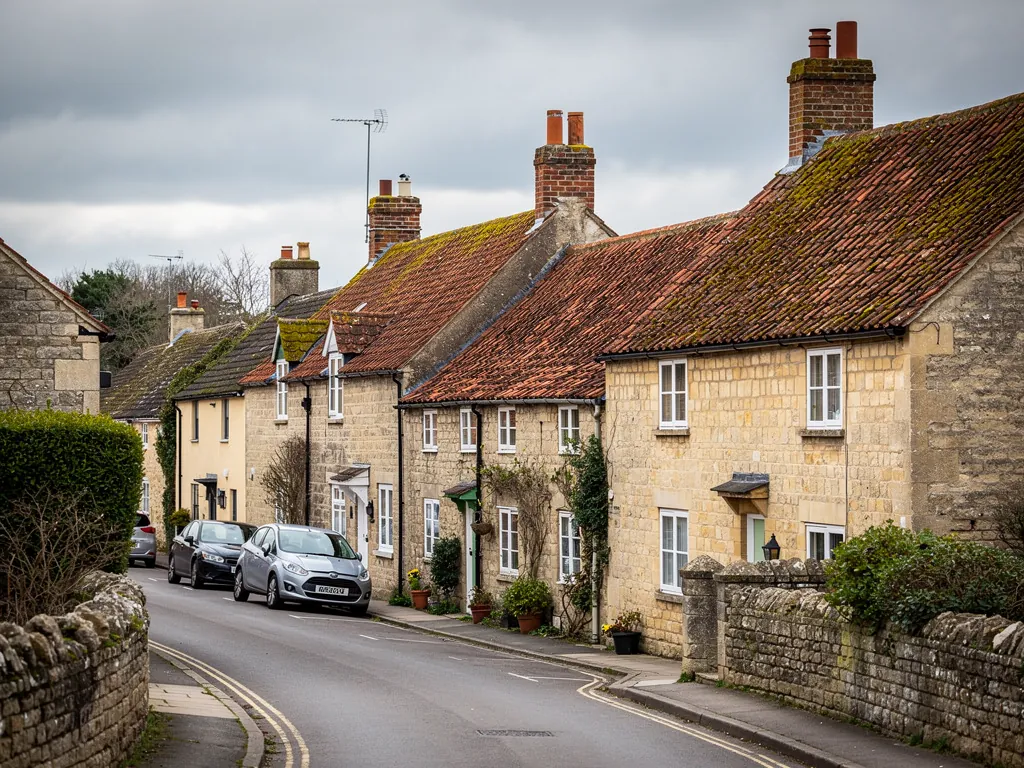
A Somerset village street of stone cottages with clay pantile roofs

Roofers in Pensford

Pensford lies 11.2 road miles west of Bath, a conservation-area village with a coaching inn, a Georgian lock-up and a Victorian viaduct. Conservation-area rules and the weather both shape the repairs on old and new houses alike, and what each job needs is written down before the work starts.

Local roofs

A conservation area built around a river crossing

Pensford was designated a Conservation Area in May 1988 for its special architectural and historic interest. The village has a clear set of landmarks. Pensford Viaduct, built in 1873, is 995 feet long with sixteen arches, carries a Grade II listing, and ran trains until flood damage closed the line in 1968. The octagonal lock-up of the 18th century has the same listing and is a Scheduled Ancient Monument too. The George and Dragon, a former coaching stop, dates from 1752 and has its own entry on the list at Grade II.

The 1968 floods left another mark. St Thomas à Becket Church, first built in the 14th century and Grade II* listed, was deconsecrated after the floods and bought in 2008 to be repaired and used as a private dwelling. Pensford colliery opened in 1909 and closed in 1955, and the site was later converted to residential use. So the village holds a very old church, a Georgian inn and a former industrial site now given over to homes, all in one small parish.

For a roofer, that mix means no two jobs begin the same way. A cottage in the conservation area asks about materials and details before it asks about price. A house on the old colliery land asks about the plain upkeep of a newer roof. A larger building that has stood empty asks what the weather did while nobody was looking.

Pensford falls in the Publow and Whitchurch ward, where the council (Bath and North East Somerset) writes the conservation area policy and decides any listed building consent. If your property is covered by either, speak to B&NES before you commit to anything beyond a straight repair.

Council
Bath and North East Somerset Council
From central Bath
11.2 road miles, west
Conservation Area
Designated in May 1988
Pensford Viaduct
Built 1873, 995 feet long, Grade II listed
George and Dragon
1752, former coaching stop, listed at Grade II

What we find

What the Pensford conservation area would notice

Changes that a conservation area would noticeBefore anything else we look at what is on the roof now and what would change if we replaced it. A different covering, a new window in a front slope or a switch of gutter material can all alter how a street reads, so we flag those early.
Water paths on older, multi-pitched buildingsInns, large houses and converted buildings often have several roof slopes meeting at valleys and abutments. We trace where each slope drains and check each junction, since leaks on such roofs usually start at one of the joins.
Roofs that have stood without upkeepA vacant or long-neglected building can pass for sound from the road while gutters have blocked, vegetation has rooted and timbers have taken water. We look at the gutters, the valleys and the wall heads first because the damage tends to start there.

What a conservation area means for a roof

Pensford has been a Conservation Area from 1988 onward, and the designation shapes the questions a roofer asks first.

A conservation area is there to look after what gives a place its character, and it is not meant to freeze a village in time. In Pensford the character comes from a particular set of buildings and the spaces between them: the lock-up, the inn, the church, the viaduct and the houses that line the roads between. Rules in a conservation area usually bear on external alterations, and roofs are among the most visible parts of any building.

For most routine roof work the question is simply whether the repair keeps the roof as it is. Replacing a few damaged tiles with matching ones, clearing a gutter or refixing a ridge unit rarely changes anything the street can see. Changing the covering material, altering the roof shape or adding a new opening is different, because those are things a planning officer might want to look at. We do not predict what the council will decide, and we say that up front. Instead we write out the proposed work with the material, the dimensions and the position, so you can put your question to B&NES with the facts in front of you.

Some streets in Bath and its surroundings also have Article 4 directions, which remove certain permitted development rights. B&NES publishes its policy map, and it is worth a look before you plan a change to the front of a house. A new roof window is a common example: whether it needs consent depends on your property and its status, and our roof windows service explains how we approach it and where to check the rules.

A conservation area also puts a premium on matching. If your roof is covered with a particular tile or slate, the best repair is one that keeps it, with new material chosen to match in size, colour and texture. If the pattern of the roof has been altered over the years, we note that and ask what you would like to see restored. Where you want to know what your own property's status is, B&NES can tell you.

1988

Year Pensford was designated a Conservation Area

1752

Year the George and Dragon coaching stop dates from

1873

Year Pensford Viaduct was built

Figures: Pensford entry, Wikipedia, checked October 2026

A coaching inn of 1752 and the roofs that go with it

Large, many-sided buildings like the George and Dragon pose problems that a plain gable roof never raises.

The George and Dragon is a Grade II listed building from 1752, and it was a coaching stop, which tells you something about its shape. Coaching inns were built to receive travellers, stable horses and store goods. They tend to be long ranges with several roof slopes, rear wings, outshuts and sometimes a carriage arch, all joined by valleys and abutments. We are not describing the inn's own roof, which we have not seen, only what buildings of its type tend to share.

Each of those joins is a place where water can go wrong. A valley drains two slopes into one narrow channel, usually lined in lead. An abutment is where a slope butts against a taller wall, and a flashing seals it. In a multi-pitched building the number of these details multiplies, and a leak inside can be a long way from the fault that causes it. Water can follow a rafter or a wall for a metre or more before it shows on a ceiling.

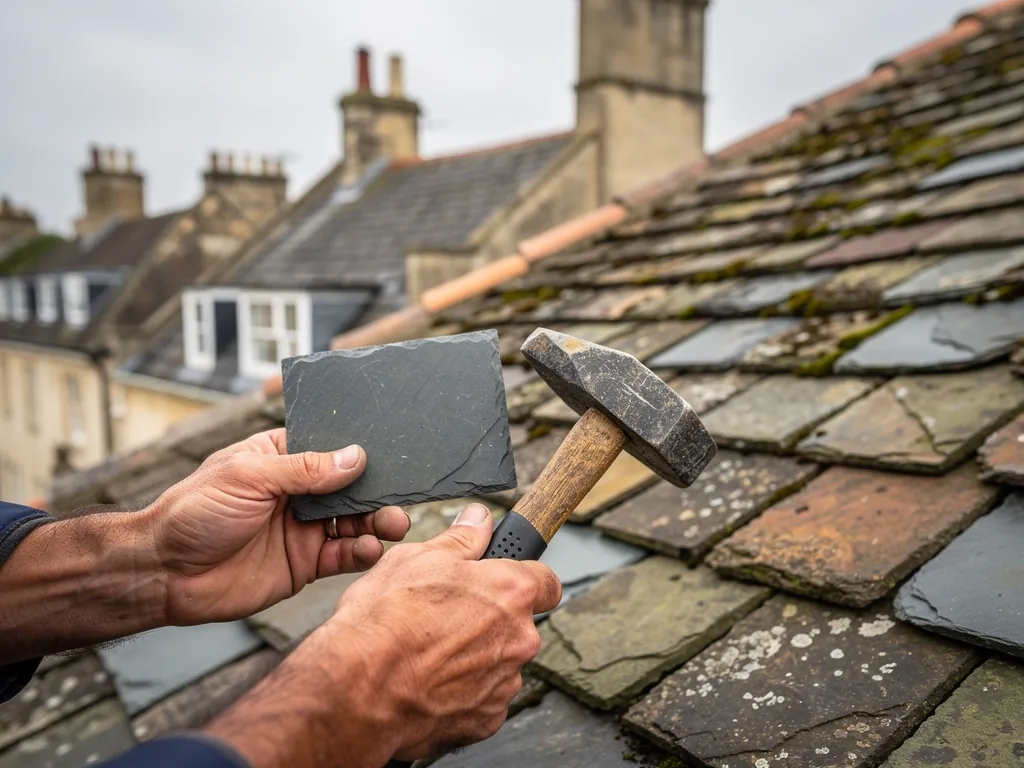
That is why we survey the whole roof and not only the part that has been marked by damp. We walk each slope, check each junction and look at the loft from below. We look for lead smothered in sealant, for slates cracked where they meet a wall and for gutters that were fixed with the wrong fall. If the roof is slate, our slate roofing work covers the repair and re-slating options, and for a listed building we match the slate in size, colour and thickness.

Larger buildings also raise questions of access. A roof that is three storeys up with a pitched slope needs proper scaffold, edge protection and a safe route for materials. The scaffold is a genuine share of the cost, and it is why a building with several roofs often makes sense to treat in one phase. We give you a fixed written price after the survey, so you can plan the work without surprises on the day.

The church conversion and what an empty building teaches

St Thomas à Becket was deconsecrated after the 1968 floods and bought in 2008 to become a home, a reminder of how fast neglected roofs deteriorate.

St Thomas à Becket Church was first built in the 14th century and is Grade II* listed. After the 1968 floods it was deconsecrated, and in 2008 it was bought for repair and use as a private dwelling. We have no part in that project and make no claim about its roof. We mention it because it points to a general truth about buildings that go unused for a time.

A roof depends on being looked at. When a building is occupied, someone notices a stain, a dripping downpipe or a slate on the path, and small faults get small repairs. When it stands empty, those faults run on. Gutters fill with leaves and silt and overflow down the wall. Seeds root in a blocked valley. A single slipped slate lets water onto the batten and from there onto the rafter. Months become years, and what was a minor repair becomes a question of how much timber has to be replaced.

If you own a building in that position, whether a house between tenants, an outbuilding or a large property you are about to convert, we suggest starting with the roof. A survey tells you what is sound, what needs urgent attention and what can wait. We separate the findings into those groups, so that you can protect the building now and plan the larger works in order. In some cases temporary protection, such as sheeting a vulnerable slope or clearing a valley, buys time without committing you to a full scheme.

Conversions bring their own demands, because the roof often has to be insulated and ventilated to suit a new use. A thermal upgrade may be required when much of the roof is renewed, and the right build-up depends on the structure beneath. Your building control body, council or private, can confirm the requirements, and our survey gives it accurate information to work from. The first step is the same in every case: find out what is actually up there before deciding what to do about it.

Words you will hear

Valley
The inside corner where two slopes join, which gathers water from each.
Abutment
The line where a roof slope runs up against a taller wall.
Flashing
Lead or other sheet metal shaped over a joint so that water cannot enter.
Batten
A narrow timber strip fixed across the rafters to carry slates or tiles.

Homes on the colliery site and newer roofs

Pensford's colliery closed in 1955, and the land has since been turned over to housing with roofs of a different generation.

Pensford colliery opened in 1909 and closed in 1955, and its site was later converted to residential property. Homes built on land of that kind belong to a different era from the village's old centre, and they ask for a different kind of attention. We do not know what any particular house there is made of, and we do not assume. On a newer roof we begin by identifying the covering, the underlay and the fixings, since those decide what upkeep it needs.

On newer roofs the faults are often small, and they arrive in familiar places. Ridge and hip units, if they were bedded on mortar, can crack and loosen. Verge pointing wears out. Plastic or aluminium guttering sags between brackets or splits at its joints. Fascias and soffits, the boards under and in front of the eaves, can rot where water has run down them. Moss gathers on shaded slopes and holds moisture against the tile, and where trees overhang, gutters clog sooner than they should.

The remedy is rarely dramatic. A yearly check from the ground, a clear gutter in autumn and a prompt repair when something comes loose will keep a modern roof working for a long time. Where moss has taken hold, careful cleaning helps, and we explain the method before any work starts, since some methods can damage the surface of certain coverings. Our roof cleaning service sets out the options and the cautions.

If a newer roof does start to fail, the diagnosis matters. A leak at a chimney or a roof window is usually a flashing problem, not a covering problem. A stain around a bathroom extract can be a condensation problem and not a roof one at all. We trace the cause, tell you what we found with pictures taken on your own roof, and recommend the smallest repair that will put it right.

Myth

A newer roof does not need looking at for many years.

Fact

Newer roofs still lose ridge bedding, verge pointing and gutter joints, and small faults left alone let water reach battens and timber.

Map showing the location of Pensford.

Nearby

Roofers near Pensford

Roofing services in Pensford

Local questions

Questions from beneath the Pensford viaduct

Pensford is a Conservation Area. Does that stop me replacing my roof covering?

It does not stop you, but a change of covering is the kind of work to discuss with B&NES first. A like-for-like repair usually raises few questions. Switching to a different material or altering the roof shape may be treated differently. We describe the proposed work precisely so the council has something concrete to reply to, and we do not guess at its answer.

Our house is near the old viaduct and the river. Is damp in the walls a roof problem?

Not necessarily. Damp near a river can come from the ground, from blocked drainage or from a roof fault, and the three look alike on a wall. We check the roof, gutters and downpipes first, and if the evidence points to rising damp or ground water we tell you that, and we do not sell you a roof repair that will not help.

Can you repair a roof on a building that has been empty for a long time?

Yes. We survey it carefully, because the damage may be hidden: blocked gutters, rooted growth in valleys and softened timbers. The survey sorts the findings into what needs protecting now and what can be planned. Temporary measures can buy time while a longer scheme is arranged.

Is a roof window allowed in a Pensford conservation-area house?

It depends on your property, the slope and its status. Check with B&NES planning first. Our roof windows page sets out how the permitted rights work and what we need to know about your house before we can describe the job.

Get your free survey

Get your free roof survey

Tell us what's happening and we'll call you back to arrange a visit. Prefer to talk? Call 01225 285181.

  • Photos of your own roof
  • A fixed price in writing
  • 10-year workmanship guarantee
Call Free survey