
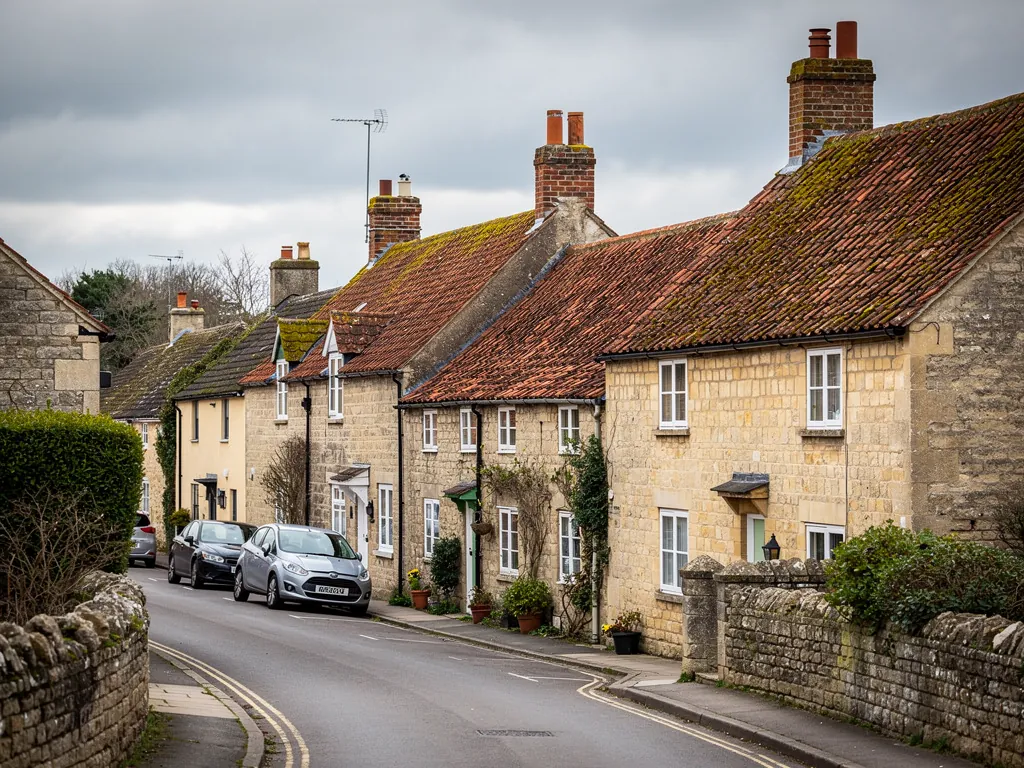
A Somerset village street of stone cottages with clay pantile roofs

Roofers in Farmborough

Farmborough is 8.4 road miles west of Bath, a village that spreads across both the A39 and the A368. Its buildings include a 15th century church and a school from 1857. Pitched roofs on both sides of the main roads, old and newer, get repaired or re-roofed here with fixings and details chosen to last.

Local roofs

A coalfield village with a church older than most of its roofs

Farmborough's most senior building is the Church of All Saints. It dates from the 15th century and is Grade II* listed. A few streets away stands the Church of England primary school, built in 1857, which gives the village a clear marker for the Victorian period. In between runs a history that stretches much further back: the Farmborough Hoard, a find of Iron Age coins made in the village in 1984, now sits in the British Museum.

The village has long been tied to the Somerset coalfield, whose mines are now all closed. That connection matters to a roofer in a quiet way. Settlements that grew with an industry tend to gain houses in bursts, so the roofs you meet in one village can come from several building periods, each with its own materials and its own weaknesses. A roof we survey on one street may have little in common with the one next door.

Farmborough also straddles two main roads, the A39 and the A368. That brings traffic past a good many front doors, and it brings its own practical questions when a scaffold has to go up. We deal with them at the survey, not on the day.

For planning and listed building consent, and for building control as well, the authority in Farmborough is Bath and North East Somerset Council. A routine repair may need none of those, and we will say so if yours does.

Council
Bath and North East Somerset Council
From central Bath
8.4 road miles, west
Church of All Saints
15th century, Grade II* listed
Village school
Built in 1857
Main roads
Village straddles the A39 and A368

What we find

Loose ridges and tired fixings in Farmborough

Ridge and hip units that have worked looseThe top line of a roof takes the most wind, and a ridge or hip that was bedded in mortar years ago may now rock under a hand. We lift a unit or two to see what is beneath and decide whether the whole line needs rebedding.
Fixings that have reached the endOn slate and tile alike, the nail or clip is usually the first thing to give. We look for slipped units in rows, since a pattern across a slope says more than one fallen tile.
Shared details between neighboursWhere houses sit close together, a valley, abutment or chimney may serve two roofs. We find out who the detail belongs to before the work is planned, so that a fix on one side holds up when the other is tested by rain.

The church, the old core and the roofs around them

A Grade II* church sets the tone for a village, and the buildings near it deserve a careful first look.

All Saints has stood in Farmborough since the 15th century, and a building of that age and rank shapes its surroundings. Not every neighbouring house is listed, but the older streets near a church are the most likely to hold buildings that are, along with others that sit in their setting. If you own a house in that part of the village, find out your property's status before you plan anything beyond routine repair.

The check is simple. B&NES keeps the record of listed buildings in its area, and Historic England holds the national list. A listed house needs consent for work that changes its character, and for a roof that usually means a change of covering, a new opening or a stack taken down and rebuilt. A like-for-like repair, with the same material in the same pattern, is a different matter, and it often goes ahead with little more than a conversation. We will tell you openly where your own job sits, and when it is the council's call and not ours, we say that too.

On older cottages and farmhouses the roof structure matters as much as the covering. Timber that has stood for a very long time can look worse than it is, and we spend time in the loft before recommending anything. Sound rafters with a fault only in the covering or its details mean a repair can keep the roof going. Where the timbers have decayed at the wall plate or the ridge, the repair has to reach them, and we explain that in terms you can check for yourself with our photographs.

Choosing between a repair and a re-roof on an older house is easier with the differences laid out, and the pitched roofing service does that, from re-fixing sound slates to stripping a slope and starting again with new battens and underlay.

What an 1857 school tells you about a Victorian roof

The village school was built in 1857, and the roofs of that period share a pattern of strengths and faults.

Farmborough's primary school dates from 1857, in the middle of the Victorian building boom. Roofs from those years tend to follow a familiar recipe: steep pitches, natural slate or clay tile, timber of good section and, very often, no underlay at all. They were built to shed rain quickly and to be repaired, and many have been doing both for well over a century.

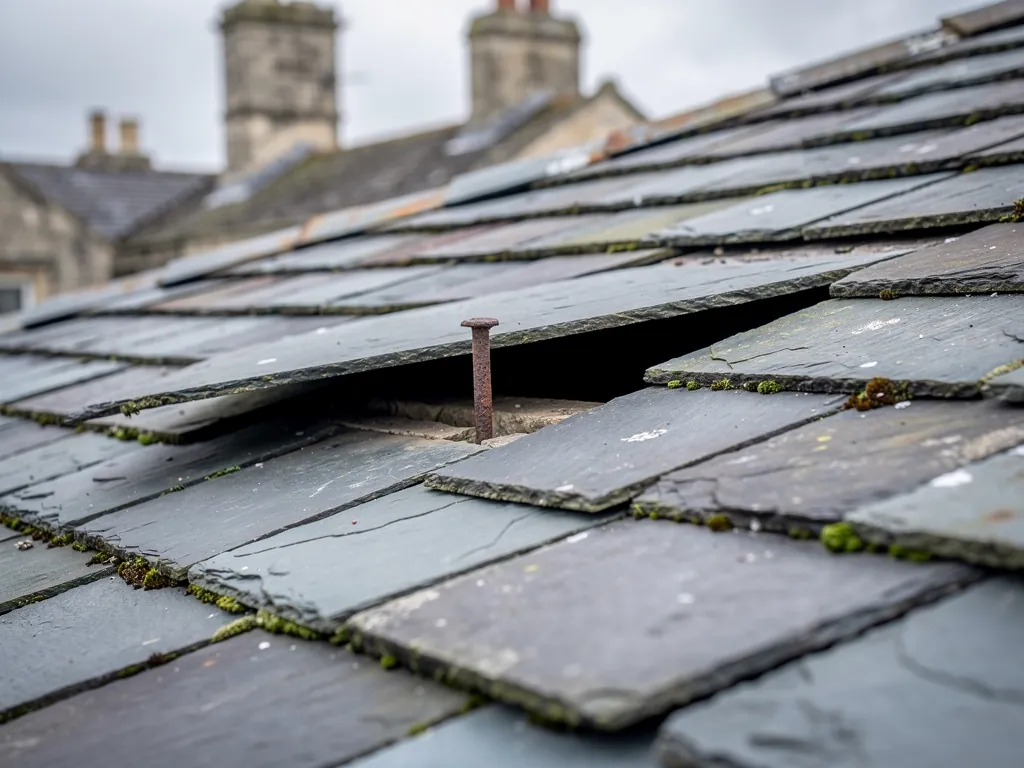
The faults that arrive with age are familiar too. Slate is a durable material, and a slate that is sound at the head will go on for a very long time, but the iron nails that hold it rust. When the nails go, the slates slip. A few missing slates in one corner is a repair. Slipped slates across several slopes, perhaps with copper or lead tingles (small straps that hold a slate in place) from earlier fixes, is a sign that the fixings have reached their limit across the roof. We check the pattern before we price.

Hips and ridges are the second weak area. On a Victorian roof they were often finished in clay ridge tiles on a bed of mortar, and the bedding cracks as the roof flexes. Rebedding on mortar alone is no longer the recommended practice, so we fix ridge and hip units mechanically as well. If you want to know how that works on a pitched roof, the ridge and verge repairs service covers the methods, dry-fix systems included.

The third weak area is the join to other things: chimneys, walls and the valleys between slopes. Water finds those joins first. A good repair there means new lead where the old has split, soakers cut to suit the courses, and flashings dressed so that they move with the roof and do not tear. When a roof like this is re-covered, the sound slates are kept, the rest are matched, and a modern underlay goes down so that the roof performs better than it did when it was new.

Words you will hear

Tingle
A narrow metal strap, usually copper or lead, that pins a loose slate back in its course.
Soaker
A piece of lead tucked beside a chimney or wall, one for each course of slates or tiles.
Hip
The sloping line formed where two roof slopes meet at an external corner.
Dry-fix
Ridge or verge units held by clips and fixings, with no dependence on mortar.

Terraces, shared walls and the roofs that belong to two houses

A village with a working past tends to have houses built close, and close houses share their roof problems.

The Somerset coalfield shaped a lot of villages in this part of the county, and Farmborough's links to it are part of its history. We do not claim that any particular row of houses was built for any particular purpose. What we can say is that places that grew with an industry often include terraced and semi-detached houses built together, and that the roofs on such houses behave as one structure, not as separate ones.

That has consequences for repair. A party wall carries a chimney stack on both sides. A valley between two houses collects water from both. A shared ridge line runs across the boundary, and a gutter at the party wall may serve both gardens. If one owner repairs their side well and the other leaves theirs, the repair is only as strong as the weaker half.

We try to find out early what is shared. We check the stack, the abutments and the valleys from both the roof and the loft, and we tell you in the survey where a fault sits relative to the boundary. When a repair needs access from a neighbour's property, or a neighbour's agreement on scaffold, we explain what is involved and leave the conversation to you, with the facts to hand. The law on party walls is a legal matter for your own adviser, and we will not guess at it.

It also helps to know when to treat the whole terrace together. If three or four roofs in a row are due the same repair, doing them in one visit can save on scaffold and make the finished result consistent along the street. For roofs at the end of their life, the choice between patching and renewal is covered on our roof replacement page, which sets out what a full strip, new battens, new underlay and a new covering involve.

Myth

A roof repair only matters on your own side of the party wall.

Fact

Water crosses boundaries through shared stacks, valleys and abutments, so a fix on one side is tested by the condition of the other.

Two main roads and the practical side of a roofing job

With the A39 and A368 both running through the village, access, parking and cleaning need planning before the first tile comes off.

Farmborough straddles the A39 and the A368. For a roofer that matters in three ways. The first is access: a scaffold on a road frontage needs space for the tower and the lift, and if it sits on a pavement or restricts the carriageway it may need a permit from the highway authority. The second is parking: a skip and a delivery lorry both need somewhere to stand. The third is dirt. Roads throw up dust, grit and moss spores, and the roofs and gutters beside them collect more than most.

We cover these at the survey, with you, and we write the arrangements into the price. We agree where the scaffold goes and how long it stays. We say where the skip will stand and who handles any parking arrangement. We plan deliveries so the road is not blocked for longer than it has to be. On a busy road, a tidy site matters twice over, once for you and once for everyone passing.

Roadside roofs also pay for their position in gutters. Leaves, silt and moss build up in a gutter faster where traffic and trees overhang, and a blocked gutter sends water down the wall or back beneath the lowest course of slates. Clearing is among the cheapest upkeep a roof can have, and a gutter that is checked each autumn seldom needs more than a quick tidy. If gutters are failing on a house beside the road, the cause is often a combination of blocked outlets and brackets that have pulled away.

At handover the site is left clear, the rubbish leaves in our vehicle and the scaffold comes down as carefully as it went up. How a full replacement or a major repair runs, stage by stage, is described under pitched roofing.

Roadside access

Settle scaffold, skip and parking arrangements at the survey, so that nothing about the road surprises you or your neighbours on the day.

Map showing the location of Farmborough.

Nearby

Roofers near Farmborough

Roofing services in Farmborough

Local questions

Farmborough neighbours ask about shared roofs

Our Farmborough house has Victorian slates. Can the slipped ones be replaced without redoing the roof?

Often yes. If the slates are sound and only some have slipped, we can refix or replace them, using tingles or matching slates for the gaps. If slipping is widespread across several slopes, the nails have simply run out of service and a re-slate is the better answer. We look at the pattern across the whole roof before we advise.

What happens when a scaffold has to go on a pavement beside the A39 or A368?

We plan it at the survey. A scaffold on a footway or against the carriageway can need permission from the highway authority, and we will tell you what applies to your frontage. We also agree skip positions, deliveries and the time the scaffold stays up, so that the road and the pavement are disturbed as little as possible.

We share a chimney stack with the neighbours. Who pays for the flashing?

That is for you and your neighbours to agree, and a legal adviser can help if you cannot. What we can do is show where the fault is, photograph it and explain what the repair involves, so that you each know what is being asked. Where both sides need work, doing it in one visit usually costs less than two separate scaffolds.

Is it worth rebedding a ridge that looks only slightly cracked?

Usually, yes. Cracked bedding lets water in under the ridge units and loosens them in wind, and a ridge unit that falls can damage the roof below. We check how many units are loose, then rebed with mechanical fixings as well as mortar, or replace the line with a dry-fix system where that suits the roof.

Get your free survey

Get your free roof survey

Tell us what's happening and we'll call you back to arrange a visit. Prefer to talk? Call 01225 285181.

  • Photos of your own roof
  • A fixed price in writing
  • 10-year workmanship guarantee
Call Free survey