The short answer
There is no published lifespan for a roof window as a whole. The makers quote a guarantee, not a life, and the parts wear at different rates. Seals and moving parts tend to go first, glazing units next, and a well-fitted frame and lead flashing can outlast both. Exposure, ventilation and the quality of the installation decide most of the difference.
Why you will not find one number
A roof window is an assembly: a frame, one or more sashes, sealed glazing units, rubber seals, hinges and handles, a lining inside, and a flashing outside. Each part is made from a different material and faces different conditions. The seal sits in sunlight. The flashing takes rain and wind. The frame spends years behind condensation. Asking how long the whole thing lasts is a little like asking how long a car lasts.
Manufacturers do publish guarantees. Velux UK, for example, states a 10-year guarantee on its roof windows, and 5 years on the electrical components of solar and electric windows, extendable by a further 5 years on registration. A guarantee is a promise about faults in manufacture, not a forecast of how long the window will work, so it is a poor guide to how long the window will keep working. A better guide is the condition of the parts you can see: a sash that closes without force, seals that are still soft and a frame with no dark staining at the corners all suggest years of use left.
Seals, handles and the parts that move
The rubber seal between sash and frame is usually the first part to show age. Sunlight dries it, repeated opening flexes it, and over time it hardens, shrinks and splits. Wind-driven rain then finds its way past. Seals are among the cheaper parts to replace on many models, and replacing them early protects the frame.
Hinges, handles and friction stays wear with use. A window that is opened every day will tire sooner than one opened a few times a year. A stiff window is often a sign of dirt or dried lubricant rather than damage, so cleaning and refreshing the moving parts is worth trying first.
Electric and solar-powered windows add motors, sensors and batteries. Those are electrical parts with their own, shorter guarantee from the maker. See our guide to electric roof windows for what they involve.
Glazing, frames and the effect of condensation
Double and triple-glazed units are sealed at the edges. Once an edge seal lets go, damp air enters the gap between the panes and the unit stays misted. That does not make the window leak into the room, but it cannot be wiped away, and it shows that the unit has reached the end of its sealing life. Replacing the glass alone is often possible.
Frames differ by material. Timber frames, normally pine, are coated for protection, and if that coating is kept in good condition, they last well. Where condensation sits at the bottom corners for years, the timber can rot. Polyurethane and metal-clad frames resist moisture, but the cladding can corrode at cut edges and joints.
Ventilation is the quiet factor. A bathroom or kitchen without an extractor fan sends warm, damp air up to the nearest cold surface, and a roof window often is that surface. Our page on roof window condensation explains how to deal with it. Keeping condensation down does more for the frame than almost any other single habit.
Flashing, covering and the roof around the window
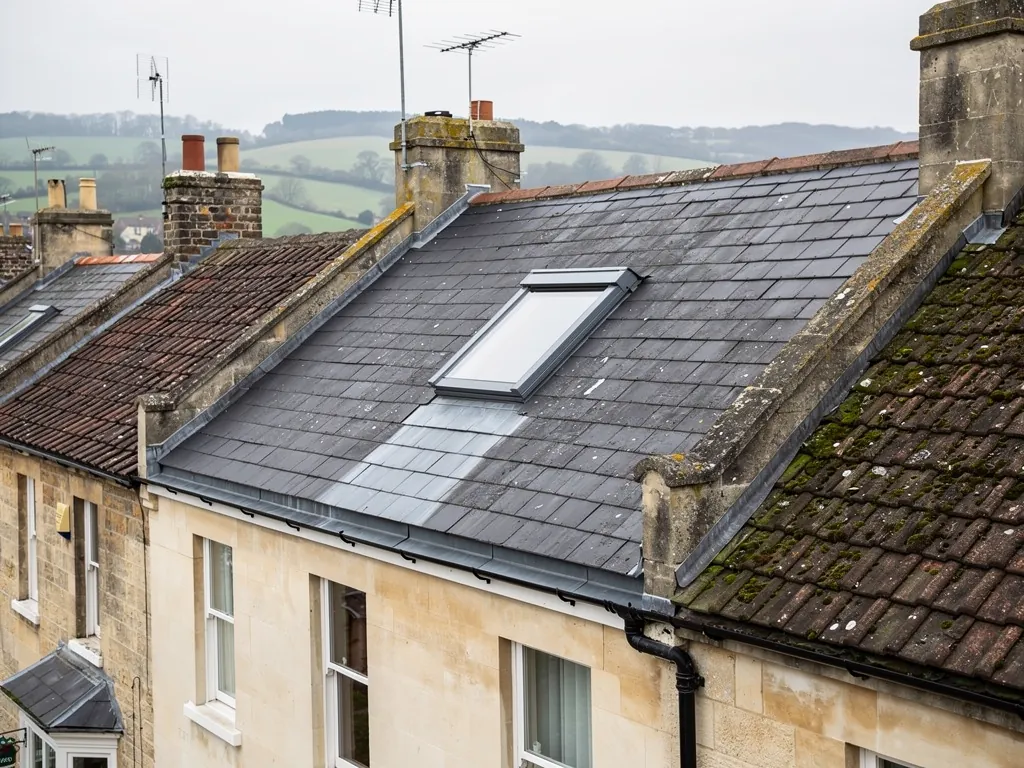
The flashing is the metal trim around the frame that turns rain aside over the roof covering. On a window with hand-formed lead flashing, the lead can be very long-lived. MyJobQuote's 2026 guide gives correctly installed lead flashing a life of over 80 years, and over 100 years for the higher lead codes, which are the thicker grades. That figure applies to lead on a chimney, and its use for a window depends on the detailing, but it does show how long lead can last when it is fitted well.
Aluminium flashing kits, the usual factory-made option, depend on being fitted in the right order for the covering. A kit that was misjudged can leak within a few winters, while a well-fitted one can serve for a long time. In practice the quality of the installation counts for more than the label on the box.
The covering around the window matters as well. A frame set into slates held with failing iron nails is only as secure as those nails. When an old slate roof is stripped and rebuilt, it is sensible to replace the flashing too.
Reading the signs and planning ahead
You do not need a number to know when a window is tiring. Look for stiff opening, seals that have gone brittle, misting between panes, flaking paint or lining timber, staining on the sill, and any leak that returns after a repair. One sign is a maintenance task. Several are a conversation about replacement, and our repair or replace rules set that out.
Annual habits help. Wipe the seals, check the vents are clear, remove moss and leaves from above the frame, and look at the lining for damp. Ask for the flashing to be checked whenever the roof is looked at for another reason, such as after a storm. Repainting or re-staining a timber lining before the finish wears through keeps moisture out of the grain, and a quick wipe of the glazing edges removes the grime that holds damp against the seal.
If you are weighing a dormer, which is a roofed projection with its own windows and a different set of ageing parts, our dormer windows page sets out its construction. For wider reading on fitting, flashing and replacement, the roof windows and skylights hub has the full set. We cover Bath and the towns within 30 road miles around it.