
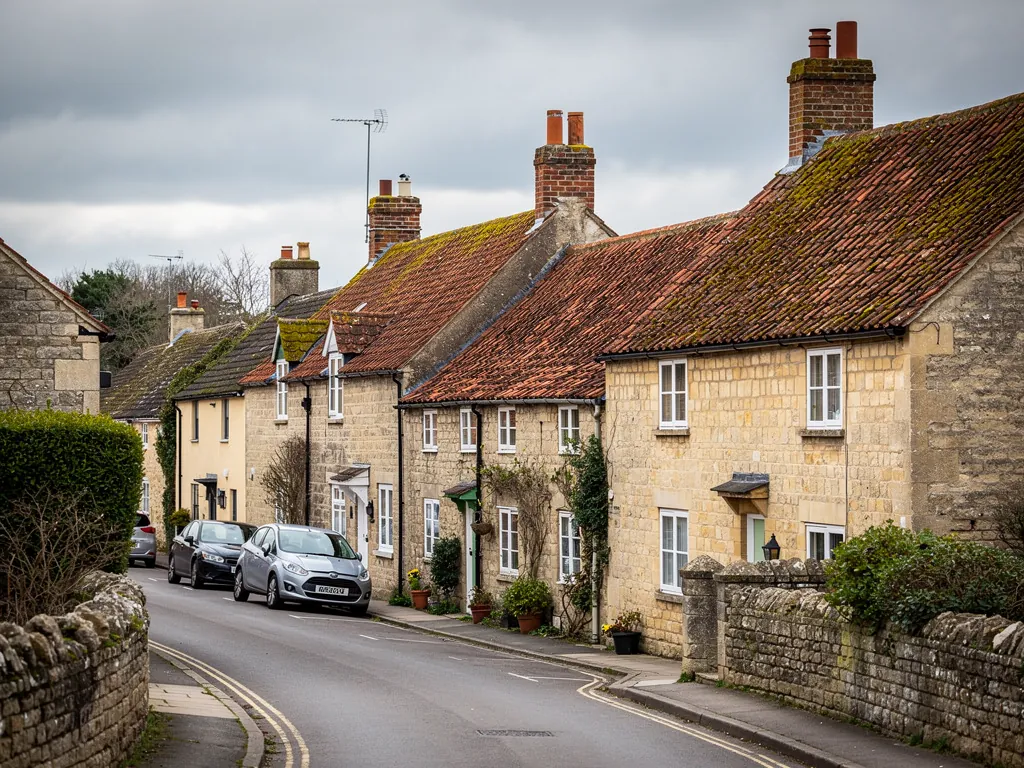



Listed farmhouses from the 15th and 17th centuries
Rectory Farmhouse, Byemills, Parson's and Stanton Wick are reminders that a roof can outlast its first builders by many generations.
Rectory Farmhouse dates from the 15th century. Byemills Farmhouse, Codrington Cottage, Stanton Wick Farmhouse and Parson's Farmhouse are listed 17th-century buildings in the parish. A roof on a house of that age is not the roof it started with. It has been patched, retiled or reslated as fashions and budgets changed, and the frame beneath it has settled to suit. Our job is to mend the roof as it now exists without making it a new roof.
The listing matters. On a listed farmhouse, any change to the building's character requires B&NES consent, and the roof with its chimneys carries much of that character. Owners are told to approach the council before starting, and it warns that carrying out unauthorised work is an offence. We would add one piece of practical advice: ask early. A short written description of a repair, with photographs, often settles the question in days, whereas a job started on the wrong assumption can take months to put right.
Inside the roof we look for several things. Rafter feet and wall plates are the first, because they sit where water from above meets damp from the walls. Purlins come next, the long horizontal timbers that hold the rafters part-way up the slope, followed by any sign of old insect attack and any new timber that has been spliced in. Where timber needs a specialist joiner's repair, we pass on what we found and work alongside whoever you choose. For the roof covering and its details, the roof repairs service shows how that is done.
One caution applies near thatch. The Round House has a thatched roof, and thatch and hot work do not mix. On any roof close to thatch we avoid naked flames and plan lead work, flashing and chimney repairs so that nothing is lit near it. If a neighbour's roof is thatched, we ask about it at the survey and agree how we will work.